

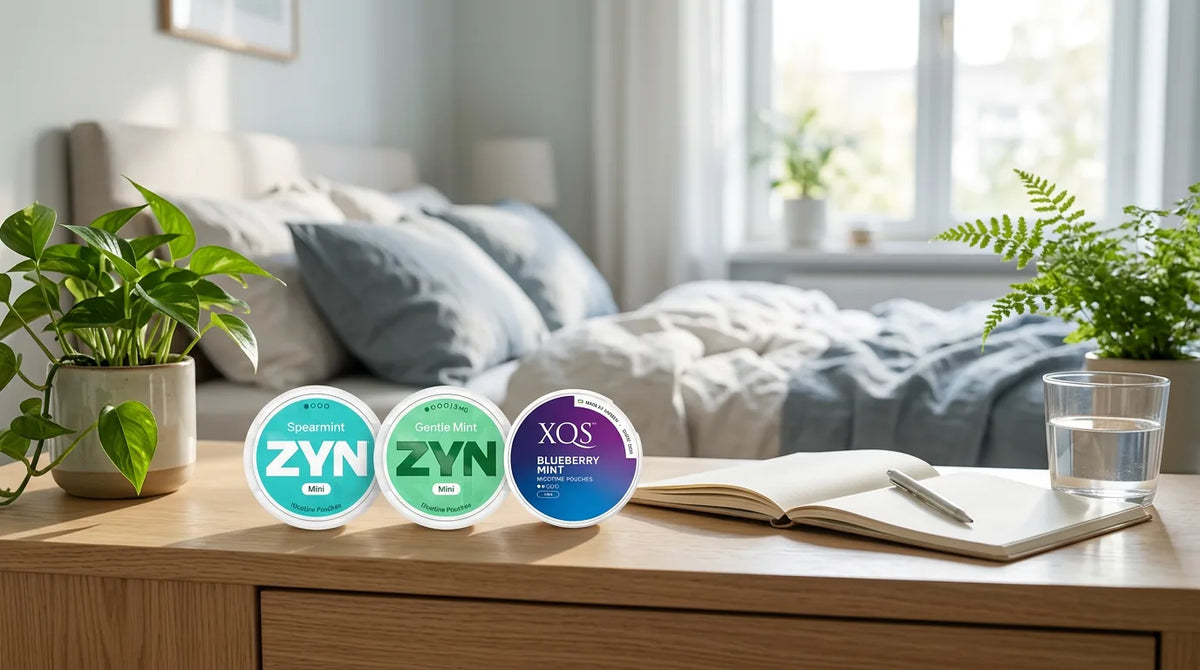
Can nicotine pouches cause depression? It is a question more pouch users are asking, especially after new Swedish research linked nicotine use to anxiety and low mood. The short answer is that the science shows a clear link but not proof of cause. If you want to keep your nicotine intake low while you think it over, lower-strength options like ZYN Spearmint Mini 1.5 mg are a good place to start. Here is what the research actually says.
Key Takeaways
- There is no direct proof that nicotine pouches cause depression, but nicotine use is consistently linked to more depression and anxiety symptoms.
- 2026 Swedish studies found these links for nicotine pouches as well as cigarettes, especially in teenage girls.
- Nicotine withdrawal causes low mood, which can feel like depression between pouches.
- Quitting smoking is linked to better mood, according to a Cochrane review of 102 studies.
- Nicotine pouches are not a treatment for depression. Speak to a doctor if you have symptoms.
How Nicotine Affects Your Mood
Nicotine works on the brain's reward system. According to the Mental Health Foundation, nicotine stimulates the release of dopamine, a chemical involved in positive feelings. At first, it can improve mood and concentration and reduce stress.
The problem is what happens next. Regular nicotine use changes the brain, so withdrawal symptoms appear when nicotine levels fall. As the NHS explains, the good feeling "does not last", and as nicotine leaves your system "it triggers withdrawal symptoms like irritability and anxiety".
This creates a cycle. Many users feel calmer after a pouch, but part of that relief is simply ending the withdrawal that built up since the last one. Our guide to nicotine pouch addiction explains this in more detail.
What the 2026 Swedish Studies Found
In 2026, researchers at the University of Gothenburg published three studies on nicotine and mental health. They found that adolescents who use nicotine are more likely to report symptoms of anxiety and depression.
- A survey of nearly 3,000 Swedish high school students found links for tobacco and tobacco-free products, including nicotine pouches and e-cigarettes. Almost 80% of girls who used nicotine reported clinically relevant anxiety symptoms.
- A study following about 1,500 adolescents over time found depressive symptoms were more common in those who smoked. Girls whose tobacco use increased were more likely to report worse sleep, anxiety and low mood.
- A rat study found nicotine caused long-lasting changes in the amygdala, a brain area involved in emotions and stress.
Professor Louise Adermark, one of the lead researchers, was clear about the limits: "we still cannot determine cause and effect". The researchers also noted that stress, alcohol, other substances and social factors affect both nicotine use and mental health.
What Snus Research Tells Us
Nicotine pouches are newer than snus, so snus studies give useful long-term clues. The results are mixed.
| Study | Who | Finding |
|---|---|---|
| Norwegian SHoT study (Nicotine & Tobacco Research) | 50,054 students, 2018 | Daily snus users had 38% higher odds of mental health problems; daily smokers had 96% higher odds |
| Swedish Kupol study | 3,959 adolescents | Current snus use was not linked to new depressive symptoms a year later; smoking was |
| Saudi nicotine pouch survey (Tobacco Prevention & Cessation) | 1,214 adult pouch users | 39.3% reported some psychological symptoms, mostly mild; the authors say this does not prove direct effects |
Overall, smoking shows the strongest link with depression. Snus and pouches show weaker or mixed links, and all these studies show association, not cause.
Why Cause and Effect Is Hard to Prove
There are three possible explanations for the link between nicotine and depression, and they can all be true at once.
- Nicotine may affect mood. Animal studies like the Gothenburg rat study show nicotine can change brain areas involved in emotion.
- Low mood may lead to nicotine use. The Mental Health Foundation notes that people with depression may use nicotine to temporarily boost dopamine. This is sometimes called self-medication.
- Shared factors may drive both. Stress, money worries, alcohol and other substances are linked to both nicotine use and poor mental health.
Most studies so far are cross-sectional, meaning they look at one moment in time. That makes it impossible to tell which came first. Long-term studies that follow pouch users over many years are still needed.
Withdrawal: The Low Mood Between Pouches
One of the clearest links between nicotine and mood is withdrawal. The NHS lists "feeling anxious, tense, or low in mood" among common nicotine withdrawal symptoms, alongside irritability, frustration and poor concentration.
NHS treatment guidance from the NCSCT says withdrawal-related depression affects around 60% of people who stop smoking and usually lasts less than four weeks. The same applies in principle to any nicotine product, including pouches.
If you notice low mood in the morning or after long gaps between pouches, withdrawal may be part of the reason. Our post on nicotine pouches and anxiety covers a similar pattern.
Does Quitting Nicotine Improve Mood?
For smoking, the evidence is encouraging. A 2021 Cochrane review of 102 studies with over 169,500 people found that stopping smoking was linked to less depression, anxiety and stress compared with continuing to smoke. It found no evidence that quitting made mental health worse.
The effect size for anxiety was similar to that of antidepressant medication, according to the review authors. These studies were about smoking, not pouches, so we cannot assume the same result. But they suggest that, once withdrawal passes, mood often improves without nicotine.
Who Should Be Most Careful
- Young people. The Gothenburg studies found the strongest links in teenagers, particularly girls. Nicotine pouches are for adults only.
- People with depression or anxiety. Nicotine can interact with your mood and with some medications. Our guide to nicotine pouch medication interactions explains more.
- People with poor sleep. Nicotine can affect sleep, which in turn affects mood. See nicotine pouches and sleep.
Practical Tips for Protecting Your Mood
- Track your mood and use. Note when you feel low and how long since your last pouch.
- Avoid using pouches to manage feelings. If you reach for a pouch every time you feel stressed or sad, that is worth noticing.
- Step down slowly. Going from 6 mg to 3 mg, then to 1.5 mg, can reduce withdrawal. ZYN Gentle Mint Mini 3 mg and XQS Blueberry Mint 4 mg are useful middle steps.
- Keep a regular routine. Sleep, exercise and daylight all support mood.
- Get support. Our step-by-step guide on how to quit nicotine pouches can help if you decide to stop.
Low-Strength Options at The Snus Outlet
| Product | Strength | Price |
|---|---|---|
| ZYN Spearmint Mini | 1.5 mg | €4.99 |
| ZYN Gentle Mint Mini | 3 mg | €4.99 |
| XQS Blueberry Mint | 4 mg | €5.90 |
When to Get Help
Feeling low for more than two weeks, losing interest in things you enjoy, or having trouble sleeping and eating can be signs of depression. Speak to your doctor, who can help with both your mood and your nicotine use.
If you ever have thoughts of harming yourself, contact emergency services right away. In the EU, you can call 112 from any phone.
FAQ: Nicotine Pouches and Depression
Can nicotine pouches cause depression?
There is no direct evidence yet that nicotine pouches cause depression. Studies show that people who use nicotine, including pouches, report more depression and anxiety symptoms, but researchers say they cannot tell which comes first. Nicotine withdrawal between pouches can cause low mood, which may feel like depression.
Why do I feel low when I stop using nicotine pouches?
Low mood is a common nicotine withdrawal symptom. The NHS lists feeling anxious, tense or low in mood among withdrawal symptoms. NHS treatment guidance says withdrawal-related low mood usually lasts less than four weeks.
Do nicotine pouches help with depression?
No. Nicotine can give a short lift in mood, but the NHS explains this feeling does not last and is followed by withdrawal symptoms. Nicotine pouches are not a treatment for depression. Speak to a doctor if you have symptoms of depression.
Does quitting nicotine improve mood?
Research on smoking suggests it does. A 2021 Cochrane review of 102 studies found people who stopped smoking had less depression, anxiety and stress than people who continued. There is no equivalent review for nicotine pouches yet.
Should I stop using nicotine pouches if I have depression?
Talk to your doctor before making changes, especially if you take medication. If you want to cut down, a slow step-down to lower strengths can reduce withdrawal symptoms. Never stop prescribed medication without medical advice.
Final Thoughts
So, can nicotine pouches cause depression? The honest answer is that we do not know for sure. Research from Sweden and Norway links nicotine use to more depression and anxiety symptoms, and withdrawal clearly causes low mood. But no study has yet shown that pouches directly cause depression.
If you use pouches, keep an eye on your mood and consider stepping down to lower strengths. Browse our ZYN range for 1.5 mg and 3 mg options, with free EU shipping on orders over €99. For adult nicotine users only.
Share:
Nicotine Pouches in Cold Weather: 10 Winter Storage and Use Tips