

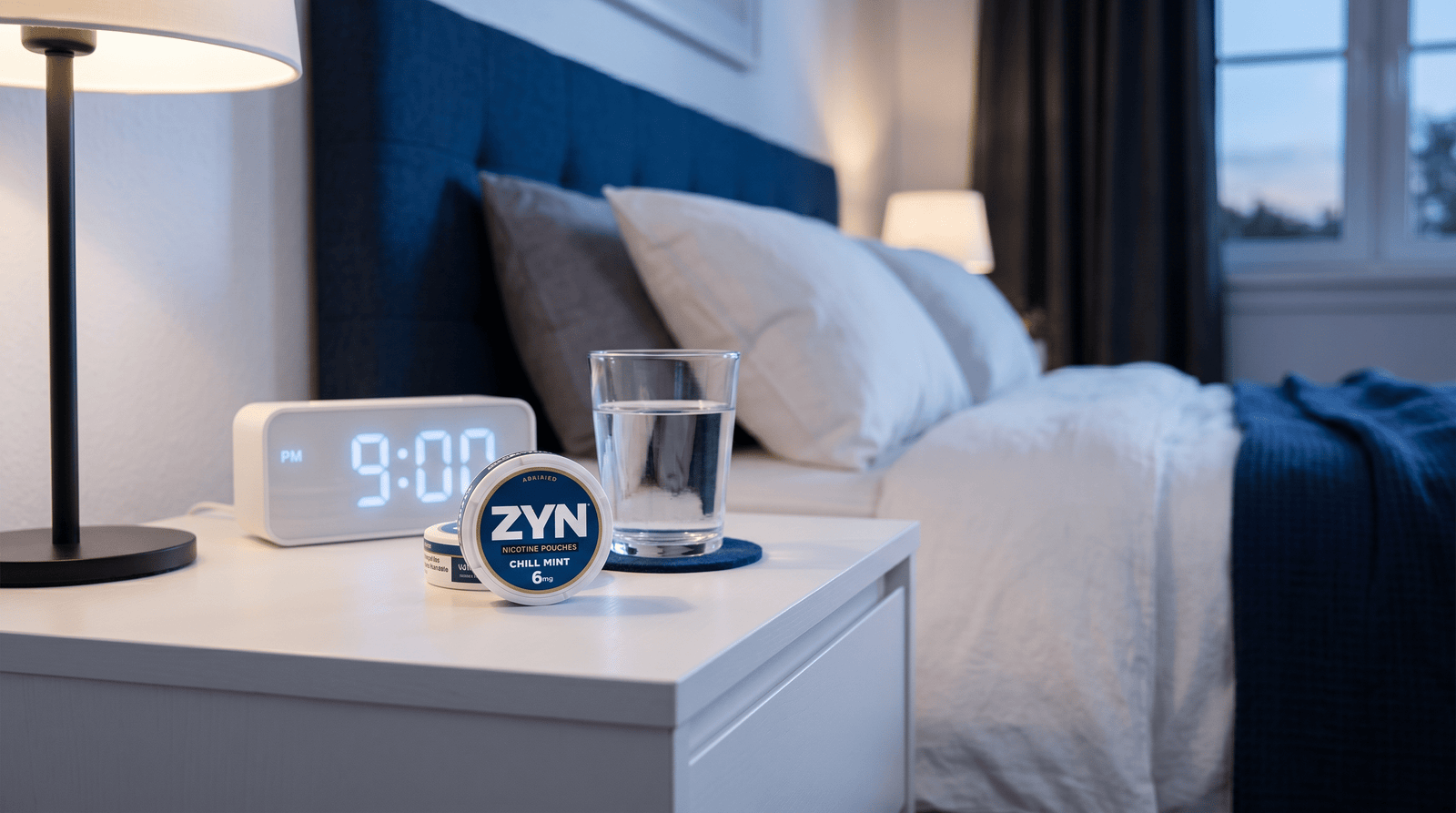
- Nicotine is a stimulant — using pouches within 4 hours of bedtime is linked to more fragmented sleep and reduced sleep efficiency, per a large 2019 study.
- The main effects are longer time to fall asleep, reduced REM sleep, and more nighttime awakenings — especially in people who already struggle with insomnia.
- Strength and timing are the key variables. A 3 mg pouch at 7 PM carries far less risk than a 16 mg LOOP at 9 PM.
- Pouch users switching from cigarettes often report better sleep overall — no late-night cigarette runs, no respiratory disruption, lower nicotine-per-session volume.
- Light-strength options from The Snus Outlet light nicotine pouches collection are the best choice for evening use if you need nicotine after dinner.
If you reach for a nicotine pouch before bed and then lie awake for longer than you would like, you are probably not imagining it. The science on nicotine and sleep is well-established and consistent across dozens of studies: nicotine disrupts sleep quality, primarily through its stimulant effects and its interaction with the neurotransmitters that govern your sleep-wake cycle. This guide breaks down exactly what happens, how serious it is, and what you can do about it.
How Nicotine Affects the Brain at Night
Nicotine works by binding to acetylcholine receptors in the brain and triggering a cascade of stimulatory neurotransmitters — primarily dopamine, serotonin, and norepinephrine. During the day, this is the focus-and-alertness effect you are using nicotine for. At night, those same effects work against you.
Nicotine also suppresses melatonin production, the hormone your brain releases in the evening to trigger drowsiness and prepare the body for sleep. Research published through Cureus (PMC, 2023) found that nicotine use close to bedtime disrupts circadian rhythms by altering these melatonin-regulating pathways — which means your internal body clock registers later and later sleep times the more consistently you use nicotine in the evenings.
The half-life of nicotine in the body is approximately two hours. A 6 mg pouch used at 9 PM still has active nicotine circulating until around 11 PM. A strong 16 mg pouch used at the same time has a longer effective window. This timing effect is more significant than most pouch users realise.
The 4-Hour Rule: What the Research Says
The clearest and most actionable finding from the sleep science literature comes from a 2019 longitudinal study published in the journal Sleep (via PMC), one of the most rigorous sleep journals in the world. The study found that nicotine use within 4 hours of bedtime was associated with:
- A 1.74% reduction in sleep efficiency — meaning less of your time in bed is actual restorative sleep
- 6 minutes of additional wake-after-sleep-onset — you wake up more during the night
- Significantly increased sleep fragmentation — more brief awakenings, even if you do not fully remember them
- For those with existing insomnia symptoms: over 40 minutes less total sleep time compared to nights without evening nicotine use
The 4-hour cut-off is not a hard rule — it is an average observation across a large population. Some people are more sensitive and need a longer buffer. Others with high nicotine tolerance may experience less disruption. But as a starting point, avoiding nicotine in the 3–4 hours before you plan to sleep is the most evidence-backed recommendation available.
What Exactly Gets Disrupted? The Sleep Architecture Breakdown
Your sleep is not one uniform state — it cycles through distinct stages: light sleep (N1/N2), deep slow-wave sleep (N3), and REM (rapid eye movement) sleep. Each serves a different restorative function. Nicotine affects each stage differently.
| Sleep Stage | Function | Nicotine's Effect |
|---|---|---|
| Sleep onset | Falling asleep | Delayed by 5–25 minutes; stimulant effects keep alertness elevated |
| N3 (deep sleep) | Physical recovery, immune function | Reduced duration — nicotine suppresses acetylcholine receptors that promote N3 |
| REM sleep | Memory consolidation, emotional processing | Suppressed — less REM time, impacting learning and mood regulation |
| Sleep continuity | Uninterrupted rest | Fragmented by micro-awakenings; withdrawal cravings emerge during later sleep cycles |
The REM suppression is particularly worth paying attention to. REM sleep is where your brain consolidates memories from the previous day, processes emotional experiences, and prepares neural pathways for learning. Consistently reduced REM — even by small amounts — accumulates over weeks and months into noticeable cognitive and mood effects, as confirmed in multiple studies reviewed in Sleep Medicine X (2023).
Are Nicotine Pouches Better for Sleep Than Cigarettes?
The honest answer: probably yes, for most users. This is one area where pouches have a genuine advantage over smoking. Several factors make the comparison favourable:
No respiratory disruption. Cigarette smoke directly impairs airway function, worsens snoring, and is a significant risk factor for obstructive sleep apnoea. Pouches involve no inhalation whatsoever, so those respiratory mechanisms are completely absent.
Lower nicotine volume per session. A typical cigarette delivers 1–2 mg of absorbed nicotine very rapidly. Heavy smokers can consume 20–30 mg of absorbed nicotine daily. A moderate pouch user consuming five 6 mg pouches with roughly 20% absorption takes in around 6 mg total — significantly less in many cases.
No late-night cigarette compulsion. Many heavy smokers wake at night driven by nicotine withdrawal and the automatic smoking habit. Pouch users generally do not exhibit the same nighttime-craving intensity, partly because pouches deliver nicotine more slowly and partly because the ritual is less ingrained in sleep-adjacent behaviour.
This does not mean pouches are sleep-neutral — they are not. But for a smoker switching to pouches, sleep quality improvements are a commonly reported side effect of making the switch.
Strength and Timing: The Two Variables That Matter Most
Not all evening pouch use carries the same risk. The two factors that most determine sleep impact are how strong the pouch is and how close to bedtime you use it.
Strength
A 3 mg light-strength pouch at 7 PM is unlikely to meaningfully disrupt sleep for most established users. A 16 mg LOOP Extra Strong used at 9 PM is a different story entirely. The stimulant load from higher-strength products is proportionally greater and stays active longer. If you must use nicotine in the evenings, dropping to a 3–6 mg light or regular strength pouch is the most straightforward harm-reduction step.
Timing
The 4-hour rule is your guide. If you typically sleep at 11 PM, aim to have your last pouch by 7 PM. Some users find a 2-hour window sufficient; others with higher sensitivity need the full 4 hours or more. The first few days of adjusting your cut-off time may feel uncomfortable — that mild irritability is nicotine's way of protesting the new schedule. It passes within a week as your body adjusts.
Practical Tips for Better Sleep as a Pouch User
- Set a nicotine cut-off time. Decide on a hard stop — 7 PM or 8 PM is a good starting point — and stick to it. Consistency trains your body to expect the wind-down and makes falling asleep easier over time.
- Drop your evening strength. Keep strong pouches (9 mg+) for daytime use. Use a 3–6 mg option in the early evening if you need one. Browse light nicotine pouches — ZYN 3 mg and VELO 4 mg are both good choices.
- Avoid ice or menthol pouches late in the day. The cooling sensation from mint and ice flavours is mildly stimulating on top of the nicotine. A fruit or coffee flavour is a gentler choice for an early-evening pouch if you use one.
- Consider nicotine-free pouches after your cut-off. If the ritual of using a pouch is part of your evening wind-down, 0 mg nicotine-free pouches provide the mouth feel without the stimulant. This is one of the most practical bridges to better sleep without abandoning the habit entirely.
- Track your sleep for two weeks. Most people underestimate how significantly evening nicotine use affects their sleep until they track it systematically. Most smartphones have built-in sleep tracking now. Try two weeks of stopping nicotine by 7 PM and compare your data to the preceding two weeks.
FAQ: Nicotine Pouches and Sleep
Do nicotine pouches keep you awake?
Yes, if used close to bedtime. Nicotine is a stimulant that increases alertness and suppresses melatonin. Research from the journal Sleep found that nicotine within 4 hours of bedtime significantly increases sleep fragmentation and reduces sleep efficiency. The effect is stronger in individuals with existing insomnia.
How long before bed should I stop using nicotine pouches?
The evidence-based recommendation is at least 3–4 hours before sleep. If you plan to sleep at 11 PM, your last pouch should ideally be by 7–8 PM. Higher-strength pouches (9 mg+) require a longer buffer than lower-strength ones. The NHS guidance on sleep hygiene broadly recommends avoiding stimulants in the hours before bed, which applies directly here.
Do nicotine pouches affect REM sleep?
Yes. Multiple studies confirm that nicotine suppresses REM sleep — reducing both its duration and quality. REM is the sleep stage responsible for memory consolidation and emotional regulation. Chronic REM suppression from evening nicotine use can contribute to brain fog, mood fluctuations, and reduced learning performance over time.
Will my sleep improve if I switch from cigarettes to pouches?
For most people, yes. Cigarette smoke causes direct respiratory damage that worsens snoring and sleep apnoea. The absence of inhalation alone makes a meaningful difference. Most ex-smokers who switch to pouches report improved sleep as one of the first benefits they notice. The remaining sleep impact from nicotine itself is manageable with good timing habits.
What is the best nicotine pouch strength to use in the evening?
If you use pouches in the evening, 3–6 mg is the recommended upper limit. Opt for a dry-format pouch (ZYN or LOOP in lower strengths) rather than a moist format, as the slower release profile creates a gentler nicotine curve. Or switch to nicotine-free pouches entirely after dinner.
Final Thoughts
Nicotine pouches are not a sleep remedy — and used at the wrong time, they are a sleep disruptor. The science is clear: evening use increases the time it takes to fall asleep, fragments your rest, and suppresses the REM sleep your brain depends on for cognitive recovery. The good news is that the fix is simple: shift your last pouch to at least 3 hours before bed and drop the strength in the evening.
For evening-friendly options, browse The Snus Outlet light nicotine pouches — ZYN 3 mg, VELO 4 mg, and XQS 4 mg are the best choices for users who want low-impact nicotine in the early evening. And if you want to keep the ritual without the stimulation, the nicotine-free range has you covered. Free EU shipping over €99 — stock up at The Snus Outlet outlet deals.