

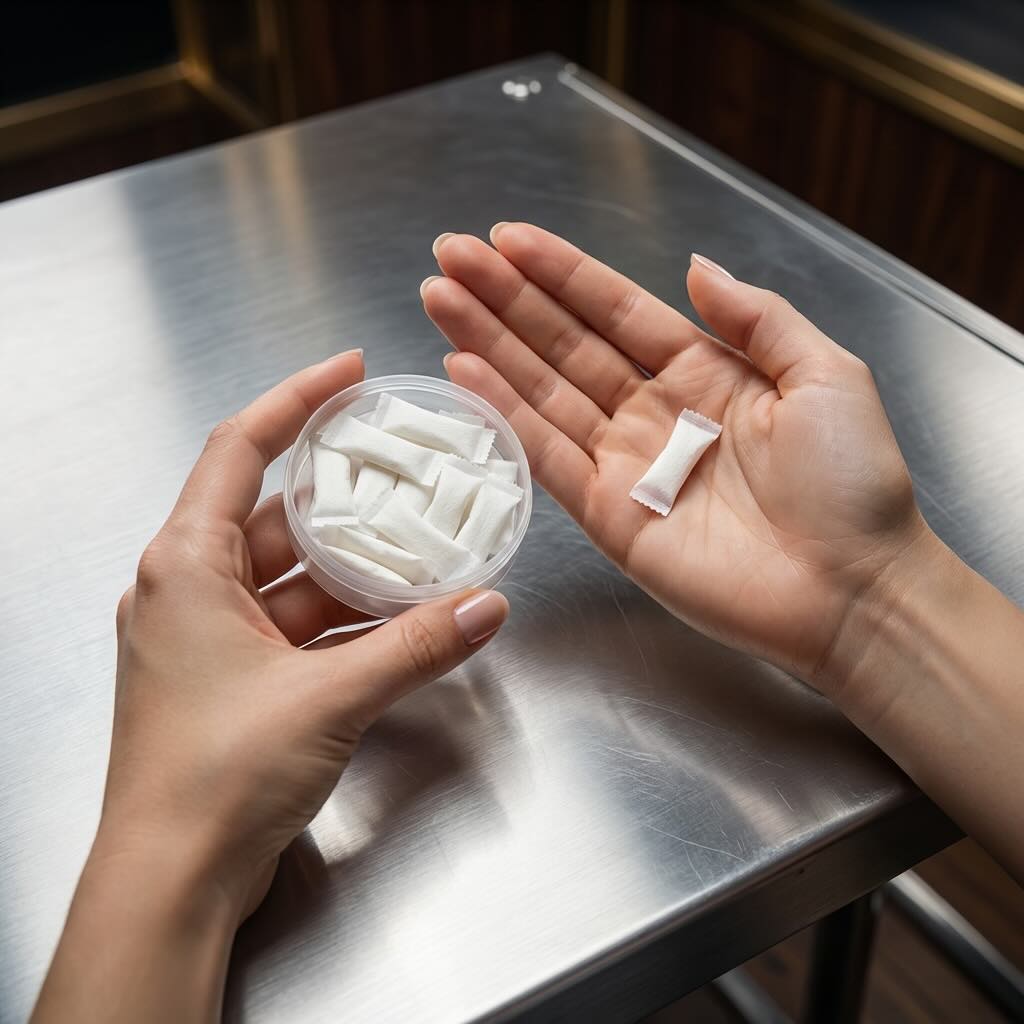
Should I use nicotine pouches past the expiration date?
Finding an old can of nicotine pouches raises a familiar question: are they still worth using after the printed date? Most manufacturers stamp a best-before or expiration date, typically six to twelve months after production; a few stretch it to twenty-four. The date guarantees peak flavor, moisture, and nicotine delivery rather than warning of sudden spoilage. Users who try expired pouches usually notice reduced quality, not an obvious safety risk, yet the drop can be clear enough to justify a fresh purchase. Our date guide explains how those numbers are set and why they matter.
What actually changes after the date
Nicotine does not rot, but it oxidizes and loses potency. Over time, you may feel a weaker buzz because each pouch delivers less active nicotine. Flavor is the second easy-to-spot casualty: mint feels flat, fruit notes grow dull, and subtle aromas can taste slightly stale. Texture shifts too. Dry portions become stiff or brittle, while pre-moistened ones lose moisture and sit less comfortably under the lip. Most guides flag three warning signs: an odd smell, visible discoloration, or a pouch that crumbles when squeezed. If the first pouch from a newly opened can feels muted, the rest will almost certainly follow suit.
How long a can stays enjoyable depends on storage conditions and seal integrity. Once air sneaks in, volatile flavor compounds evaporate and moisture escapes. Many users report that an opened can drops noticeably in quality within a month even when the printed date claims more time remains. By contrast, an unopened can stored correctly often performs close to the top end of its stated shelf life.
Storage matters more than the calendar
Heat, humidity, and direct light speed up degradation. Cars, sunny window ledges, and bathroom shelves are poor choices. A cool, dry, dark cupboard keeps flavor oils stable and slows nicotine oxidation. Always click the lid shut after removing a pouch to limit oxygen. For extra protection, especially if you keep multiple open cans in rotation, refrigeration helps. Place the can in the back of the fridge, make sure it is firmly closed, and keep it away from foods with strong odors. Freezing is not recommended; ice crystals can distort a pouch and leave it feeling rough once thawed. Detailed advice appears in our step-by-step storage tips.
Brand formulation matters too. Portions that begin life relatively dry handle small moisture losses with little impact, while very moist variants become noticeably harsher when they dry out. Users who rely on high nicotine strengths tend to be the first to notice small potency drops. For reference, our visual strength chart shows how each milligram level should normally feel, making it easier to judge whether an aged can still performs as expected.
Making the call on an expired can
When you pull an old can from a drawer, start with a simple inspection.
• Check the printed date and note if the can is sealed or opened.
• Open the can and smell the contents. Off-putting odors or a cardboard-like scent are red flags.
• Gently squeeze a pouch; it should feel pliable, not crumbly or rock-hard.
• Try one briefly. If flavor is flat and the nicotine hit is weak, the rest will match.
Your personal goals guide the decision. If you are tapering nicotine intake, a milder pouch may be acceptable. If you rely on a consistent buzz or want a bright flavor profile, you will save time and satisfaction by moving on to a fresh can. For opened cans that still taste fine, aim to finish them within a few weeks and keep them tightly closed between sessions. For sealed cans you want to store, pick a stable spot with no heat spikes and no direct sunlight.
Some consumers try to “rehydrate” dry pouches by adding water. Manufacturers advise against this shortcut because it can introduce bacteria or unevenly swell the material, causing leaks. Let a dry can rest in a cool, dark place instead, and accept that quality will not fully return. When you buy a replacement, experiment with portion style, flavor, or nicotine level; our searchable flavor finder helps compare options quickly.
A final rule of thumb from industry guides is simple: an unopened can stored well usually reaches its stated shelf life, while an opened can lives on borrowed time. If you encounter dull taste, dryness, weaker nicotine, discoloration, or an odd smell, swap it out, review your storage habits, and give the next can the conditions it needs to stay fresh.
Sources & Further Reading
- World Health Organization (WHO) — nicotine and tobacco
- U.S. Food and Drug Administration (FDA) — nicotine products and regulation
- NHS Better Health — quitting smoking and nicotine alternatives