
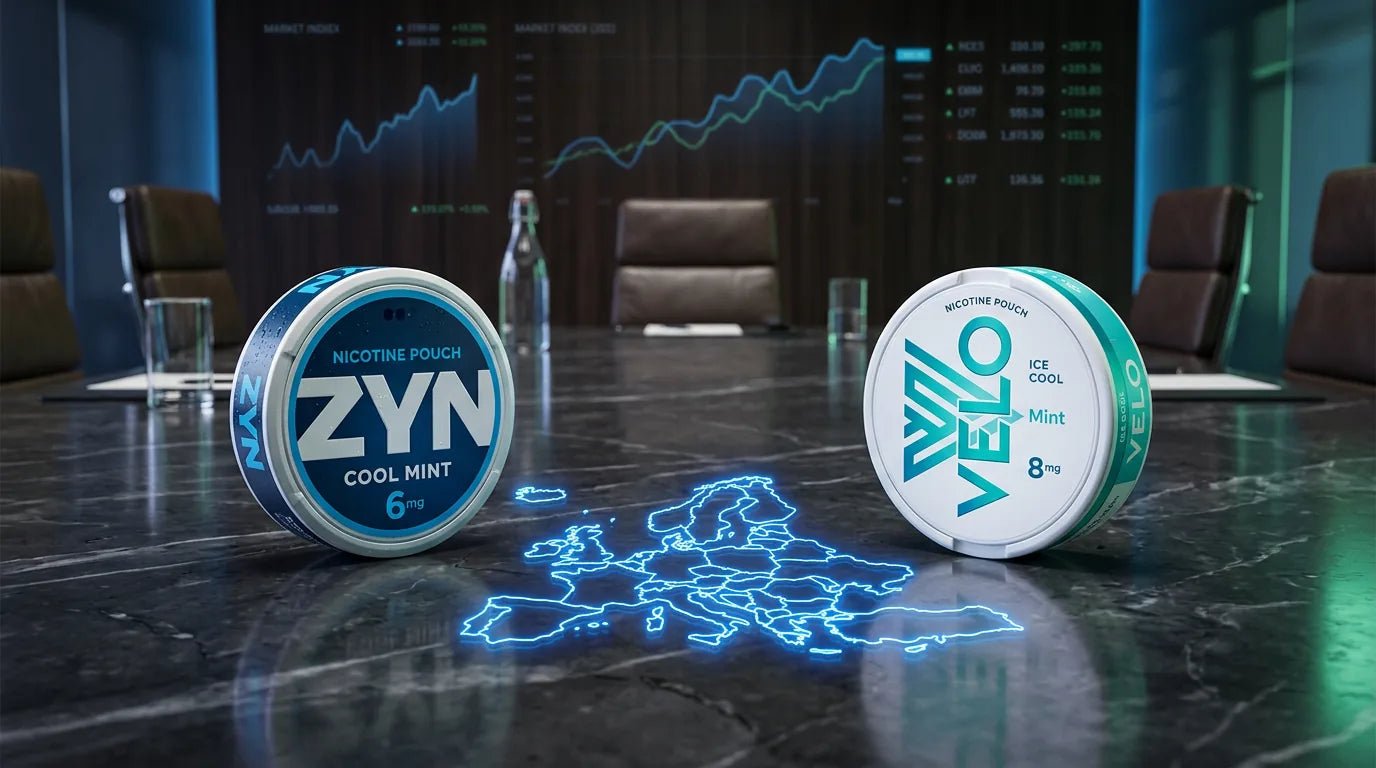
The European nicotine pouch market has a new shape, and it's being carved by two of the world's largest tobacco companies. Philip Morris International — now the owner of ZYN — and British American Tobacco — behind VELO — are locked in a high-stakes race for dominance across Europe. In 2026, Europe's nicotine pouch market is worth an estimated $2.47 billion, and the two giants are spending billions to control it. Here's where the battle stands, who's winning, and what it means for the market.
Key Takeaways
- Europe's nicotine pouch market is worth approximately $2.47 billion in 2026 — 26% of the global total
- PMI (ZYN) paid $16 billion for Swedish Match in 2022 to own ZYN outright — the defining acquisition of the category
- BAT (VELO) leads in European distribution, with VELO available in 50+ markets and strong Scandinavian presence
- ZYN grew 19% in Q4 in the US, but faces intensifying pressure from VELO's European logistics machine
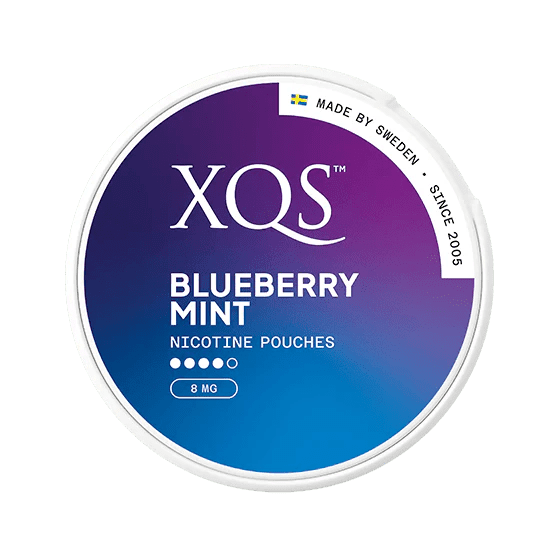
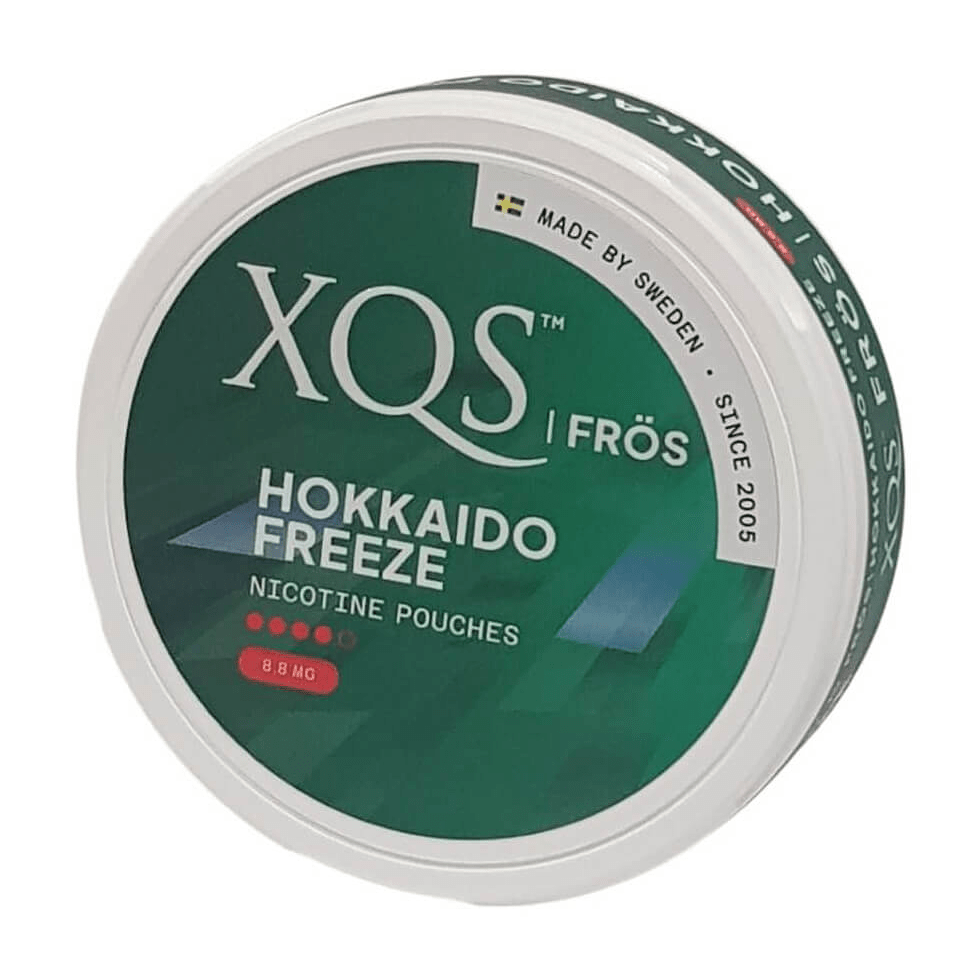
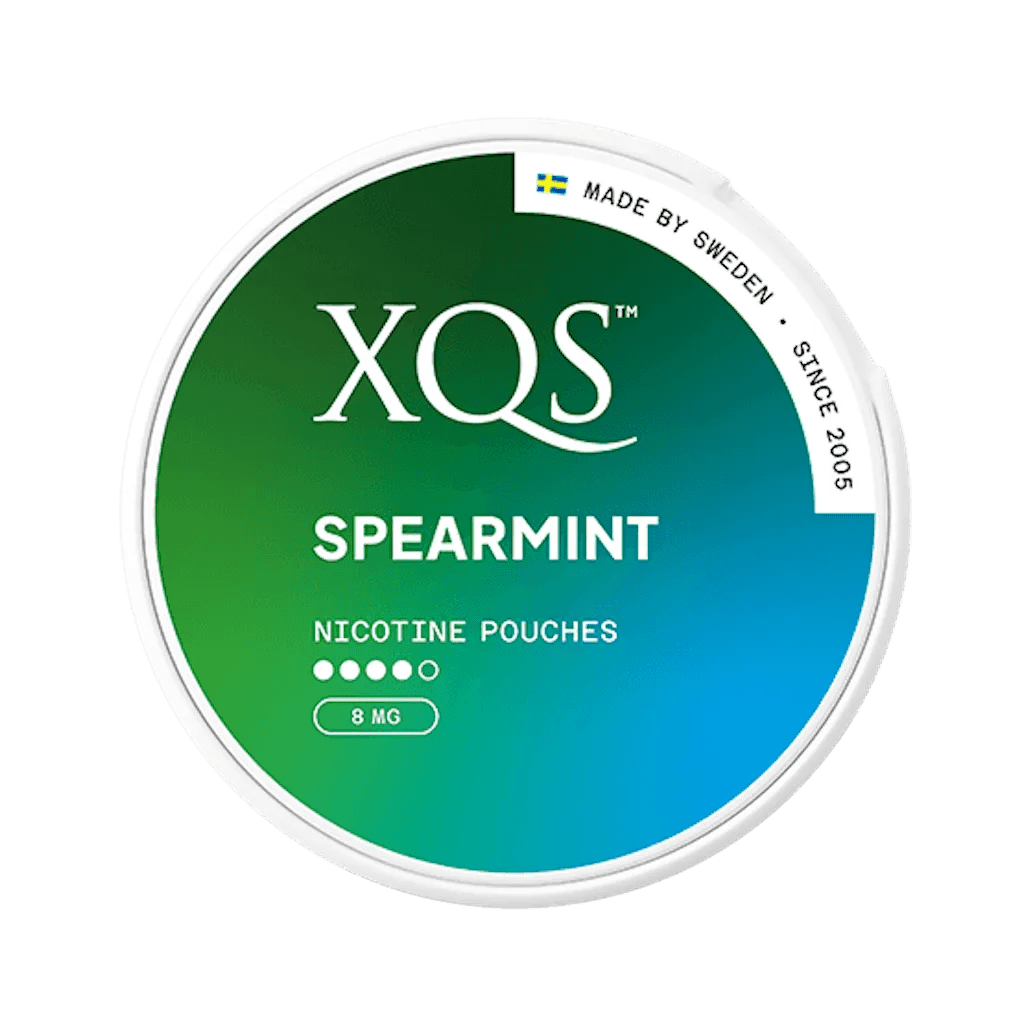
- Independent brands — LOOP, XQS, C.R.E.A.M, KUMA — are carving niche positions the giants can't easily replicate
The $16 Billion Opening Move: PMI Buys Swedish Match
When Philip Morris International spent $15.7 billion to acquire Swedish Match in November 2022, analysts were split. Some thought PMI was overpaying for a niche category. In 2026, that bet looks like the smartest acquisition in tobacco history. Swedish Match was the owner of ZYN — the brand that has since become the defining nicotine pouch name globally.
PMI completed the full acquisition and began ZYN's international rollout in early 2025, pushing into 15 new markets across Asia Pacific and Latin America. In the US, ZYN grew 19% in Q4, despite intensifying competition. PMI's smoke-free products now account for 42% of total revenue, and the company has signalled it expects to cross 50% by 2027 — a remarkable shift for a company historically synonymous with Marlboro cigarettes.
PMI's European ZYN strategy focuses on premium positioning: plant-based pouch fibres, low-sweetener formulas, strict youth access controls, and wellness-adjacent messaging. Browse ZYN's range to see how the brand executes that positioning in practice — clean branding, clear strength tiers, and a restrained flavour palette that stands apart from more aggressive competitors.
BAT's Counter-Move: Distribution at Scale
British American Tobacco isn't PMI's equal on brand recognition in the pouch category — but it may be its superior on logistics. VELO is available in over 50 markets worldwide, backed by BAT's global distribution infrastructure, which few brands can match. In Europe particularly, VELO moved quickly to establish retail presence across Scandinavia, Central Europe and the UK before many rivals had even defined their strategy.
BAT's 2024 announcement of a biodegradable pouch material under the VELO brand was also significant — an ESG-aligned play aimed at Gen Z consumers increasingly concerned with sustainability. The company simultaneously announced a new manufacturing investment in Sweden, scaling production capacity in response to double-digit demand growth across its European portfolio.
VELO's strength is consistency and reach. The flavour range — from Freeze Ultra to Tropic Breeze — covers the breadth of consumer taste profiles, and BAT's regulatory-compliance infrastructure means VELO is typically among the first brands cleared in new markets. According to a February 2026 Reuters report, BAT has been "capturing a greater portion of the market's growth" — a fact that has triggered concern among some ZYN investors about long-term market share erosion.
Market Share: Where Each Giant Stands in Europe
| Metric | PMI / ZYN | BAT / VELO |
|---|---|---|
| Parent company smoke-free revenue share | 42% of total PMI revenue | Growing segment, exact % not disclosed |
| European market presence | Strong in Scandinavia, expanding | 50+ markets, broadest coverage |
| Key European markets | Sweden, UK, Germany | Sweden, UK, Germany, CEE, Baltics |
| Brand positioning | Premium / wellness-aligned | Scale / consistency / ESG |
| US market (for context) | Dominant — historically 79% unit share | Growing fast, market share gains |
| Recent innovation | Plant-based fibres, low-sweetener SKUs | Biodegradable pouch material (2024) |
| Manufacturing base | Sweden (Swedish Match facilities) | Sweden + global BAT network |
The European Battleground: Country by Country
Europe's $2.47 billion nicotine pouch market is not uniform. The UK accounts for an estimated 20% of European volume — approximately $494 million — driven by post-cigarette switchers and a relatively permissive regulatory environment. Germany represents 18% of the European market ($445 million), fuelled by high cigarette consumption and flexible retail classification of nicotine pouches.
Scandinavia — particularly Sweden — remains the spiritual home of the category. Sweden's historically high oral tobacco culture (snus) created a natural early adopter base for nicotine pouches. Both ZYN and VELO originate from Swedish manufacturing, and the Scandinavian market remains their most established foothold in Europe.
Eastern and Central Europe are the contested frontier. BAT has been quicker to expand VELO distribution into these markets. Countries like Poland, the Czech Republic and the Baltic states are growing rapidly in pouch adoption — and VELO's existing distribution infrastructure gives it a significant first-mover advantage in markets where ZYN is still scaling.
The Third Player: Altria and the Rest of the Field
Beyond PMI and BAT, US tobacco giant Altria owns the On! brand — currently a smaller European player but with significant US infrastructure to draw on. Then there's the increasingly important layer of independent European brands that the giants simply cannot replicate in terms of flavour creativity and niche positioning.
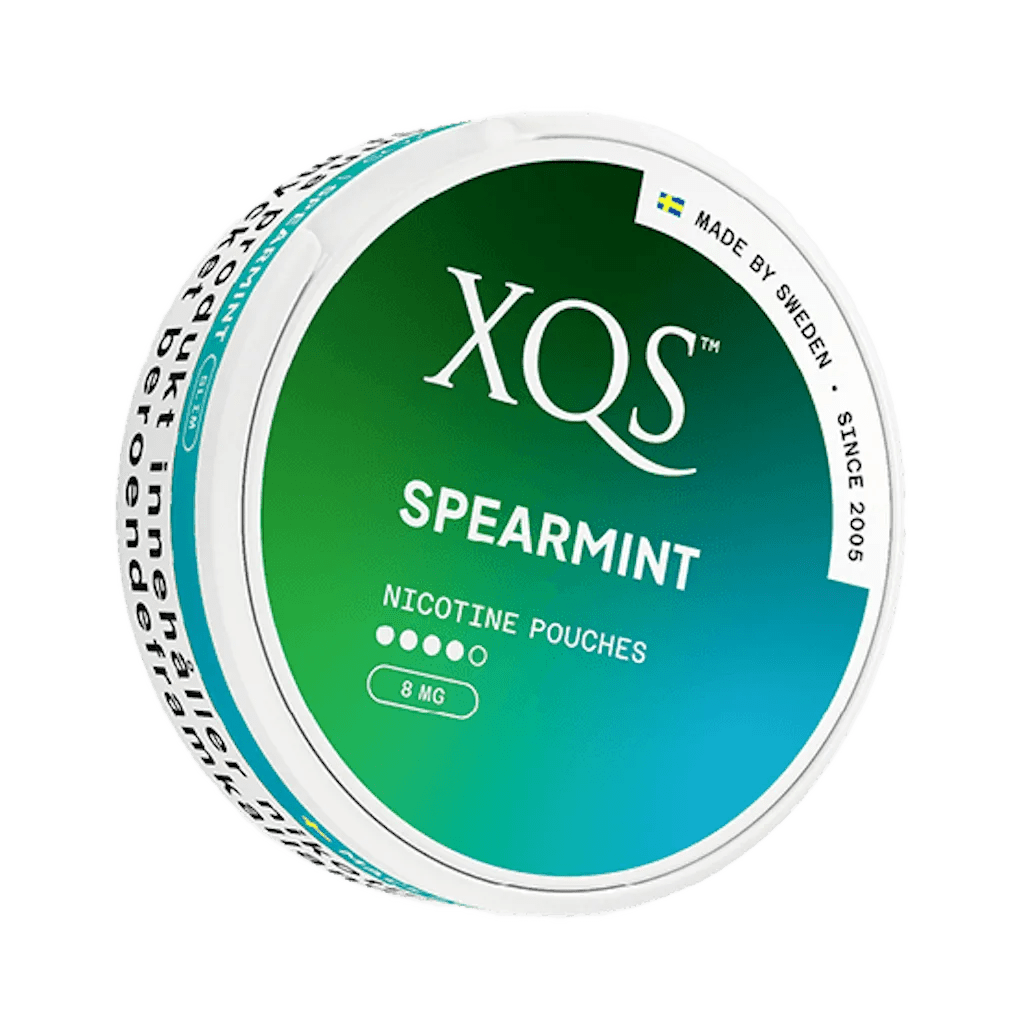
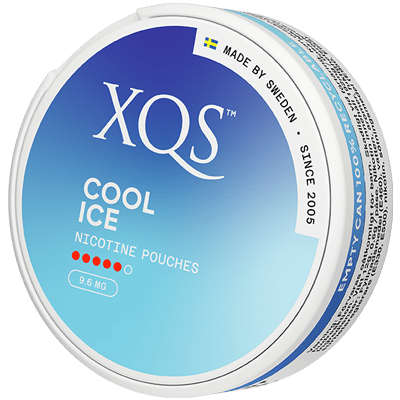
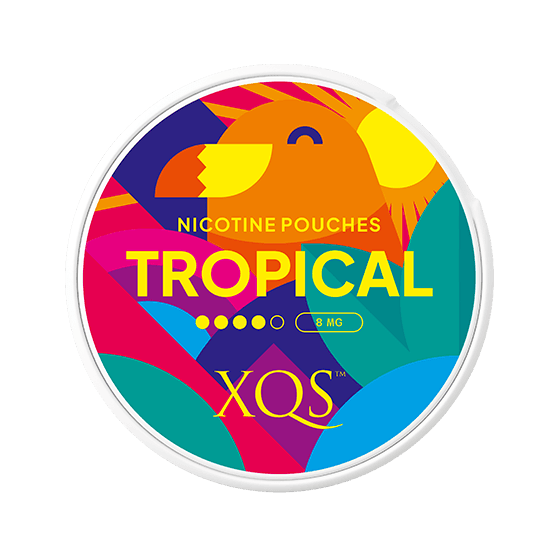
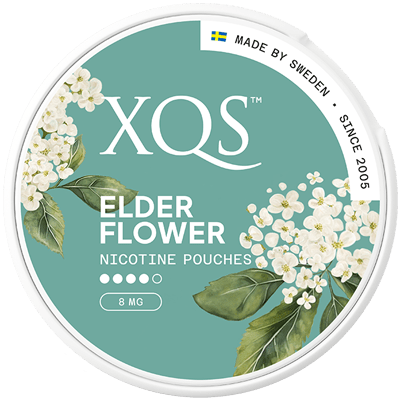
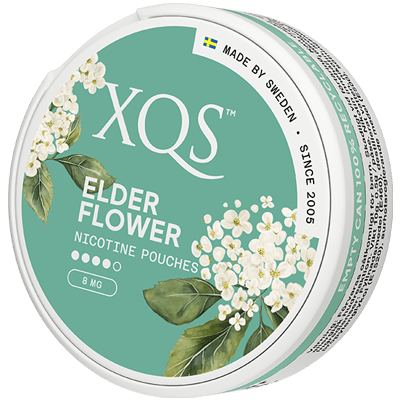
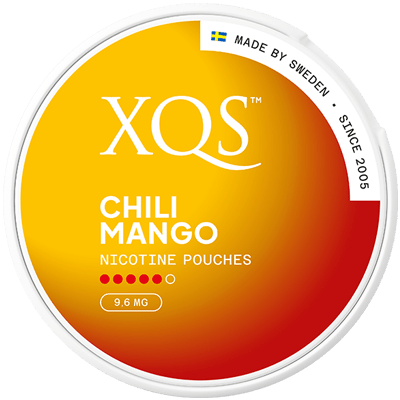
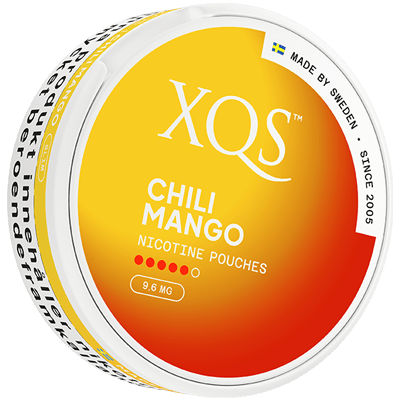
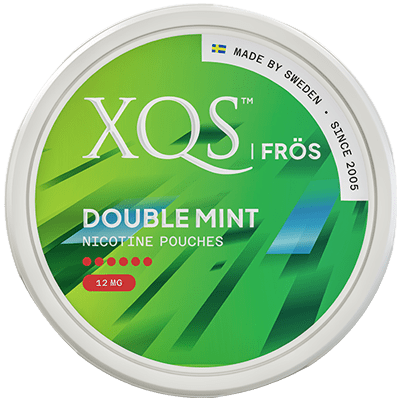
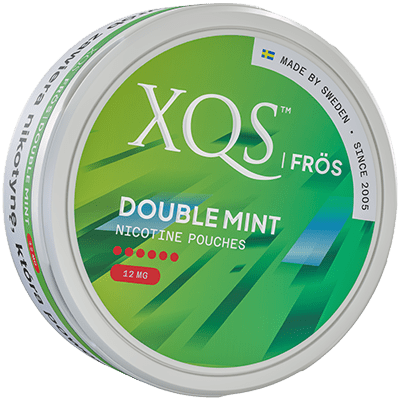
LOOP (Swedish, independently owned) has built a cult following with flavours like Habanero Mint and Salty Tangerine that PMI and BAT's corporate R&D processes would never greenlight. C.R.E.A.M targets dessert-flavour fans; XQS and KUMA attack the value end of the market with quality at prices the multinationals' cost structures make impossible to match. These indie brands aren't competing for the same customer as VELO or ZYN — they're filling gaps the giants leave open.
What the PMI vs BAT Battle Means for Consumers
Competition between the two giants is structurally good for consumers — it keeps prices from inflating and drives innovation in flavours, formats and pouch materials. The biodegradable pouch initiative from BAT and the wellness-positioned plant-based fibres from PMI are both responses to the competitive pressure, and both benefit the end user.
The key risk is regulation. Europe's patchwork of national rules — flavour bans in Latvia and France, age restrictions varying from 18 to 20, TPD3 in development — creates regulatory uncertainty that could constrain both companies' European ambitions. PMI and BAT both have compliance infrastructure to navigate this. Smaller brands don't, which may ultimately consolidate the market toward the two giants over the next several years.
For now, the range available from both brands — and the independent alternatives — has never been broader or better. Whether you lean ZYN or VELO, or prefer the independence of LOOP, XQS or C.R.E.A.M, the battle between these two giants is producing a better market for everyone.
Final Thoughts
PMI vs BAT is the defining corporate story of the nicotine pouch category. PMI made the boldest bet with its $16 billion Swedish Match acquisition and now owns the category's most recognisable name in ZYN. BAT countered with distribution scale and is gaining ground in Europe specifically. Neither is going to "win" outright — the European market is large enough for both, plus the growing layer of independent brands that serve niches the giants can't reach.
Whoever wins the corporate battle, the consumer wins from the competition. Stock up on the full range at The Snus Outlet — ZYN, VELO, LOOP, XQS, C.R.E.A.M, ZEUS and KUMA — with free EU shipping above €99 and regular outlet pricing on all major brands.