

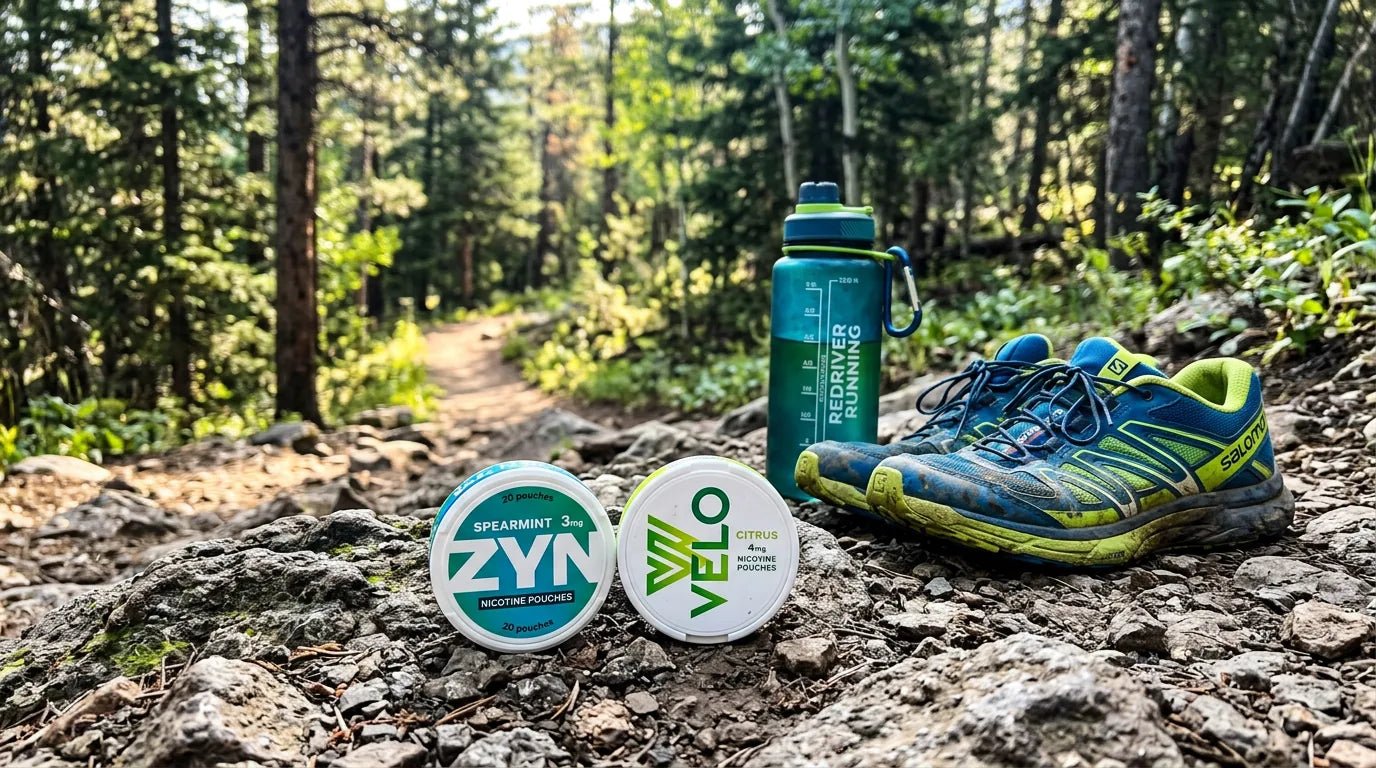
Nicotine pouches as a running aid — it sounds counterintuitive, but it's a real conversation happening among recreational runners and endurance athletes in 2026. ZYN pre-workout content is going viral on TikTok and Instagram, and the search data confirms: more runners are asking whether nicotine can boost their endurance or help them push through mental fatigue. The honest answer is nuanced. Here's what the science actually shows — and how to use pouches around training if you already use them.
Key Takeaways
- A 2006 Experimental Physiology study found nicotine users cycled 17% longer before exhaustion compared to placebo
- Nicotine raises heart rate by 5–10 bpm and increases blood pressure — which matters for cardiovascular-heavy runs
- The endurance benefit is most likely cognitive, not physical — nicotine delays perceived fatigue, not muscle fatigue
- Nicotine is not banned by WADA — it's permitted in competitive sport
- Post-run is the safest window; high-intensity long runs are the worst combination with nicotine
What Does Nicotine Do When You Run?
Nicotine is a stimulant that activates the sympathetic nervous system — the same system your body uses during a run. When you use a pouch before or during a run, nicotine triggers adrenaline release, raises heart rate, and stimulates dopamine pathways in the brain. The result is increased alertness, reduced perception of effort, and a temporary mood boost.
At the same time, nicotine causes slight vasoconstriction — narrowing of blood vessels. This increases blood pressure and can reduce the efficiency of oxygen delivery to working muscles. It also reduces skin blood flow, which is relevant in hot conditions because your body's ability to cool itself depends on blood reaching the skin.
The upshot: nicotine gives you a mental push while creating some cardiovascular cost. Whether that trade-off works in your favour depends on the type of run, the strength of the pouch, and your individual tolerance.
The 17% Endurance Claim: What the Study Actually Shows
The most-cited data point in the nicotine-and-exercise conversation comes from a 2006 study published in Experimental Physiology. Non-smoking male participants who used a 7mg nicotine patch cycled an average of 70 minutes to exhaustion — compared to 62 minutes in the placebo group. That's a 17% improvement in time to exhaustion.
The researchers attributed the difference to nicotine's effect on dopamine pathways — specifically, delayed mental fatigue rather than improved physical capacity. The participants didn't feel they were working harder; they simply held on longer before their brain called it quits. This is an important distinction: nicotine didn't boost VO2 max, increase lung capacity, or improve muscle efficiency. It shifted the perception of effort.
According to the World Anti-Doping Agency (WADA), only two studies have directly investigated nicotine's effect on exercise performance — one showed the 17% endurance improvement; the other found no effect. The evidence is real but limited, and the 17% figure shouldn't be treated as a reliable personal performance guarantee.
How Nicotine Affects Your Heart Rate When Running
This is the part that matters most practically. Nicotine raises resting heart rate by an average of 5–10 beats per minute. When you start running with a pouch in, you're already in a slightly elevated zone. For easy or moderate pacing, this is manageable. For threshold efforts, long races, or hot-weather running, the combination can push you toward upper heart rate zones faster than expected.
The cardiovascular concern is real but context-dependent. Most recreational runners doing easy 5K or 10K efforts won't hit their redline because of a 6mg pouch. But for marathon runners, summer racing, or high-intensity interval sessions, elevated baseline HR adds up. If your training uses heart rate zones, expect to be 5–10 bpm higher than normal across all zones with a pouch in.
WADA's research also highlighted a specific risk: nicotine reduces skin blood flow, which is your body's primary cooling mechanism. Using nicotine during hard runs in hot conditions significantly increases heat illness risk — this is one of the clearest warnings in the current evidence base.
Timing: When Should Runners Use Nicotine Pouches?
| Timing | Effect on Running | Verdict |
|---|---|---|
| 60 min before run | Nicotine mostly metabolised before start; some residual alertness | ✅ Low-risk option |
| 15–30 min before | Peak effect at run start; HR elevated, focus sharp | ⚠️ Works for easy/moderate effort; risky for intensity |
| During run | Full cardiovascular load — HR elevated + extra bpm from nicotine | ⚠️ Only viable for very easy pacing; not recommended in heat |
| After run | No cardiovascular interference; recovery period — some vasoconstriction | ✅ Best window for most runners |
For most runners, the post-run window is cleanest. You get the relaxation and reward effect of nicotine without stacking it on top of an already-loaded cardiovascular system. The 30–40 minute focus window from a pouch is spent well post-run — you're winding down, not trying to perform.
Best Nicotine Pouch Strength for Runners
If you use pouches around running, strength matters more than brand. Higher-strength pouches (14mg, 20mg) create significantly more cardiovascular strain than moderate options. For running contexts, the evidence consistently points toward lower and mid-strength options.
Browse light nicotine pouches for a curated selection of 3–6mg options that are better suited to active use. Going higher than 8–10mg before a run introduces real risk of dizziness, nausea, or HR overshoot — especially for users with lower tolerance or anyone running in warm weather.
- Easy days / post-run: 3–6 mg — ZYN 3 mg, VELO 4 mg, XQS 4 mg
- Pre-workout moderate effort: 6 mg — ZYN 6 mg Cool Mint, VELO 7 mg
- Pre-workout limit: 8–10 mg — LOOP 10 mg, XQS 8 mg (experienced users only)
- Avoid during runs: 14mg+ — C.R.E.A.M 11 mg, ZEUS 16 mg and above
Brand Picks for Runners
Not all pouches suit active use equally. Comfort and format matter when you're moving. Slim-format pouches are generally better for running — they stay securely in place, create no bulge, and are barely noticeable. Here's how the main brands stack up for runners:
| Brand | Best Option for Runners | Strength | Why It Works |
|---|---|---|---|
| ZYN | Cool Mint Slim | 6 mg | Clean flavour, soft material, low tingle — stays comfortable during movement |
| VELO | Freeze Slim | 7 mg | Cooling mint effect pleasant during effort; slim format secure under lip |
| LOOP | Double Mint Slim | 5 mg | Moderate strength, refreshing flavour, drier format means less drip during activity |
| XQS | Arctic Mint | 4 mg | Best budget option; light strength ideal for easy runs or post-run use |
| KUMA | Mint Slim | 6 mg | Solid value entry — comfortable, compact, won't distract during a run |
Find all of these and more in The Snus Outlet's 2026 top picks. The full range is available with EU delivery and free shipping on orders above €99.
Should You Use Nicotine Pouches Before a Race?
This comes down to your goals and experience level. For a parkrun or casual 5K, a low-strength pouch 30–60 minutes before the start is unlikely to cause problems for most experienced users. The focus boost is real, and the cardiovascular effect at that strength is modest.
For half marathons, marathons, or any race where you're working near threshold for extended periods, nicotine before a race adds unnecessary cardiovascular risk. Your heart rate is already going to be near the top of its range — you don't need it starting 8 bpm higher. The mental edge nicotine provides is real, but for long-distance racing, it's not worth the physiological cost.
Importantly, nicotine is not prohibited by WADA and is permitted in both amateur and competitive sport. There's no anti-doping issue with using pouches before a race — just performance and health trade-offs to weigh yourself.
Final Thoughts
The science is more interesting than a simple yes or no. There's a real 17% endurance finding in controlled research — but it's likely a cognitive effect, not a physiological upgrade, and it doesn't come without cardiovascular costs. For recreational runners who already use nicotine pouches, timing them correctly (post-run, or pre-run at low strength on easy days) is a sensible approach. For anyone not already using nicotine, starting purely for a running edge doesn't make sense given the dependency risk.
If you're looking for well-priced pouches across all strengths — from light 3mg options ideal for active use to stronger picks for off-days — browse The Snus Outlet deals. Free EU shipping on orders over €99, with regular outlet prices across ZYN, VELO, LOOP, XQS and more.