

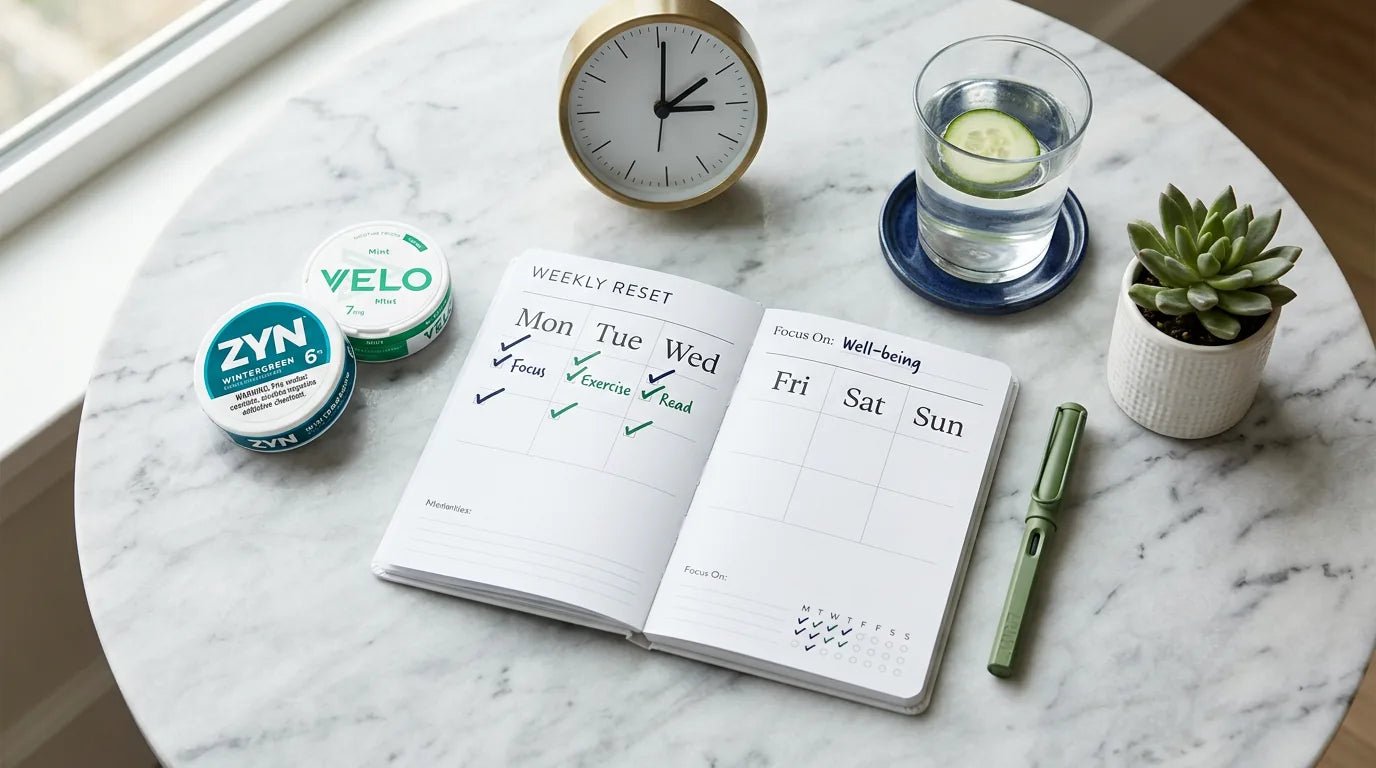
Your nicotine pouches stopped hitting the way they used to. You're reaching for stronger strengths more often, and even then the effect feels muted. That's nicotine tolerance — your brain's receptors have adapted to the intake level you've normalised. The good news is tolerance fully reverses with a planned break. The length of that break depends on how entrenched your tolerance is, and this guide walks through every level so you can reset cleanly and restart smarter.
Key Takeaways
- Nicotine tolerance builds within days of regular use and causes the same strength to feel progressively weaker
- A 1–2 week break is enough for mild tolerance; heavy users need 4–8 weeks for a full reset
- The first 72 hours are the hardest — cravings and irritability peak and then drop sharply
- Restarting at a lower mg strength prevents you from rebuilding tolerance immediately
- Switching to light-strength pouches (3–6 mg) when you return gives you the longest-lasting reset
Planning a reset? Set yourself up to come back at a lower strength, not a higher one. Our mini nicotine pouches collection focuses on lighter, lower-mg formats — the natural restart point after a break.
What Is Nicotine Tolerance and Why Does It Happen
Nicotine tolerance is a pharmacological adaptation. Every time nicotine binds to acetylcholine receptors in the brain, those receptors desensitise slightly to compensate for the stimulation. With repeated use, more receptors enter a desensitised state, and the same dose produces less effect.
According to research published in Pharmacology & Biochemistry and Behavior, nicotine tolerance develops rapidly — within days of daily use — and is directly tied to total daily nicotine exposure. The more mg you consume per day, the faster and deeper the tolerance builds.
For pouch users, this shows up in two ways: you start using a higher strength than you originally needed, or you start using more pouches per day to get the same effect. Both are signs the receptors have adjusted.
Signs Your Nicotine Tolerance Has Built Up
Tolerance isn't always obvious. Here are the clearest indicators that a reset is worth doing in 2026:
- You've moved from 3 mg to 6 mg, or 6 mg to 11 mg over the past few months without a specific reason
- A pouch that used to deliver a strong buzz now feels like background noise
- You're going through a can faster than you used to — more pouches per day than your original routine
- The duration of effect has shortened noticeably — you're changing pouches more frequently
- You feel mild discomfort or irritability if you skip a session, even briefly
If two or more of these apply, you've built meaningful tolerance. A break will restore sensitivity significantly, and you may find you can drop back a full strength level when you return.
How Long the Break Should Be
There's no single answer — the right break length depends on your current usage level and how long you've been at it. Use this table as a guide:
| Tolerance Level | Usage Pattern | Recommended Break | Expected Outcome |
|---|---|---|---|
| Mild | 1–5 pouches/day, under 6 months regular use | 7 days | Sensitivity mostly restored; return at same or lower strength |
| Moderate | 6–10 pouches/day, 6–12 months | 14 days | Clear improvement in effect at same strength; cravings manageable |
| Heavy | 10+ pouches/day or consistent 11–16 mg use | 4 weeks | Substantial receptor recovery; return at a lower strength tier |
| Very Heavy | Multiple cans/day, 16 mg+ pouches, 12+ months | 6–8 weeks | Near-full reset; can likely return to 6 mg or lower and feel it strongly |
The 72-hour window matters most. That's when nicotine clears the system and withdrawal symptoms — irritability, difficulty concentrating, mild headaches — peak. After day 3, the physical side fades substantially. What remains is habitual craving, which takes longer to address but doesn't carry physical discomfort.
After 2–4 weeks fully off, receptor sensitivity returns to close to baseline. Users who complete a full 4-week break often report that a 3 mg or 6 mg pouch feels stronger than the 11 mg pouches they were using before the break.
Step-by-Step Break Plan
A structured break is more effective than going cold turkey without preparation. Here's a practical framework:
- Pick your start date. Start on a Wednesday or Thursday — the first 3 days are hardest, and having the peak over a weekend gives you flexibility. Avoid starting before a high-stress work week.
- Clear your stock. Finish your current can or give it away. Keeping a spare at hand makes it too easy to fold.
- Identify your trigger sessions. Morning coffee, post-meal, work breaks — know which slots will be hardest and plan what you'll do instead. Water, gum, or a walk often work.
- Track the days. Use a physical calendar or your phone. Marking off each day creates a small psychological reward and makes relapsing feel more costly.
- Set a return date. Know exactly when you're coming back and what strength you'll start with. Having a defined endpoint makes the break a project, not a vague endurance test.
Tips for Getting Through the Break
The hardest part of a nicotine tolerance reset isn't physical — it's the habitual pull. Your brain has associated specific times, places, and activities with nicotine, and those associations don't disappear on day one.
Hydration and sleep are the two most effective variables you can control. Nicotine is metabolised faster in a well-hydrated body, and sleep quality typically improves noticeably by days 4–6. Don't underestimate how much better you'll feel by the end of week one.
If you're stepping down rather than going fully off, try spacing pouches further apart instead of dropping to a lower strength immediately. Adding an extra hour between sessions reduces total daily exposure while keeping the habit structure intact.
Avoid caffeine spikes during the first few days — caffeine amplifies nicotine craving signals and can make the first 72 hours harder than they need to be. Moderate your intake and you'll find the adjustment noticeably smoother.
How to Restart Without Rebuilding Tolerance Immediately
Coming back from a break is where most people undo their reset within two weeks. The temptation is to return to the same strength and frequency as before — which simply resets the clock on tolerance.
The right approach is to drop one full strength tier when you return. If you were on 11 mg, start back at 6 mg. If you were on 6 mg, return to 3 mg. After a full reset, you'll find the lower strength hits harder than you expect. The beginner-strength collection is a good place to pick your return can — everything there sits at the gentle end of the scale. For a structured step-down plan, see our guide on how to reduce nicotine pouch strength.
ZYN Mini 3 mg and VELO 4 mg are popular return-strength choices for users coming back from a break — both deliver clean nicotine release without overwhelming freshly sensitised receptors. LOOP 4 mg Habanero and KUMA 4 mg are also strong options if you want variety at the lighter end. The mini format range is a natural fit for a restart too — smaller pouches, lower doses, less surface contact.
Limit yourself to 4–6 pouches per day for the first two weeks back. This prevents rapid tolerance rebuild and helps you understand your new baseline. After two weeks at the lower tier, you'll have a much clearer picture of whether you need to step up or if the lighter strength is sustainable long-term. Unsure which tier fits your new baseline? Our nicotine pouch strength guide breaks down every level.
One useful rule: never increase strength or frequency two weeks in a row. If you want to step up, wait at least two weeks between adjustments. This pacing avoids the escalation pattern that leads back to needing another reset.
Frequently Asked Questions
How long does it take to reset nicotine tolerance completely?
For most regular users, 2–4 weeks fully off nicotine restores receptor sensitivity close to baseline. Heavy users who have been at high strengths (11 mg+) for more than a year may need 6–8 weeks for a full reset. The physical withdrawal symptoms peak at 48–72 hours and largely subside by day 7.
Can I reset tolerance by switching to a lower strength instead of quitting?
Stepping down significantly reduces tolerance build-up but doesn't produce a full reset. Moving from 11 mg to 3 mg will lower your baseline over 3–4 weeks, but you won't achieve the same receptor sensitivity as a complete break. If a full break isn't practical, stepping down to 3 mg or below while cutting daily pouches to 3–4 is the next best option.
Will a tolerance break help me feel the effect of nicotine pouches again?
Yes — this is the main reason to do one. After a 2–4 week break, users consistently report that lower-strength pouches produce a noticeably stronger effect than higher-strength pouches did before the reset. The sensitivity restoration is significant and makes the break worth the short-term discomfort.
What are the symptoms during a nicotine tolerance reset?
The most common symptoms are irritability, difficulty concentrating, mild headaches, and increased appetite during the first 3–5 days. These are signs of nicotine clearance and receptor upregulation — they're temporary. By day 7, most users report feeling considerably more clear-headed with better sleep quality.
How often should I do a nicotine tolerance break?
There's no universal rule, but a structured 1–2 week break every 3–6 months prevents tolerance from compounding over time. If you find yourself consistently reaching for higher strengths or more pouches, that's a clear signal a break is overdue rather than optional.
Final Thoughts
A nicotine tolerance reset is one of the most effective things a regular pouch user can do — it restores the experience, reduces how much you rely on high-strength products, and gives you more control over your usage. The break itself is uncomfortable for a few days and then it isn't. The payoff is feeling a 6 mg pouch the way you felt your first 11 mg one.
When you're ready to come back, browse the full 2026 selection and start at a strength tier lower than where you left off. Orders over €99 ship free to the EU — and with a freshly reset tolerance, you'll need fewer pouches to get the same effect, which means your order lasts longer too.