

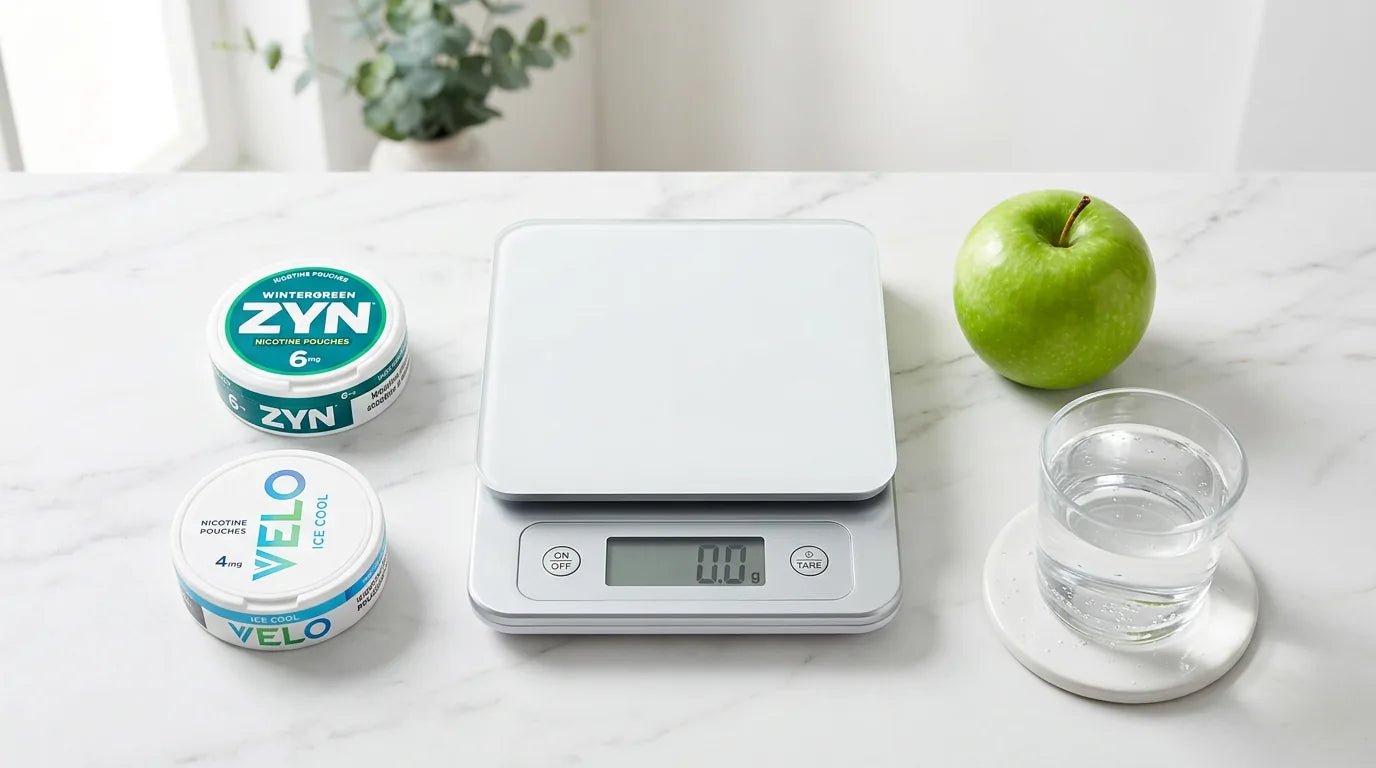
There's a reason nicotine pouches and appetite suppression have become a genuine search topic in 2026 — nicotine really does interact with hunger signals in the brain. The science is well-established enough that researchers at Yale University identified a specific receptor pathway through which nicotine triggers satiety. But the full picture is more complicated than "pouches kill hunger." This guide breaks down the actual mechanisms, the limits of the effect, and what pouch users should know before drawing conclusions about body weight.
Key Takeaways
- Nicotine activates specific brain receptors that send satiety signals — the effect is real, not imagined
- Hunger hormones ghrelin (appetite-triggering) and leptin (fullness) are both affected by nicotine use
- Any metabolic boost from nicotine is short-term and fades with tolerance — it does not compound over time
- Nicotine pouches deliver the same nicotine mechanisms as other products, but are not a proven or recommended weight management tool
- Stopping nicotine use often causes temporary weight gain, primarily through behavioural compensation rather than metabolic change
How Nicotine Suppresses Appetite in the Brain
The appetite-suppressing effect of nicotine isn't a side effect — it's a direct result of how nicotine interacts with the central nervous system. When nicotine enters the bloodstream, it binds to nicotinic acetylcholine receptors throughout the brain, triggering the release of several neurotransmitters including dopamine, norepinephrine, and serotonin.
Researchers at Yale University identified a specific receptor subtype — the α3β4 nicotinic receptor — that plays a direct role in sending satiety signals when activated by nicotine. This pathway runs through the hypothalamus, the brain region that governs appetite regulation. When these receptors fire, the brain interprets the signal as "fed" even when no food has been consumed.
Dopamine and norepinephrine also play a secondary role. These neurotransmitters are strongly associated with reward processing — and food is one of the brain's primary rewards. When nicotine floods the dopamine system, it partially satisfies the reward circuitry that would normally drive hunger and eating behaviour. The practical result is a blunted appetite response.
This mechanism applies to all nicotine delivery formats — cigarettes, patches, gum, and nicotine pouches alike. What differs is the speed of delivery and the peak nicotine concentration reached, both of which influence how pronounced the appetite effect feels in the short term.
The Hunger Hormones: Ghrelin and Leptin
Beyond neurotransmitter effects, nicotine also interacts with the endocrine system — specifically with the two hormones most directly linked to hunger and fullness.
Ghrelin is often called the "hunger hormone." It's secreted primarily by the stomach wall and signals the brain to initiate eating. Research published in the International Journal of Endocrinology found that even a single instance of nicotine exposure can reduce salivary ghrelin levels significantly, which may reduce the subjective sensation of hunger and diminish food's appeal.
Leptin works in the opposite direction — it signals fullness and tells the brain to stop eating. Studies examining smokers compared to non-smokers found that nicotine users tend to have lower leptin levels, which creates an interesting situation: reduced ghrelin (less hunger drive) alongside reduced leptin (less fullness signalling). The net effect for most users is a blunted overall appetite response rather than a clean on/off switch.
It's worth noting that this hormonal disruption is temporary and subject to tolerance. Users who consume nicotine daily often report that the hunger-blunting effect weakens over weeks as the endocrine system compensates. The same nicotine dose that suppressed appetite in week one may have minimal effect by week eight.
Does Nicotine Boost Your Metabolism?
The metabolic angle is real but often overstated. Nicotine is a stimulant — it increases heart rate and activates the sympathetic nervous system, which in turn raises resting energy expenditure. This is a genuine, measurable effect.
Research examining nicotine's effects on energy balance found that nicotine can elevate both resting metabolic rate and physical activity energy expenditure, likely through catecholaminergic (adrenaline-related) pathways. One study suggested nicotine shifts the body's fuel preference toward fat burning by lowering the respiratory exchange ratio — meaning the body uses more fat relative to carbohydrate as an energy source.
The caveat is tolerance. The metabolic boost from nicotine is most pronounced in new or infrequent users. In regular daily users, the stimulant effect diminishes substantially as the nervous system adapts. This is why smokers who quit typically don't gain large amounts of weight from metabolic slowdown alone — the metabolic contribution of their nicotine use was already largely blunted by tolerance.
For nicotine pouch users, the metabolic picture is essentially the same. A fresh 6 mg ZYN or VELO will raise heart rate and create a short-term metabolic bump. That effect reduces progressively with daily use and should not be factored into any weight management strategy.
Do Nicotine Pouches Have the Same Effect as Cigarettes?
The nicotine mechanisms — receptor binding, hormone effects, metabolic stimulation — are consistent across delivery formats. What changes is the pharmacokinetic profile: how quickly nicotine reaches the brain and at what concentration.
Cigarettes deliver nicotine to the bloodstream in under 10 seconds via lung absorption, producing a rapid, high-peak effect. Nicotine pouches absorb through oral mucosa over 20–40 minutes, producing a slower, lower-peak but longer-sustained release. This means the appetite-suppressing hit from a pouch is more gradual and less sharp than from a cigarette.
In practical terms, pouch users are likely to experience a more diffuse appetite blunting effect rather than the immediate hunger-killing spike associated with smoking. Brands like LOOP, XQS, and lighter-strength options at 3–6 mg deliver a milder effect, while higher-strength products like ZEUS 16 mg, C.R.E.A.M Icy Cold, or KUMA Extra Strong will produce a more pronounced stimulus response.
There is no specific research on tobacco-free nicotine pouches and appetite suppression in isolation — most studies use cigarettes or nicotine patches as the delivery vehicle. The mechanistic parallels are strong enough to assume the core effects transfer, but the absence of pouch-specific data is worth acknowledging.
The Weight Gain Risk When You Stop
This is arguably the most practically relevant part of the nicotine-weight relationship for most pouch users. Stopping nicotine use is associated with temporary weight gain — but the mechanism is primarily behavioural, not metabolic.
When nicotine is removed, the brain's reward system loses a frequent input. For many people, the response is to compensate with food — particularly high-sugar, high-fat options that activate similar dopamine pathways. This substitution behaviour, not a meaningful slowdown in metabolism, explains the majority of post-cessation weight gain.
The appetite hormones also normalise. Ghrelin levels rebound after stopping nicotine, sometimes producing a period of heightened hunger in the first 1–2 weeks. This is temporary — levels typically stabilise within a month — but it's a real and uncomfortable experience for many users stopping for the first time.
The practical implication: if you're planning a tolerance break or stepping away from pouches for any reason, planning non-food substitutes (water, exercise, gum) for the first two weeks is a sensible way to avoid the compensatory eating pattern.
Should You Use Pouches to Control Your Appetite?
The honest answer is no — not as a primary strategy. The appetite-suppressing effect is real but inconsistent, highly tolerance-dependent, and not studied specifically in the context of nicotine pouches. More importantly, there is no evidence that nicotine pouch use translates to measurable, sustained weight loss in controlled conditions.
The 2024 "O-Zyn-Pic" trend — referring to ZYN pouches being used as a budget alternative to GLP-1 weight loss drugs — was a social media trend rather than a clinical approach. Endocrinologists and physicians have been clear that while nicotine does suppress appetite by mechanism, the evidence for nicotine products as a practical weight management tool simply isn't there.
Nicotine pouches are for adults who want a tobacco-free nicotine product. They are not a weight loss device, and using them primarily for appetite control sets up a use pattern that builds tolerance quickly, potentially escalates to higher strengths, and creates dependency without a product-aligned purpose. Use them for what they do well.
Frequently Asked Questions
Do nicotine pouches suppress appetite?
Yes, nicotine pouches suppress appetite through the same mechanisms as other nicotine products. Nicotine activates receptors in the hypothalamus that trigger satiety signals, and it influences ghrelin (hunger hormone) and leptin (fullness hormone) levels. The effect is real but weakens with regular use as tolerance develops — most daily users find it diminished within weeks.
Can nicotine pouches help with weight loss?
There is no clinical evidence that nicotine pouches cause measurable, sustained weight loss. While nicotine does provide a short-term metabolic boost and appetite suppression, both effects are tolerance-dependent and not significant enough to function as a weight management strategy. Physicians and researchers do not recommend nicotine products for weight control purposes.
Why do people gain weight when they stop using nicotine pouches?
The weight gain associated with stopping nicotine is primarily behavioural — the brain compensates for the lost reward input by seeking food rewards, particularly sweet and fatty foods. Ghrelin levels also temporarily rebound after nicotine cessation, increasing hunger signals for 1–2 weeks. The metabolic contribution is relatively minor.
Does the strength of a nicotine pouch affect its appetite-suppressing properties?
Higher-strength pouches (11 mg and above) produce a more pronounced stimulant response and a stronger short-term appetite effect compared to 3–6 mg options. However, tolerance builds faster at higher strengths, so the advantage is short-lived. There is a diminishing returns dynamic: the same higher-strength pouch that strongly suppressed appetite in week one may have little effect by week six of daily use.
Is the nicotine-appetite link the same for pouches as for cigarettes?
The underlying mechanisms — receptor binding, hormone effects, metabolic stimulation — are consistent across nicotine delivery formats. The main difference is pharmacokinetics: cigarettes deliver nicotine faster and at a higher peak, producing a sharper appetite-suppressing effect. Nicotine pouches produce a slower, more gradual absorption curve, so the appetite effect is more diffuse but also longer-sustained per session.
Final Thoughts
The science confirms nicotine does interact with appetite — through receptor pathways, hunger hormones, and a modest metabolic effect. None of that makes nicotine pouches a weight management product. What it does mean is that daily pouch users are experiencing a physiologically real appetite interaction, not a placebo, and understanding that interaction helps set expectations around tolerance, stopping, and strength selection.
If you're looking for the right product to start or maintain a routine, browse the full range including ZYN, VELO, LOOP, XQS, and more — all shipped fast to the EU with free delivery on orders over €99.