

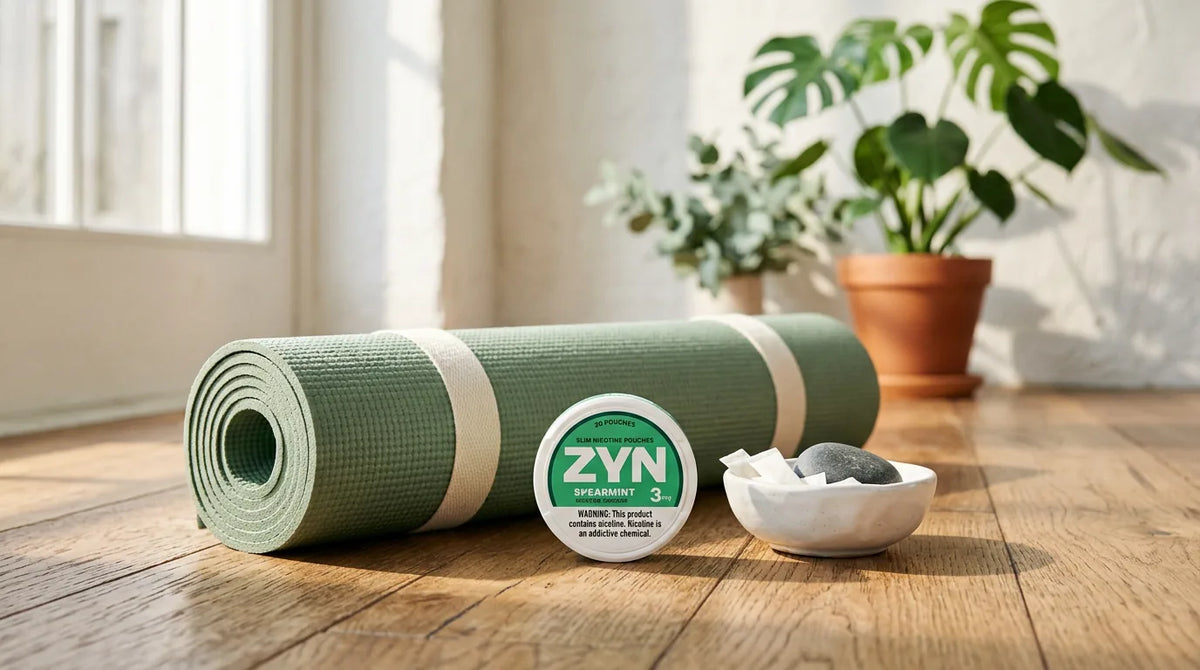
More people who practice yoga and mindfulness also use nicotine pouches than you might expect. The overlap makes sense: both involve intention, breath, and the question of how you manage your mental and physical state throughout the day. If you're a regular yogi who also uses nicotine pouches, this guide helps you think about when, how, and which formats work best within a mindfulness-focused lifestyle.
- Nicotine pouches are smoke-free and hands-free — compatible with the physical demands of yoga without interrupting practice
- Intentional use — pausing to consciously decide before using a pouch — is a direct mindfulness practice that improves your relationship with nicotine
- The best formats for a wellness lifestyle are slim, low-moisture pouches that sit discreetly and comfortably during extended stillness (meditation, savasana)
- Most yoga practitioners who use nicotine pouches find the light-to-regular strength range (3–6mg) most compatible with a calm, present-focused practice
- Nicotine pouches are not consumed during active asana — the morning routine window before practice, and the recovery window after, are the natural use moments
Why Nicotine Pouches and Yoga Can Coexist
Yoga philosophy has a practical side that many practitioners live daily: you make choices about what you put in or on your body, how you use your time, and how you manage craving and discomfort. Nicotine is a legal substance that millions of adults use; the question for a mindful practitioner isn't whether nicotine use is inherently incompatible with yoga, but whether your relationship with it is intentional and conscious.
Tobacco-free nicotine pouches remove many of the physical incompatibilities that smoking or vaping would create: no smoke, no breath impact, no carbon monoxide, no hands occupied, no smell on clothing or the practice space. For teachers who smoke between classes or practitioners who step outside mid-session, the transition to pouches often dramatically improves the experience for themselves and those around them.
The format also supports stillness in a way that cigarettes cannot. A slim pouch from ZYN or VELO can be placed and forgotten during a 45-minute session — it releases gradually, unobtrusively, and doesn't demand your attention. This makes it categorically more compatible with a mindful practice than any combustion-based product.
The Mindful Use Framework: Pause Before You Pouch
The most powerful mindfulness practice you can bring to your nicotine use doesn't require a yoga mat. It's a simple two-step check before every pouch: stop, and ask why. Are you reaching for a pouch because of genuine nicotine need, because of habit and autopilot, or because of a specific emotional state (stress, boredom, restlessness)? This pause is itself a mindfulness practice — applying present-moment awareness to a habitual behaviour.
Research into habit formation suggests that the pause disrupts the automatic trigger-routine-reward cycle. When you insert a moment of conscious choice, the pouch use remains your decision rather than your autopilot's. Over time, this shifts your relationship with nicotine from compulsive to intentional — a shift that aligns directly with what yoga philosophy calls svadhyaya (self-study) and tapas (disciplined practice).
The practical version is simple: before placing a pouch, take two conscious breaths. Notice what you're feeling. Then decide. You'll often find you still want the pouch — and that's fine. Occasionally you'll find you were reaching out of habit and don't actually need it. Both outcomes are valuable.
When to Use Pouches Around Yoga Practice
| Timing | Recommendation | Why |
|---|---|---|
| 30–60 min before practice | ✅ Good window | Nicotine peaks and clears during warm-up; alertness benefit without mid-practice distraction |
| During active asana | ⚠️ Not ideal | Inverted postures, twists, and breath-focused work don't mix well with anything in the mouth |
| During seated meditation / savasana | ✅ Compatible if placed before | A slim pouch placed before lying down is comfortable during extended stillness |
| Post-practice recovery (0–30 min after) | ✅ Natural window | The post-practice calm is a good moment for intentional, slower-paced use |
| Evening wind-down | ⚠️ Choose low strength | Nicotine can interfere with sleep onset if used within 1–2 hours of bed — choose 3mg or below |
Best Nicotine Pouch Formats for a Mindful Practice
Not all pouches are equally suited to a yoga-adjacent lifestyle. The key properties for mindful use are: slim format (sits discreetly), low moisture (comfortable during extended stillness), clean flavour (mint and citrus are the most universally tolerated), and the right strength for your tolerance level.
- ZYN Slim (3mg or 6mg) — The benchmark for discreet, dry-format pouches. Barely noticeable once placed. Mint flavours work especially well with a fresh-breath wellness mindset. No tobacco, no moisture drip.
- VELO Slim (4mg or 7mg) — Slightly softer texture than ZYN, broad flavour range including citrus and fresh mint. 24 pouches per can improves daily value for regular practitioners.
- LOOP (9mg) — A single-strength option that works well for experienced users who want a reliable, measured dose. The "one setting" approach simplifies the decision-making that mindful use frameworks try to encourage.
- XQS Slim (4–6mg) — Swedish Scandinavian precision in a gentle strength range. Clean, cool flavours that don't linger in the practice space.
- Discreet formats — Any ultra-slim, low-drip format that you can wear without consciousness during movement or stillness.
Morning Routine Integration
For many practitioners, the clearest integration point is the morning routine — that window of personal time before the demands of the day arrive. A typical mindful morning might look like: wake, hydrate, meditation or breathing practice, movement (yoga or walking), then breakfast. Where does nicotine fit?
The most natural window for a regular pouch user is after morning water and before or during meditation. At this point, alertness is welcome, the pace is still, and there's no active physical movement that makes a pouch uncomfortable. The calm, focused quality that nicotine provides at low-to-moderate doses can complement a meditation session rather than disrupt it — provided the strength is calibrated to enhance rather than overstimulate.
For this window, 3–6mg is the sweet spot. ZEUS, C.R.E.A.M, and KUMA all offer options in this range, though for morning practice specifically, the clean flavour profiles of ZYN Spearmint or VELO Citrus tend to feel most appropriate. Save the stronger variants (9mg+) for later in the day when mental demands are higher.
Managing Tolerance Through Mindful Rotation
One practical benefit of the mindful use framework is natural tolerance management. When you use pouches intentionally rather than automatically, you tend to use fewer per day. This keeps your nicotine sensitivity calibrated — preventing the tolerance creep that turns a 6mg pouch into an eventual 11mg need over months of automatic, habitual use.
Yoga practitioners often find that their general body awareness extends to nicotine sensitivity — they notice the quality and onset of each pouch more clearly than non-practitioners who are less attuned to internal sensation. This heightened awareness is an advantage: it means you're more likely to stop at the right moment, use the right strength, and avoid the numbing that comes from chronic overuse.
FAQ: Nicotine Pouches and Yoga
Can I use a nicotine pouch during yoga?
During active asana practice — particularly inversions, twists, and breath-focused sequences — it's not recommended. A pouch can be uncomfortable and distracting during dynamic movement. The pre-practice and post-practice windows, and during extended seated meditation or savasana, are more natural moments for use.
What's the best strength for a yoga and meditation lifestyle?
For most practitioners, 3–6mg aligns best with a calm, present practice. This range provides enough nicotine to satisfy cravings and support focus without the potential overstimulation that higher strengths can produce. ZYN 3mg and 6mg, and VELO 4mg, are the most commonly cited choices among wellness-focused users.
Do nicotine pouches affect breathing or lung capacity?
Tobacco-free nicotine pouches have no direct effect on respiratory function. Unlike cigarettes, they produce no combustion byproducts and do not affect the airways, bronchial tissue, or lung capacity. Your pranayama practice, breathwork, and cardiorespiratory endurance are not impacted by pouch use in the way that smoking categorically is. NHS NRT guidance confirms oral nicotine products do not damage the respiratory system.
Is it possible to use nicotine pouches mindfully long-term?
Yes — many people maintain stable, intentional nicotine use for years without tolerance escalation or dependency intensification. The key is the pause-and-decide habit, keeping strength calibrated to actual need rather than creep, and using variety rotation (different brands and flavours) to prevent habitual lock-in to a single stimulus pattern.
Final Thoughts
The combination of nicotine pouches and a yoga or mindfulness lifestyle isn't a contradiction — it's an invitation to bring the same intentional awareness you apply on the mat to every choice you make. Slim, clean formats like ZYN, VELO, and XQS fit seamlessly into a wellness-oriented morning routine. Use the pause-before-you-pouch habit as a daily practice in itself. Browse the full discreet slim nicotine pouches range at The Snus Outlet — free EU shipping on orders over €99.
Share:
Nicotine Pouches in Norway 2026: Snus Is Legal, Pouches Are Not — What You Need to Know