

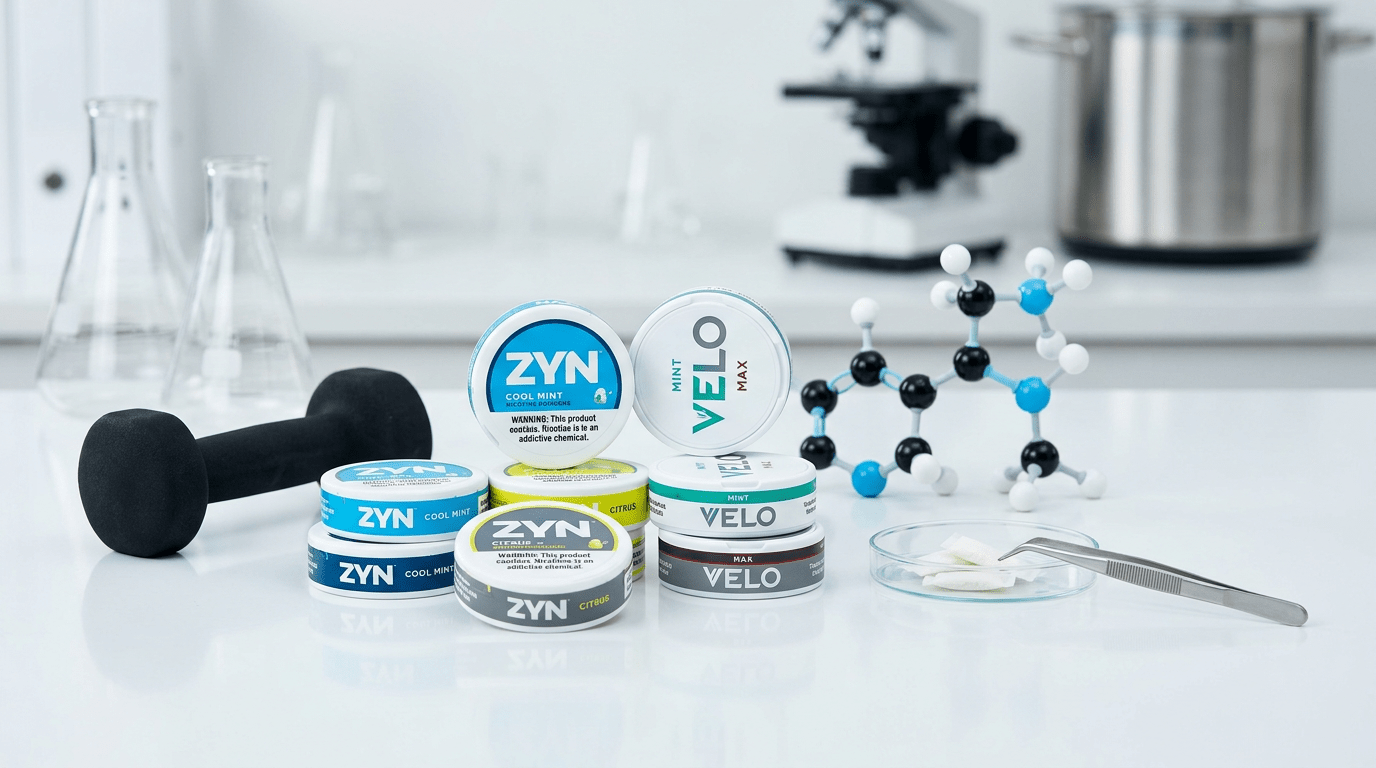
- There are currently no dedicated clinical studies on nicotine pouches and testosterone specifically — most data comes from research on cigarettes, nicotine gum, or cotinine levels.
- Short-term nicotine exposure may cause temporary fluctuations in testosterone (both small spikes and dips have been observed), but these effects are inconsistent and not clinically significant for most users.
- Long-term, heavy nicotine use — primarily from cigarettes — is associated with lower testosterone over time, partly due to direct Leydig cell damage from combustion toxins as well as nicotine's effect on the hormonal axis.
- The most relevant proxy data (nicotine gum studies) suggests minimal testosterone impact at moderate doses — largely because gum shares nicotine delivery via oral absorption without combustion, similar to pouches.
- Nicotine raises cortisol with regular use, which can indirectly suppress testosterone — particularly important for daily, high-strength users.
The question of whether nicotine pouches affect testosterone has become one of the most searched health questions around pouch use — and the honest answer is more nuanced than most articles admit. There's genuinely limited data on pouches specifically. What we have is broader research on nicotine from multiple delivery formats, and it points in a few directions at once.
This is not a topic with a clean verdict. Here's the actual science, without the spin. For context on the full range of health research on pouches, see our 2026 best nicotine pouches guide.
Why the Question Is Complicated
Most studies examining nicotine and testosterone use cigarette smokers as the study population. This makes clean conclusions difficult, because cigarette smoke contains over 7,000 chemicals — many of which have their own direct toxic effects on testosterone-producing tissues, independent of nicotine. Separating "nicotine causes this" from "combustion toxins cause this" is methodologically challenging.
Nicotine pouches, by contrast, contain no tobacco leaf and produce no combustion. They are the most direct proxy for isolated nicotine delivery without the combustion confounders. The closest existing research analogue is nicotine gum — which also delivers nicotine orally without burning. That research shows a more modest hormonal picture than cigarette data would suggest.
What Happens to Testosterone Short-Term
Short-term nicotine exposure has mixed effects on testosterone. When nicotine enters the bloodstream, it stimulates the adrenal glands and briefly activates the hypothalamic-pituitary axis. Some studies have observed a small, temporary rise in luteinizing hormone (LH), which signals the testes to produce testosterone — leading to a brief spike. Other studies, including work using nicotine gum in healthy adult males, have observed the opposite: a short-term dip of roughly 10–15%, followed by recovery.
Neither effect is stable or significant for most users at moderate doses. What both findings confirm is that nicotine does interact with hormonal systems in the short term — it's not hormonally inert. But the swings are small, transient, and unlikely to have meaningful impact on daily hormone levels for an average adult male using pouches at normal frequency.
Nicotine, Cortisol, and the Indirect Route
The more clinically relevant pathway is indirect: nicotine reliably raises cortisol (the primary stress hormone). This is well-established across multiple delivery formats. Cortisol and testosterone have an inverse relationship — chronically elevated cortisol suppresses the hypothalamic-pituitary-gonadal (HPG) axis, reducing testosterone output over time.
For occasional or moderate users, cortisol spikes from nicotine are transient and the HPG axis recovers. For daily heavy users — particularly those using multiple high-strength pouches throughout the day — the sustained cortisol load becomes more relevant. This is the most plausible mechanism through which regular pouch use could, over time, contribute to lower testosterone in susceptible individuals. It is not unique to pouches; it applies to any regular nicotine use format.
What Long-Term Research on Nicotine and Smoking Shows
The longer-term picture from smoking research is concerning but partially confounded. A 2025 study published in Health Science Reports found that male cigarette smokers had significantly lower total testosterone levels (400 ng/dL) compared to non-smokers (510 ng/dL) — a roughly 22% difference. The researchers identified chronic hypoxia, oxidative stress, and nicotine's direct effects on the HPG axis as contributing mechanisms. They also found Leydig cell damage in testicular tissue — the cells responsible for testosterone production.
The critical question is: how much of that damage is caused by nicotine itself versus by the combustion toxins in cigarettes? The honest answer is: we don't fully know yet. There is strong reason to believe combustion toxins play a significant direct role in Leydig cell damage that nicotine-only products do not replicate. This is why extrapolating cigarette testosterone data directly to nicotine pouches is scientifically imprecise.
What the Nicotine Gum Data Shows (The Closest Proxy)
Nicotine replacement products — especially gum — are the closest research proxy for pouches. They deliver controlled doses of nicotine via oral mucosal absorption without combustion, sharing the same basic delivery mechanism. Studies using nicotine gum generally show minimal to no sustained effect on total testosterone at therapeutic doses. Some studies found no significant difference in testosterone between nicotine gum users and placebo controls over study periods of 4–12 weeks.
This is broadly consistent with the mechanistic picture: nicotine has short-term hormonal interactions, but without the Leydig cell destruction associated with combustion toxins, the long-term testosterone impact appears substantially lower than what smoking research shows. Moderate pouch use — analogous to nicotine gum use — is therefore unlikely to produce the testosterone suppression pattern seen in heavy smokers.
Effects in Women
Research on nicotine's hormonal effects in women centres on estrogen and reproductive function rather than testosterone. A 2022 review in Current Research in Toxicology documented that nicotine inhibits aromatase activity — the enzyme that converts testosterone to estradiol — which can disrupt estrogen-progesterone balance. Studies have found that female nicotine users experience higher rates of menstrual irregularities and reduced estradiol production in some contexts. The effects appear dose-dependent and are likely modulated by individual hormonal baseline.
For women using nicotine pouches at moderate doses for extended periods, these mechanisms are worth being aware of — particularly for those with hormonal sensitivities or who are trying to conceive. Nicotine use is generally not recommended during pregnancy regardless of delivery format.
Dose, Frequency and Context Matter Enormously
| Usage pattern | Testosterone impact (likely) | Cortisol impact | Notes |
|---|---|---|---|
| Occasional use (1–3 pouches/week) | Negligible | Transient, recovers quickly | Body resets between sessions |
| Moderate daily use (4–8 pouches/day, 6–11mg) | Minimal | Elevated during use periods | Most common usage pattern |
| Heavy daily use (10+ pouches/day, high-strength) | Possible gradual suppression | Chronically elevated | Cortisol mechanism most relevant here |
| Switching FROM cigarettes TO pouches | Likely improvement over baseline | Reduced vs cigarettes | Removing combustion toxins is the key win |
Frequently Asked Questions
Do nicotine pouches lower testosterone?
There are no studies showing nicotine pouches specifically lower testosterone. The broader nicotine research is mixed: long-term heavy smoking is associated with lower testosterone, but this is likely partly due to combustion toxins directly damaging Leydig cells — an effect that tobacco-free pouches would not replicate. Nicotine does elevate cortisol with regular use, which can indirectly suppress testosterone over time. Moderate, controlled pouch use is unlikely to produce meaningful testosterone suppression in healthy adults. According to NHS guidance on nicotine use, nicotine replacement products without combustion have a markedly lower systemic harm profile than cigarettes.
Can nicotine increase testosterone?
Some studies show a brief, transient spike in LH (which drives testosterone production) following nicotine exposure. But this effect is inconsistent, short-lived, and not a reliable or meaningful testosterone boost. Nicotine is not a testosterone-enhancing compound in any clinically useful sense, and using it with that intention would expose you to risks far outweighing any marginal short-term hormonal fluctuation.
Is it better to use pouches than cigarettes if I care about testosterone?
Based on current evidence, yes — if you already use nicotine. The Leydig cell damage and oxidative stress associated with cigarette smoking appear to be substantially driven by combustion toxins, not nicotine alone. Switching to tobacco-free pouches removes the combustion and tobacco leaf components associated with the most direct testicular tissue damage seen in smoking research. A complete switch is the harm-reduction improvement; dual use (both pouches and cigarettes) does not provide the same benefit.
Do high-strength pouches affect testosterone more than regular ones?
Potentially. Higher nicotine doses produce stronger and more sustained cortisol responses. If testosterone suppression from pouches does occur in heavy users, it is most plausibly via this cortisol mechanism — meaning higher-strength products used more frequently carry greater theoretical risk. For users concerned about this, maintaining moderate strength (6–11mg) and not exceeding 8–10 pouches per day is a reasonable precaution.
What does the research specifically say about ZYN, VELO or LOOP and testosterone?
No brand-specific testosterone research exists for ZYN, VELO, LOOP, or any other nicotine pouch brand. All three use pharmaceutical-grade nicotine in tobacco-free formats — the hormonal effects would be driven by nicotine content and usage frequency, not by brand. The most relevant comparable research is on nicotine gum, which shows minimal sustained testosterone effects at therapeutic doses.
Final Thoughts
The honest verdict: nicotine pouches interact with hormonal systems through cortisol and short-term HPG axis activation, but the evidence for meaningful testosterone suppression from pouch-specific nicotine delivery is currently limited. The more severe testosterone effects seen in smoking research appear largely linked to combustion toxins — which pouches don't produce. Heavy daily use remains something to be mindful of via the cortisol pathway, but moderate use by healthy adults is unlikely to produce clinically significant hormonal disruption.
If you're switching from cigarettes to pouches with testosterone health in mind, the research suggests that change is directionally positive. Browse our full range at The Snus Outlet's 2026 picks, all tobacco-leaf-free, with free EU shipping on orders over €99.