

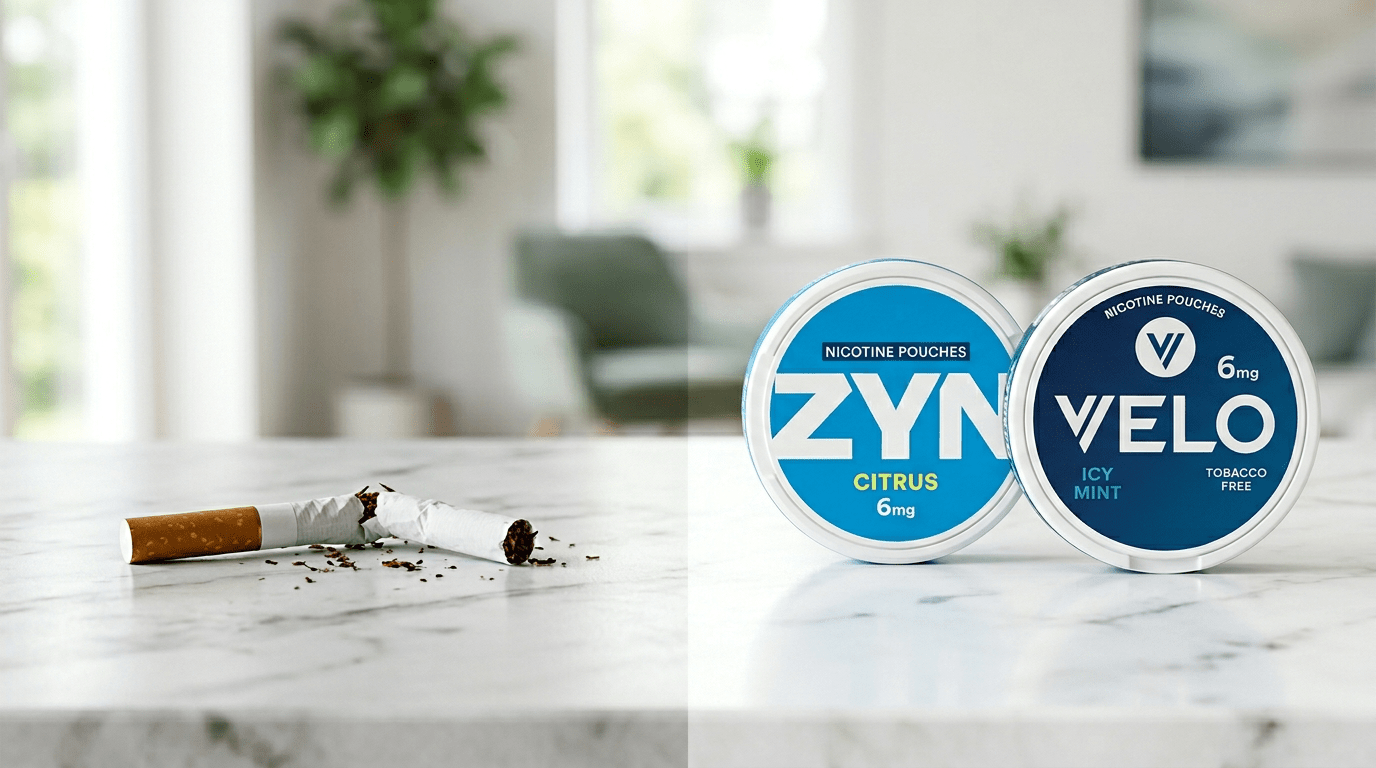
- The biggest mistake new switchers make is choosing a pouch that's too weak — match your nicotine intake to your current cigarette consumption before stepping down.
- Replacing the hand-to-mouth habit and smoke break ritual is just as important as replacing the nicotine — pouches solve the nicotine side, you need a plan for the ritual side.
- Most successful switchers report feeling comfortable with pouches by Day 3–5. The first 48 hours are the hardest.
- Start with ZYN 11mg, VELO 10mg, or LOOP 9.4mg if you smoke 10–20 cigarettes per day — these match typical smoking nicotine delivery closely.
- According to NHS guidance on nicotine replacement, using an NRT product you actually like and can stick with is the most reliable predictor of a successful switch.
Switching from cigarettes to nicotine pouches is one of the most effective harm-reduction steps a smoker can take. But it's not automatic — the first days can feel uncomfortable, cravings hit unexpectedly, and most people make the same avoidable mistakes. This is the complete step-by-step guide: what to do, when to do it, and how to make the switch stick.
Start by browsing our curated nicotine pouches for quitting smoking — stocked specifically for users making the switch from cigarettes, with recommended brands and strengths at every level.
Why Switching Isn't Always Straightforward
Cigarette addiction has two layers. The first is nicotine dependence — your body's physical need for the compound. The second is behavioural habit — the smoke break routine, the hand-to-mouth action, the post-meal cigarette. Nicotine pouches solve the first problem completely. They don't solve the second on their own.
This is why many people who try a nicotine pouch for the first time find it "doesn't feel the same" — not because the pouch is ineffective, but because the ritual cue isn't there. Understanding this from the start prevents the common conclusion that "pouches don't work for me." They work. The adjustment period is real, and it passes.
Step 1 — Calculate Your Nicotine Replacement Level
The most common early failure is under-dosing. Most smokers massively underestimate how much nicotine they get from cigarettes and start with pouches that are far too weak. Each cigarette delivers roughly 1–2mg of absorbed nicotine (from a 10–14mg cigarette, absorption is partial due to combustion variability). Here's how to match your intake:
| Daily cigarettes | Estimated daily nicotine absorbed | Recommended starting pouch strength | Recommended brands |
|---|---|---|---|
| 5–10 per day (light smoker) | ~5–15mg | 6mg pouches | ZYN 6mg, VELO Easy Mint 4mg, XQS 6mg |
| 10–20 per day (regular smoker) | ~15–30mg | 11mg pouches | ZYN 11mg, VELO 10mg, LOOP 9.4mg |
| 20–30 per day (heavy smoker) | ~25–45mg | 11–14mg pouches | ZYN 14mg, VELO Freeze 14mg, ZEUS Strong |
| 30+ per day (very heavy smoker) | ~40–60mg | 14–17mg pouches | VELO Freeze X-Strong 17mg, ZEUS Extra Strong |
Start at the right level or one step higher than you think you need. You can step down later — but if you start too low and feel unsatisfied, you'll go back to cigarettes. Stepping down is easier than fixing a failed switch. See the full strength range in our strong nicotine pouches collection.
Step 2 — Choose Your Starter Pouch
For most cigarette smokers switching to pouches, the best starting points are brands with clean nicotine delivery, no drip, and familiar flavour profiles. Avoid ultra-sweet or dessert flavours at first — they can feel jarring as a cigarette replacement. Start with mint, spearmint, or tobacco-adjacent flavours.
- ZYN Cool Mint 11mg — the most widely recommended first pouch for ex-smokers. Dry format, no drip, consistent delivery, familiar cool-mint sensation that pairs well with post-meal and stress triggers.
- VELO Ice Cool Mint 10mg — slightly more active at the gum than ZYN, which some smokers find more satisfying. Slightly more intense initial hit.
- LOOP Minted 9.4mg — the longest-lasting option at 50–60 minutes per pouch. Ideal if you currently smoke frequently and need longer inter-session cover.
- ZEUS Ice 11mg — a slightly sharper, bolder delivery that some ex-smokers describe as feeling closer to the "bite" of a cigarette.
Step 3 — The First 24 Hours
This is the hardest part. Your body will trigger smoke cravings based on the usual patterns — waking up, finishing meals, stress moments, waiting around. Each time you feel a trigger, reach for a pouch instead of acting on it.
Place the pouch under your upper lip, against the gum. You'll feel a mild tingle within 2–3 minutes — this is the nicotine starting to absorb. By minute 5, most users feel satisfied enough that the craving passes. Leave the pouch in for 20–40 minutes; don't chew or suck it. The first pouch of each day will feel strongest — this is normal and passes as your body adjusts to the delivery format.
One important note: do not use cigarettes and pouches at the same time. Dual use defeats the purpose and can cause nicotine overconsumption. The goal is replacement, not addition. If you slip and have a cigarette, that's fine — start again with the next trigger.
Step 4 — Managing Week One: The Trigger Plan
The first week is about identifying and substituting your four or five main smoking triggers. For most people these are: morning coffee, post-meal, stress/anxiety, social situations, and boredom. Each needs a planned response.
- Morning coffee trigger: Place a pouch before you finish your first coffee. The nicotine absorption pairs naturally with the stimulant effect of caffeine — many ex-smokers find this combination works better than the cigarette ever did.
- Post-meal trigger: Place a pouch immediately after finishing eating. The 30-minute satisfaction window covers exactly the post-meal period where cravings are strongest.
- Stress/anxiety trigger: This is the hardest one because stress creates a sharp craving spike. A slightly stronger pouch for high-stress moments (ZYN 14mg instead of 11mg, for example) can help bridge the gap. Give it 5 minutes before evaluating whether you still need a cigarette — you usually won't.
- Social situations: Tell your smoking friends in advance that you're switching. The social pressure to join a smoke break is real. A pouch lets you stay present in social settings without needing to step outside.
- Boredom trigger: This is the easiest to handle — a pouch gives you something to "do" orally in the same way a cigarette did. The pouch wins here just by existing.
Step 5 — Month One: Stepping Down
After the first week, most switchers are comfortable. The urge to pick up a cigarette weakens significantly once your body has recalibrated to oral nicotine delivery. Month one is about beginning the optional step-down: reducing pouch strength progressively if your goal is eventually reducing nicotine dependence entirely.
A practical step-down schedule: spend 2–3 weeks at your starting strength, then drop by one tier (14mg → 11mg, 11mg → 6mg). Wait 2–3 weeks before dropping again. Don't rush it. According to WHO guidance on tobacco cessation, gradual reduction is more effective than abrupt stops for managing withdrawal symptoms and maintaining compliance. There's no obligation to step down — using pouches long-term at a stable strength is a legitimate harm-reduction outcome on its own.
Check our light nicotine pouches selection when you're ready to step down — 3–6mg options from ZYN, VELO, XQS and others.
What to Expect: A Timeline
- Day 1–2: Cravings are strong, especially at trigger moments. Push through with a pouch each time. The nicotine delivery is real — trust it.
- Day 3–5: The edge comes off. You stop actively craving cigarettes and start simply defaulting to the pouch.
- Week 2: You'll notice taste and smell improving. Morning lung congestion reduces. The pouch feels natural.
- Month 1: Most switchers report they no longer want a cigarette at all — the idea starts to seem unappealing compared to the clean simplicity of a pouch.
- Month 3+: Trigger associations fade. Coffee no longer demands a smoke. Meals feel complete without one. The switch is done.
Frequently Asked Questions
Can nicotine pouches actually replace cigarettes?
Yes — for nicotine delivery, completely. A 11mg ZYN or VELO pouch delivers comparable absorbed nicotine to smoking 5–6 cigarettes depending on your smoking style. What pouches don't replace is the smoke, the ritual, and the social habit. Those require a conscious plan to substitute. The NHS smoking cessation guide recommends addressing both the physical and behavioural components for best results.
What strength pouch should a 20-a-day smoker start with?
Start with 11mg. ZYN Cool Mint 11mg or VELO Ice Cool Mint 10mg are the two most commonly recommended options for regular smokers. If after the first day you're still feeling strong urges despite using pouches, step up to 14mg. It's far better to match your current intake on day one than to feel deprived and relapse. Browse the quit smoking collection for recommended switcher picks at every level.
Will I get nicotine cravings between pouches?
In the first 1–2 days, possibly. The absorption profile of pouches is slightly different from cigarettes — pouches provide sustained delivery over 30–60 minutes rather than a fast spike. Once you've adjusted to the delivery format (usually by Day 3), the sustained nicotine level from regular pouch use is enough to prevent inter-pouch cravings entirely for most users.
How many pouches per day is normal when switching?
For a 20-a-day smoker: typically 8–14 pouches in the first days, settling to 6–10 per day by Week 2. One pouch per usual smoke trigger is a practical starting rule. As the switch settles and trigger intensity decreases, the number naturally reduces. See our full guide to how many pouches per day is safe for detailed guidance.
Is it safe to switch from cigarettes to nicotine pouches?
All current evidence says yes — substantially. Cigarettes are the leading preventable cause of cancer, heart disease, and lung disease globally. Nicotine pouches are tobacco-leaf-free, produce no combustion products, and contain none of the tar, PAHs, formaldehyde, or carbon monoxide found in cigarette smoke. The risk reduction from a complete switch is significant. No long-term pouch-specific cancer data exists yet, but the mechanistic case for substantially lower risk is strong and well-supported.
Final Thoughts
Switching from cigarettes to nicotine pouches is one of the clearest harm-reduction wins available to a smoker today. The nicotine delivery is real, the products are convenient and discreet, and the evidence base for reduced health risk is solid. Match your strength correctly, plan your triggers, and get through the first 48 hours — after that, the momentum is with you.
Get started with our full nicotine pouches for quitting smoking collection at The Snus Outlet. All tobacco-leaf-free, free EU shipping over €99, dispatched from Stockholm in 2–7 days. Your first pouch is the hardest one to commit to — make it count.