

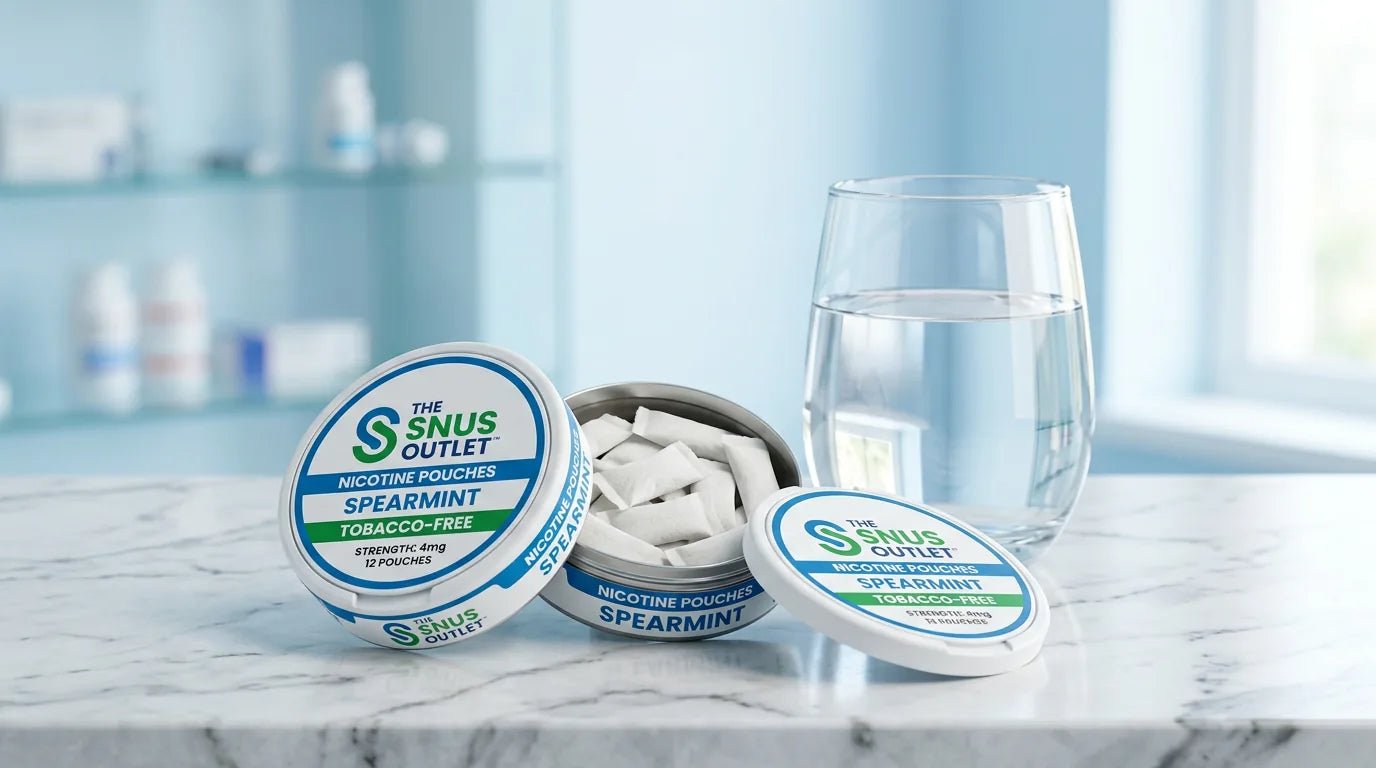
Accidentally swallowed a nicotine pouch? For most adults, one pouch is not a medical emergency — but it is worth understanding exactly what happens, what to watch for, and when to act. This guide covers the pharmacology honestly, distinguishes between adult and child risk, and gives you a clear action plan if it happens. If a child or pet has swallowed a pouch, skip straight to that section and contact your local poisons helpline. If you are new to nicotine pouches and want to reduce any such risk, starting with lower-strength options is always the smarter move.
Key Takeaways
- For healthy adults, swallowing one nicotine pouch typically causes mild nausea at worst — the nicotine dose is far below toxic thresholds
- The pouch material (cellulose filler) is inert — it is not toxic and passes through the digestive system without harm
- Children and pets face meaningfully higher risk — even a low-strength pouch can cause symptoms in a small child or cat
- Do not induce vomiting — contact your national poisons helpline for guidance if concerned
- Lower-strength pouches (3–6mg) carry less risk if swallowed than high-strength variants (14–17mg)
What Actually Happens When You Swallow a Nicotine Pouch?
When you swallow a nicotine pouch, two things enter your digestive system: the pouch material (a small bag of plant-based cellulose filler) and the residual nicotine remaining in the pouch at the time of swallowing.
The pouch material itself is essentially inert. The cellulose filler used in brands like ZYN, VELO, LOOP and ZEUS is the same class of material used in some food products and pharmaceutical capsules. Your body cannot digest it, but it causes no harm — it passes through the digestive tract and is excreted normally. The small paper or fleece pouch wrapper also passes through without issue.
Nicotine is the only active concern. During normal use, nicotine is absorbed through the mucous membrane inside your lip — a direct, fast route into the bloodstream that bypasses the digestive system. When nicotine enters the stomach instead, it faces a different and less efficient absorption pathway. Stomach acid partially denatures the nicotine, and a significant portion is broken down in the liver before reaching systemic circulation (the "first-pass effect"). According to published pharmacokinetic data on nicotine, oral bioavailability via the gastrointestinal route is substantially lower than sublingual or buccal absorption — meaning less nicotine reaches your bloodstream than if you had simply used the pouch normally.
How Much Nicotine Is in a Nicotine Pouch?
Understanding the dose is key to understanding the risk. Nicotine pouches currently on the European market range from 3mg (ZYN 3mg, light options) to 17mg (VELO Freeze Max) for mainstream brands, with ultra-strong specialist brands reaching 30mg or more. Most daily-use pouches fall in the 6–11mg range.
| Brand / Variant | Nicotine per Pouch | Category |
|---|---|---|
| ZYN 3mg | 3mg | Light / beginner |
| ZYN 6mg / VELO 6mg | 6mg | Standard / everyday |
| ZYN 11mg / LOOP 15.6mg | 11–16mg | Strong |
| VELO Freeze 17mg | 17mg | Extra strong |
| ZEUS / Pablo strong | 20–30mg+ | Ultra strong |
Importantly, during normal use you absorb 50–80% of the available nicotine through your gums. If you swallow a used pouch (which most accidental swallows are), the remaining nicotine content is already depleted. If you swallow a fresh, unused pouch, the full listed dose is present — though still subject to the reduced GI absorption efficiency described above.
Is Swallowing One Pouch Dangerous for Adults?
For a healthy adult, swallowing a single mainstream nicotine pouch is unlikely to cause serious harm. Here is the dose context: the minimum amount of nicotine estimated to cause symptomatic toxicity in a healthy adult is approximately 1–2mg per kilogram of body weight. For a 70kg adult, that is 70–140mg of nicotine — far more than any single pouch contains, even accounting for GI absorption.
A 17mg VELO pouch swallowed fresh delivers perhaps 5–8mg into systemic circulation after first-pass metabolism and reduced GI absorption. That is roughly equivalent to the effect of heavy gum use, not anything approaching a toxic dose in an adult. The most likely outcome is mild nausea, increased saliva production, or a light headache — symptoms that pass within 30–60 minutes without any treatment beyond drinking water and resting.
The situation changes if multiple pouches are swallowed, if the person is unusually small or sensitive, or if the pouch is an ultra-strong variant. Use common sense and contact poison control if anything feels off.
Symptoms to Watch For
| Symptom | Severity | Action |
|---|---|---|
| Mild nausea | Low | Drink water, sit quietly — resolves within 1 hour |
| Increased saliva / drooling | Low | Normal response to nicotine — no action needed |
| Headache or dizziness | Low | Rest, drink water — monitor for escalation |
| Stomach cramps / abdominal pain | Moderate | Contact NHS 111 or national poisons helpline for guidance |
| Vomiting | Moderate | Do not induce further — contact poison control |
| Rapid heartbeat or chest tightness | High | Seek emergency medical attention immediately |
| Seizure, loss of consciousness, difficulty breathing | Emergency | Call 999 / 112 immediately |
The last three rows represent severe nicotine toxicity — extremely unlikely from a single mainstream pouch in an adult, but included for completeness. If you feel unwell beyond mild nausea, always err on the side of calling your national poisons helpline rather than waiting.
Children and Pets: When the Risk Is Higher
Children and pets are a different matter entirely. Minimum toxic doses scale with body weight, and a small child or household pet has a fraction of an adult's weight. A 10kg toddler has a minimum toxic threshold of roughly 10–20mg of nicotine — within range of a single 17mg high-strength pouch, and potentially concerning even for a standard 6mg pouch.
If a child swallows a nicotine pouch: call your national poisons helpline immediately. In the UK: 0345 129 6655 (National Poisons Information Service). In the EU, use your country's specific number. In the US: 1-800-222-1222 (Poison Control). Do not wait for symptoms to appear — nicotine absorption can be delayed.
If a pet swallows a nicotine pouch: contact an emergency veterinary clinic or the Animal Poisons Line (UK: 01202 509000) immediately. Cats are particularly sensitive to nicotine, and even a 3mg pouch poses a genuine risk to a cat or small dog.
This is why secure storage matters. Keep nicotine pouches in a high cupboard, ideally with a child-safe lock. The built-in disposal compartment on most can lids is not a substitute for secure storage — it just contains used pouches until you can discard them properly.
The Pouch Material: Is the Filler Itself Toxic?
No. The white pouch material is made from plant-based cellulose fibres — the same class of material used in many food products and pharmaceutical tablet coatings. It is not digestible, but it is not toxic. It will not cause obstruction or damage to the digestive tract in normal circumstances.
The flavourings, sweeteners (sucralose or acesulfame K) and pH adjusters (sodium carbonates) present in trace amounts are all approved food-grade ingredients. In the microscopic quantities found in one pouch, they pose no digestive risk to an adult. For children with specific food sensitivities, the poisons helpline can give specific guidance.
What to Do If You Swallow a Nicotine Pouch
- Stay calm. For adults, one mainstream-strength pouch is very unlikely to cause serious harm.
- Do not try to induce vomiting. Unless instructed by a medical professional or poison control, inducing vomiting can cause additional harm.
- Drink a glass of water to help move the pouch through your system.
- Monitor for symptoms for the next 60–90 minutes. Mild nausea or dizziness is possible but not dangerous.
- If a child or pet is involved: call poison control or an emergency vet immediately — do not wait for symptoms.
- If symptoms escalate (vomiting, rapid heartbeat, chest tightness): seek medical attention or call emergency services.
How to Avoid Swallowing Pouches in the First Place
Accidental swallowing is most common when users fall asleep with a pouch in, talk or eat while using one, or are new to the format and misjudge placement. A few simple habits eliminate almost all risk:
- Position correctly — tuck the pouch high and flat under your upper lip, not loose in your mouth
- Start with lower strengths — ZYN 3mg or 6mg have lower nicotine content if an accidental swallow does happen
- Do not use pouches while eating or drinking — especially liquids, which can dislodge a pouch easily
- Avoid using pouches in bed — falling asleep with a pouch in is the most common cause of accidental swallowing
- Set a timer — 30–45 minutes is the standard session; removing the pouch on schedule prevents forgetting it is there
Frequently Asked Questions
What happens if you swallow a ZYN pouch?
Swallowing a ZYN pouch as a healthy adult will most likely cause mild nausea or no symptoms at all. ZYN pouches range from 3mg to 11mg of nicotine — well below adult toxic thresholds. The pouch material (cellulose) is inert and passes through the digestive system without harm. Drink water, rest, and monitor for symptoms. Contact poison control if you feel unwell beyond mild nausea, or if a child is involved.
Is it dangerous to swallow nicotine pouch juice?
Swallowing the liquid that sometimes collects in the mouth during pouch use ("pouch drip") is common and generally harmless for adults. The nicotine concentration in this fluid is low. It can cause mild stomach discomfort in sensitive individuals, particularly if you swallow repeatedly during a session. Choosing a drier pouch format — such as ZYN or dry-format XQS — produces significantly less drip than moister VELO variants.
Can you die from swallowing a nicotine pouch?
For a healthy adult swallowing a single mainstream pouch (3–17mg), the answer is no. The nicotine dose is far below adult lethal thresholds, and GI absorption is lower than buccal absorption. The risk profile is entirely different for small children, where even a standard-strength pouch contains nicotine in the range of potentially symptomatic doses. If a child swallows a pouch, treat it as a serious event and contact poison control immediately.
How long does it take for symptoms to appear after swallowing a pouch?
If symptoms occur at all, they typically appear within 15–30 minutes of ingestion as nicotine begins to be absorbed through the gastrointestinal tract. Peak effects usually occur within 60–90 minutes and then diminish. If you feel completely normal after two hours, it is unlikely anything will develop. If you feel unwell earlier than that, do not wait — contact poison control for guidance.
What should I do if my child swallows a nicotine pouch?
Call your national poisons helpline immediately: UK 0345 129 6655 (NPIS), EU countries have local numbers, US 1-800-222-1222 (Poison Control). Do not wait for symptoms to appear, do not induce vomiting, and be ready to tell them the brand, strength and approximate time of ingestion. If your child shows any symptoms — drowsiness, vomiting, pale skin — go to emergency services directly.
Final Thoughts
Swallowing a nicotine pouch accidentally is an understandable concern, but for adults using mainstream-strength products, it is not the emergency it might initially seem. The dose is low, GI absorption is reduced compared to normal use, and the pouch material itself is harmless. The key exceptions — children, pets, multiple pouches, or ultra-strong variants — all warrant an immediate call to poison control rather than a wait-and-see approach.
The simplest preventive measure: use lower-strength pouches, position them correctly, and store your cans away from children and pets. Browse the full range at The Snus Outlet — free EU shipping over €99, full brand selection including beginner-friendly 3mg and 4mg options from ZYN, VELO, XQS and KUMA.