

There's a reason people with ADHD use nicotine at roughly twice the rate of the general population. It's not coincidence — it's neuroscience. Nicotine acts on the same dopaminergic and noradrenergic systems that ADHD medications target, and for many people, the short-term focus benefit is real. But so is the risk. This article breaks down what the science actually shows, why ADHD users are particularly vulnerable to dependency, and what to think about if you have ADHD and use nicotine pouches.
- People with ADHD use nicotine at 2x the rate of the general population — research links this to self-medication of attention deficits
- Nicotine stimulates the same neurotransmitter systems targeted by ADHD medications — dopamine and norepinephrine release via nAChRs
- Controlled studies confirm short-term attention and impulse-control improvements in adults with ADHD using nicotine
- Dependency risk is significantly elevated in ADHD — tolerance develops quickly and the focus benefit fades as baseline nicotine levels rise
- Nicotine is not a recognised ADHD treatment and is not a substitute for clinical management — but understanding the mechanism helps you make informed choices
Why ADHD and Nicotine Are Biologically Linked
ADHD is primarily a disorder of dopaminergic and noradrenergic regulation in the prefrontal cortex (PFC). The PFC governs working memory, attention, impulse control and executive function — and in ADHD, these systems are underactive relative to baseline.
Nicotine works through nicotinic acetylcholine receptors (nAChRs) distributed throughout the brain, including densely in the PFC. When nicotine binds to these receptors, it triggers the release of dopamine, norepinephrine, and serotonin. In terms of mechanism, this overlaps substantially with how methylphenidate (Ritalin) and amphetamine-based medications (Adderall) work — both increase dopamine and norepinephrine signalling in the PFC.
This isn't a coincidence. The hypothesis that ADHD patients self-medicate with nicotine is well-supported in the literature, and explains why rates of nicotine use have historically been dramatically higher in this population. The fact that nicotine provides a real, biologically grounded short-term benefit is what makes the dependency risk so significant.
What the Research Actually Shows
Multiple controlled trials have found that nicotine produces measurable improvements in attention, processing speed and inhibitory control in adults with ADHD. A 2025 longitudinal cohort study published in JAMA Network Open found that ADHD symptom severity was directly correlated with the onset and continuation of nicotine use — confirming that symptomatic individuals are significantly more likely to initiate and maintain a nicotine habit, and that treatment of ADHD symptoms appears protective against nicotine initiation.
Earlier clinical studies using nicotine patches in ADHD adults found statistically significant improvements on:
- Sustained attention — reduced omission errors on continuous performance tasks
- Impulsivity — improved response inhibition on go/no-go tasks
- Working memory — better digit span and verbal recall performance
- Processing speed — faster and more consistent reaction times
These effects are real in the short term — but they come with an important caveat. The same studies found the effects diminish with repeated exposure as nicotine tolerance develops. Within weeks of regular use, baseline performance in the presence of nicotine drops back toward pre-use levels, meaning more nicotine is needed to achieve the same state.
The Self-Medication Trap
This is the core problem with using nicotine as an ADHD management tool. The initial relief is genuine — a 4 mg or 6 mg pouch from a brand like ZYN, VELO or XQS at light strength can provide a real, noticeable lift in the first weeks. But the brain adapts. Nicotinic receptors downregulate with chronic exposure, meaning your baseline attention state — without nicotine — deteriorates over time.
The result is a cycle where you need nicotine to feel normal rather than enhanced. You're no longer gaining focus; you're preventing a withdrawal deficit. Users who don't recognise this pattern find themselves using progressively more frequently, at higher strengths, to maintain a baseline that has shifted downward.
For ADHD users specifically, this dynamic is compounded by the impulsivity that defines the condition. The short time-horizon decision-making characteristic of ADHD makes it harder to resist escalation — "more works better, right now" — without the executive function to weigh long-term consequences.
Why Dependency Risk Is Higher in ADHD
Research consistently shows that ADHD is associated with elevated rates of substance use disorders broadly — not just nicotine. This has a neurobiological explanation: the dopamine reward system in ADHD is underactivated at baseline, making any dopaminergic stimulus (including nicotine, caffeine, alcohol, stimulants) more reinforcing relative to neurotypical individuals.
In practical terms, this means:
- The initial positive reinforcement of nicotine is felt more strongly
- Tolerance develops faster because the dopamine system is already tuned for scarcity
- Withdrawal symptoms (irritability, poor concentration, fatigue) are more pronounced
- The impulse to re-dose is harder to resist due to impulsivity and lower tolerance for discomfort
None of this means you shouldn't use nicotine pouches if you have ADHD — but it does mean the risk calculus is different from neurotypical users. Awareness of this pattern is the first step to managing it consciously.
Practical Guidance for ADHD Users Considering Pouches
If you have ADHD and use or are considering nicotine pouches, the following framework helps minimise dependency risk while still allowing controlled use:
| Strength Tier | Daily Limit Recommendation | Risk Level | Example Brands |
|---|---|---|---|
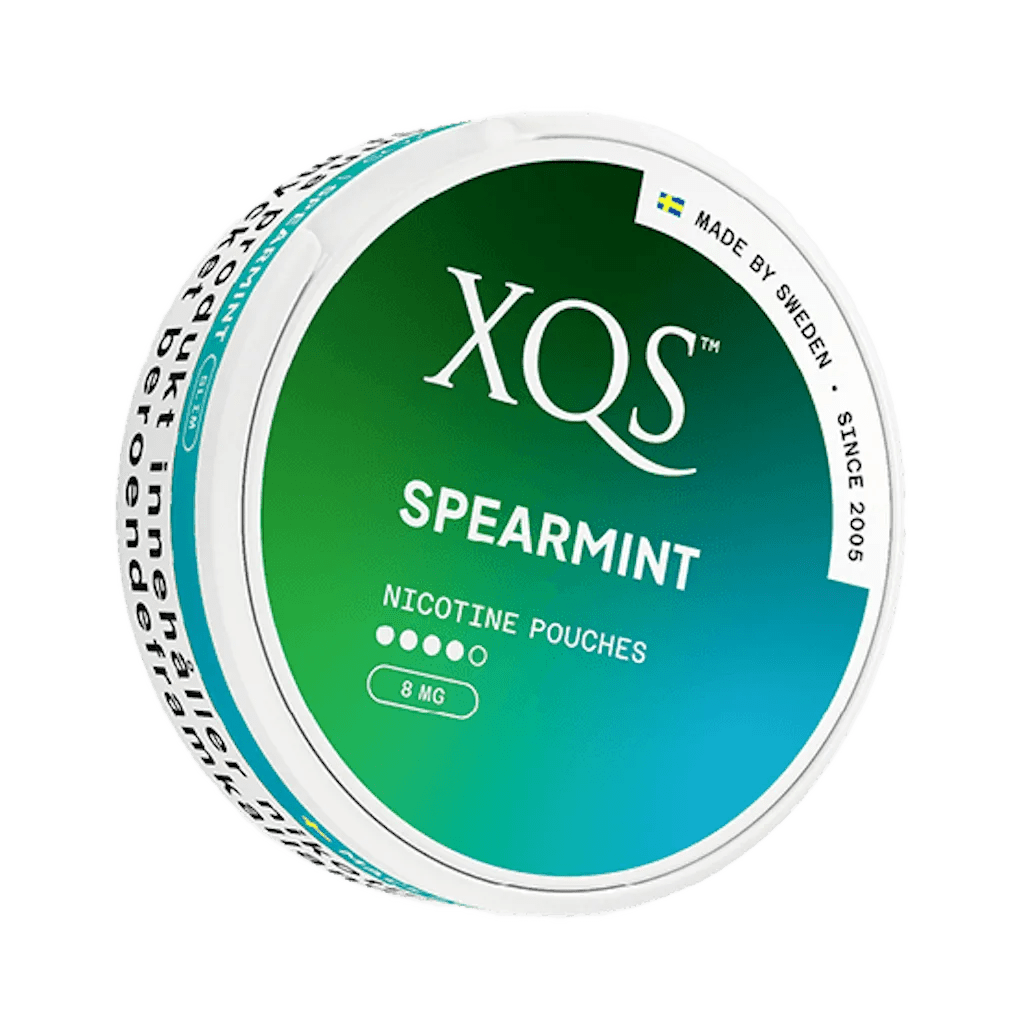
| Light (3–5 mg) | 4–6 per day maximum | Lower — modest dopamine stimulation | ZYN 3 mg, VELO 4 mg, XQS 4 mg |
| Regular (6–8 mg) | 2–4 per day | Moderate — monitor tolerance weekly | ZYN 6 mg, LOOP 6 mg, KUMA 8 mg |
| Strong (9–12 mg) | 1–2 per day | Elevated — ADHD escalation risk | VELO 10 mg, ZEUS 12 mg, C.R.E.A.M 10 mg |
| Extra/Ultra Strong (16–25 mg) | Avoid for daily ADHD use | High — tolerance accelerated | ZEUS 25 mg, XQS 16 mg |
Key principles:
- Start at the lowest effective strength — go up only if genuinely necessary
- Space use to specific tasks (a morning session before focused work) rather than all-day use
- Take regular 1–2 day breaks each week to prevent the baseline from shifting downward
- Never use nicotine as a replacement for or reason to delay clinical ADHD treatment
Nicotine Is Not an ADHD Treatment — The Clear Limits
This bears stating directly. Despite the overlapping neuroscience, nicotine is not a recognised treatment for ADHD and should not be used as one. There are no approved nicotine products for ADHD management in any jurisdiction. Clinical ADHD treatments — including methylphenidate, lisdexamfetamine, atomoxetine and non-stimulant options — have decades of controlled evidence behind them and do not carry the same dependency profile as nicotine.
If you are managing ADHD without medication and considering nicotine as a functional tool, that's a personal decision. But making it with accurate information — including the tolerance and dependency risks specific to ADHD neurobiology — is more important than for any other group of nicotine users.
Explore the range of best nicotine pouches in 2026 if you're looking for reliable options at the right strength for controlled daily use.
Frequently Asked Questions
Does nicotine actually help ADHD symptoms?
In the short term, yes — controlled studies confirm that nicotine improves attention, impulse control and working memory in adults with ADHD. The mechanism is real: nicotine stimulates dopamine and norepinephrine release in the prefrontal cortex via nAChRs, the same pathway targeted by prescription ADHD medications. The catch is that tolerance develops rapidly, and with repeated use the benefit disappears while dependency builds.
Why do so many people with ADHD smoke or use nicotine?
Rates of nicotine and tobacco use in ADHD are approximately double the general population. The leading explanation is the self-medication hypothesis: nicotine provides immediate relief of attention and focus deficits that the ADHD brain experiences chronically. A 2025 JAMA Network Open cohort study confirmed the longitudinal link between ADHD symptom severity and nicotine initiation, and found that effective ADHD treatment reduces the likelihood of later nicotine use.
Are nicotine pouches safer than cigarettes for ADHD users?
From a physical health perspective, yes — tobacco-free nicotine pouches like ZYN, VELO, LOOP, C.R.E.A.M and ZEUS eliminate combustion-related carcinogens. The dependency risk profile, however, is not meaningfully better. Nicotine is nicotine — the route of delivery changes the harm profile for the lungs and throat, but the dopaminergic dependency mechanism is the same. ADHD users should not view pouches as a risk-free alternative in terms of addiction potential.
Should I use nicotine pouches instead of ADHD medication?
No. Nicotine is not a recognised ADHD treatment, has no approved dosing protocol for this purpose, and carries real dependency risks — particularly elevated in ADHD. Prescription ADHD medications have a well-established evidence base and are designed for sustained, clinical effect. If you are using nicotine as a workaround for untreated ADHD, the most effective step is accessing clinical support for the underlying condition.
What strength pouch is best for focus without dependency risk?
The lowest strength that produces a noticeable effect for you — typically 3–6 mg for most adults. Starting at light-strength options available at The Snus Outlet and using them infrequently (not all-day, every day) gives you access to the cognitive benefit while slowing tolerance development. Avoid jumping to strong or ultra-strong variants — the dopamine-deficit baseline in ADHD makes you significantly more vulnerable to rapid tolerance and dependency escalation.
Final Thoughts
The link between ADHD and nicotine is real, well-documented and biologically grounded. For many users, pouches provide a genuine short-term focus benefit that feels qualitatively similar to ADHD medication. But the tolerance curve is steep, the dependency risk is elevated, and long-term self-medication with nicotine produces a worse baseline — not a better one.
The smart move is informed, structured use: the lightest strength that works, limited frequency, and regular breaks. If you're looking for a well-priced starting point, the outlet deals on nicotine pouches offer ZYN, VELO, LOOP and more at competitive prices — free EU shipping on orders over €99.