
Put your nicotine pouch between your upper lip and gum — that is the correct answer, and it matters more than most users realise. Upper lip placement delivers nicotine more efficiently, causes less drip, and keeps the pouch stable throughout the session. Whether you are new to ZYN or switching from snus, getting the placement right in 2026 is the single biggest factor in enjoying a clean, consistent experience.
Key Takeaways
- Upper lip is always better — better nicotine absorption, less saliva, more comfort
- Lower lip placement triggers excess saliva, dumps nicotine too quickly, and causes drip
- Rotate position across your upper gum between sessions to avoid localised irritation
- Never chew or suck the pouch — let it sit still for a sustained, even release
- Dry formats (ZYN, ZEUS) activate slower; moist formats (LOOP, C.R.E.A.M) hit faster — adjust expectations accordingly
Comfort starts with the right format: slim and mini pouches sit flatter under the lip and are easier to place correctly. Explore our mini nicotine pouches or browse the full nicotine pouches range to find your fit.
Why Placement Changes Your Entire Experience
Most first-time users assume all placement spots are equal. They are not. The oral mucosa — the soft tissue lining your mouth — varies significantly in its ability to absorb nicotine depending on where the pouch sits. Getting this wrong means wasting a good pouch.
The upper gum (buccal mucosa) sits close to a dense network of capillaries and maintains a higher pH, which favours nicotine uptake. According to research from the National Institute on Drug Abuse (NIDA), nicotine crosses mucosal membranes more efficiently at higher pH levels — and the upper gum delivers exactly that. Most quality pouches are engineered with this in mind.
The lower gum tells a different story. It sits directly above the major sublingual salivary glands. A pouch placed there floods itself with saliva, washes nicotine away before it can absorb, and creates the drip that puts so many new users off. The result: a weak, inconsistent hit followed by an uncomfortable wet feeling. That is a placement problem, not a product problem. If drip keeps bothering you, our guide to nicotine pouch drip causes and fixes goes deeper.
Upper Lip vs Lower Lip: The Full Comparison
| Factor | Upper Lip | Lower Lip |
|---|---|---|
| Nicotine absorption | Optimal — high-pH buccal mucosa | Below average — diluted by saliva |
| Saliva production | Low to moderate | High — triggers major gland stimulation |
| Drip risk | Minimal | High |
| Pouch stability | Stays in place easily | Moves around more |
| Discretion | Barely visible from outside | More noticeable lip bulge |
| Gum irritation risk | Lower if you rotate positions | Higher — more sensitive tissue |
| Nic sickness risk | Low with correct strength | Higher — nicotine delivered in one spike |
The verdict is clear: upper lip every time. The lower lip might work in a pinch if you have no choice, but it undermines what a quality pouch like LOOP or XQS is engineered to deliver.
Step-by-Step Placement Guide
Getting this right takes about 30 seconds. Once it becomes muscle memory, you will never think about it again.
- Wash your hands. Nicotine pouch material is porous — bacteria transfer happens easily. A quick rinse before handling keeps the experience hygienic.
- Take one pouch from the can. Hold it gently between thumb and forefinger. Do not squeeze — you do not want to pre-release the flavour or compress the pouch material before it reaches your gum.
- Lift your upper lip. Place the pouch between the upper lip and gum, either centre-front or slightly to one side. Avoid resting it directly against the front teeth — prolonged tooth contact can cause mild enamel abrasion over time.
- Press your lip gently. Hold it against the pouch for a few seconds. The warmth and slight moisture from your gum tissue will start to activate the nicotine and flavour compounds immediately.
- Leave it completely alone. Do not chew, suck, or reposition it. Fidgeting disrupts the absorption process, compresses the pouch, and increases drip. Trust the design — these pouches are engineered to work without intervention.
- Remove after 20–45 minutes. Most pouches are designed for this window. The nicotine release continues well after the flavour fades — removing the pouch the moment you stop tasting it means you are cutting the session short.
If you are finding your first few sessions overwhelming, start with the beginner-friendly nicotine pouches at 3 mg or 6 mg. Lower strength makes learning the placement comfortable before you scale up. Completely new to pouches? Read our complete starter guide for 2026 first.
How Brand Format Affects Placement Feel
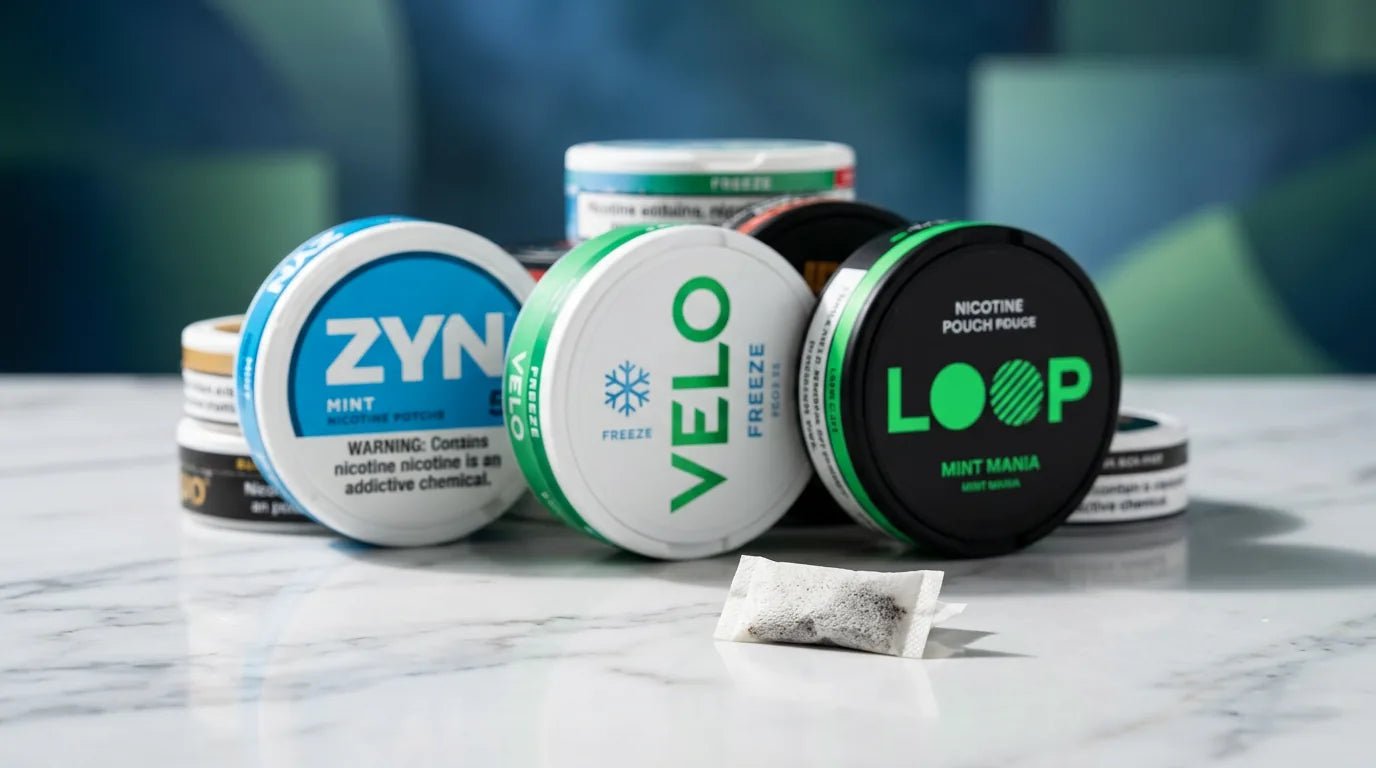
Not all pouches sit the same way under your lip. The format — slim versus regular, dry versus moist — changes how the pouch feels during placement and how quickly it activates. Understanding this helps you pick the right product for your context.
| Brand | Format | Moisture Level | Placement Experience |
|---|---|---|---|
| ZYN | Mini / Slim | Dry | Barely noticeable — activates in 2–4 min, ideal for beginners |
| VELO | Slim | Dry-to-moist | Soft, conforms to the gum naturally — easy to forget it is there |
| LOOP | Regular / Slim | Moist (Instant Rush) | Larger feel, immediate flavour — strong first few minutes |
| XQS | Slim | Dry-to-moist | Light and comfortable — works well for 40+ minute sessions |
| ZEUS | Regular | Dry | Solid and stable — does not move even during physical activity |
| C.R.E.A.M | Regular / Slim | Moist | Immediate intense flavour — dramatic first hit, softens over time |
| KUMA | Slim | Dry | Discreet and lightweight — comfortable all-day format |
Dry formats like ZYN and KUMA take a few minutes to fully activate because they draw moisture from your gum tissue first. Moist formats like LOOP and C.R.E.A.M deliver flavour and nicotine almost immediately. Neither is objectively better — it depends entirely on whether you want a slow burn or an instant experience.
Where Exactly to Position the Pouch Along the Upper Gum
"Upper lip" is the answer, but there are three distinct zones worth knowing about. Experienced users rotate between these to avoid concentrating contact on a single area.
- Centre-front zone: The most natural starting position — symmetrical and accessible. Best for new users. Avoid pressing directly against the front incisors over many consecutive sessions.
- Canine zone (left or right): A slight natural pocket forms here where the gum curves inward beside the canine tooth. Many experienced users prefer this spot for its security and reduced tooth contact. Absorption quality here is identical to the centre.
- Premolar zone (further back): The most discreet position — completely invisible even at close range. Useful in social settings or professional environments. Absorption is slightly slower here due to reduced blood vessel density compared to the front zones.
Rotate between these three zones across your daily sessions. Using the exact same spot repeatedly causes localised gum irritation — not dangerous, but unnecessary. Most regular pouch users develop a natural rotation instinctively after a few weeks.
Common Placement Mistakes and How to Fix Them
Most of the discomfort that new users attribute to the pouch itself is actually a placement issue. These are the most common errors.
- Placing it too far back. If you can feel the pouch resting near your back molars, it is too far. Move it forward to the canine or front zone. Pouches placed too far back are harder to remove cleanly and increase swallowing risk.
- Chewing or pressing the pouch repeatedly. This compresses the material and causes a sharp, uncomfortable nicotine spike rather than a sustained release. Place it and leave it.
- Defaulting to the lower lip. This is the most common mistake, usually caused by habit from chewing tobacco or dip products. Consciously place in the upper lip for your first few sessions — the habit forms quickly.
- Removing it when the flavour fades. The flavour peak typically arrives in the first 5–15 minutes. The nicotine release continues for another 20–30 minutes after that. Pulling the pouch at the 10-minute mark leaves most of the experience on the table.
- Starting at too high a strength. A correctly placed 16 mg or 20 mg pouch in the upper lip is very potent for a first-time user. Dizziness or nausea means the strength is wrong, not the placement. Step down to a 3 mg or 6 mg product before working up.
Placement During Exercise, Work and Social Settings
Context changes what the ideal placement experience looks like. A desk session and a training session require different approaches.
During exercise: Opt for a dry, slim format — ZYN, ZEUS or KUMA — and anchor it in the canine zone. Physical exertion increases mouth breathing and saliva slightly. A dry format compensates naturally. Avoid moist formats like LOOP or C.R.E.A.M during intense cardio, as the increased airflow and saliva accelerates drip and can cause the pouch to shift.
At work or in meetings: A mini or slim pouch in the centre-front or canine zone is completely invisible. The slim formats from VELO and XQS are designed with exactly this context in mind — flat, unobtrusive, zero visible lip bulge.
During travel: Long flights, train journeys or road trips are ideal pouch sessions — you are stationary, relaxed, and the 30–40 minute session window passes naturally. A 6 mg dry slim is the most versatile choice for travel. Never use a pouch during sleep — prolonged contact without the ability to monitor it is not advisable, and swallowing risk increases while unconscious.
Browse the best nicotine pouches of 2026 to find formats matched to your daily routine — from ultra-discreet minis to high-strength options for experienced users.
FAQ: Nicotine Pouch Placement
Should I put a nicotine pouch in my upper lip or lower lip?
Always use your upper lip. The buccal mucosa in the upper gum absorbs nicotine more efficiently than the lower lip, which sits above the major salivary glands and produces excess saliva that dilutes the pouch. Upper lip placement is also more discreet, more stable, and carries a lower risk of nicotine sickness from an uncontrolled dump.
How long should I keep a nicotine pouch in?
Most pouches are designed for sessions of 20 to 45 minutes. The flavour typically fades well before the nicotine release ends — removing the pouch the moment it loses taste means cutting the session short. Leave it in until you feel the nicotine effect has fully levelled off, usually around the 30-minute mark for regular-strength formats.
Why does my nicotine pouch cause too much saliva?
Excessive saliva is almost always a placement issue. A pouch in the lower lip, or placed too far back in the mouth, sits on or near the sublingual salivary glands and triggers excess production. Move the pouch to the upper front zone and switch to a dry format like ZYN or ZEUS — both produce significantly less drip than moist alternatives like LOOP or C.R.E.A.M.
Can I use a nicotine pouch while eating or drinking?
Remove the pouch before eating — food particles contaminate the material and alter absorption. You can drink plain water during a session without issue. Avoid hot drinks and acidic beverages like coffee or orange juice, as they temporarily lower oral pH and can reduce nicotine absorption efficiency for the remainder of the session.
How do I stop nicotine pouches from irritating my gums?
Rotate your placement position between sessions — alternate between the centre-front, left canine and right canine zones to avoid concentrating contact on one spot. Also verify you are using the correct strength — placing a 16 mg or 20 mg pouch against unaccustomed gum tissue is the most common cause of irritation. Drop down to 6 mg and build up gradually.
Final Thoughts
Placement is the foundation of a quality pouch experience. Get it wrong and even a premium LOOP or ZYN will underdeliver — inconsistent nicotine, excess drip, gum soreness. Get it right and those same pouches perform exactly as designed: clean release, good flavour, no mess. Upper lip, front zone, rotate between sessions, and leave the pouch alone once it is in. That is the entire technique.
If you are still finding your ideal format, check the outlet deals section — up to 60% off on selected lines across ZYN, VELO, LOOP, ZEUS and more. Free EU shipping on orders over €99.