

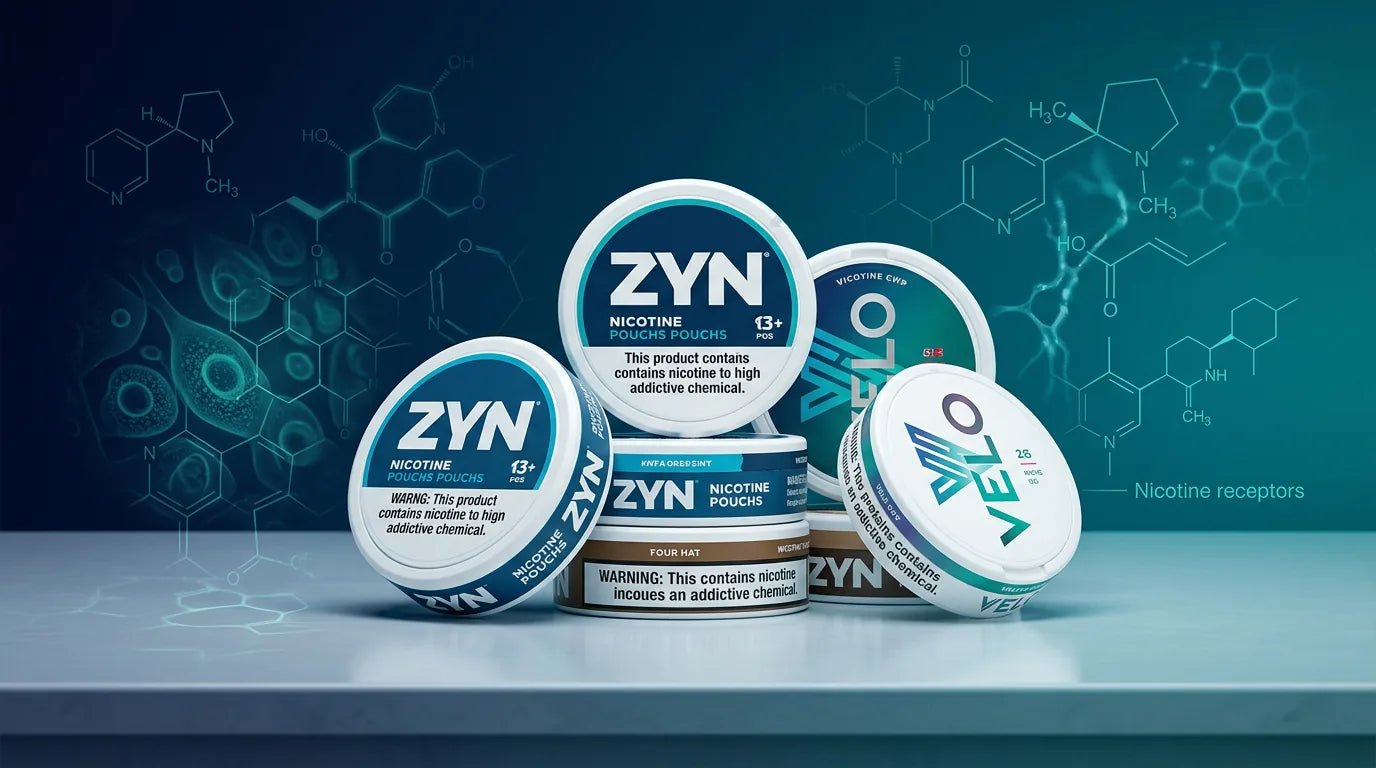
Ask most people whether nicotine is anti-inflammatory and you'll get a look of disbelief. Nicotine is toxic, right? It causes disease. But the science tells a more nuanced story — and for nicotine pouch users, the distinction between nicotine itself and tobacco combustion products has never mattered more. Here's what the research actually says about nicotine and inflammation.
- Nicotine activates the cholinergic anti-inflammatory pathway (CAP) via the alpha-7 nicotinic acetylcholine receptor (α7nAChR) — reducing pro-inflammatory cytokines like TNF-α, IL-1β and IL-6
- This mechanism was first mapped by Dr Kevin Tracey in a landmark Nature paper (2002) and is one of the most cited discoveries in neuroimmunology
- Nicotine has been clinically tested for ulcerative colitis — with evidence of benefit in active disease, particularly combined with mesalazine
- The anti-inflammatory effect of nicotine is overwhelmed by tobacco combustion — smoking creates massive pro-inflammatory oxidative stress. Tobacco-free pouches preserve the benefit without the damage
- This does NOT mean non-nicotine users should start using pouches for inflammation — nicotine is still addictive. The relevance is to existing users and those switching from cigarettes
The Cholinergic Anti-Inflammatory Pathway: What It Is
In 2002, neuroscientist Dr Kevin Tracey of the Feinstein Institutes published a discovery in Nature that changed how we understand the nervous system and immunity. He found that the vagus nerve — the long cranial nerve running from the brain through the torso — plays a direct role in suppressing inflammation. When the vagus nerve is activated, it signals the spleen to stop producing tumour necrosis factor alpha (TNF-α), a key driver of systemic inflammation.
The pathway works through the alpha-7 nicotinic acetylcholine receptor (α7nAChR), found on macrophages (immune cells that produce inflammatory cytokines). When acetylcholine — the neurotransmitter released by the vagus nerve — binds to α7nAChR, it activates a chain reaction that blocks NF-κB, the master switch for inflammatory gene expression. The result: reduced production of TNF-α, interleukin-1β (IL-1β), interleukin-6 (IL-6), and interleukin-8 (IL-8) — the primary drivers of chronic systemic inflammation.
Nicotine is a potent agonist at α7nAChR. In other words, nicotine binds to the same receptor and activates the same anti-inflammatory cascade. This is not a fringe hypothesis — the cholinergic anti-inflammatory pathway is one of the most studied mechanisms in neuroimmunology, with thousands of published research papers in the two decades since Tracey's original discovery.
Nicotine's Effect on Key Inflammatory Markers
The anti-inflammatory evidence goes beyond the pathway itself. Multiple in vitro and in vivo studies have confirmed nicotine's direct effect on specific inflammatory mediators:
- TNF-α: Nicotine suppresses TNF-α production from lipopolysaccharide (LPS)-stimulated macrophages — the same target as blockbuster anti-inflammatory biologics like adalimumab (Humira)
- IL-1β and IL-6: Both significantly reduced in studies of nicotine-treated macrophage cultures
- IL-2 and IL-8: Reduced synthesis by mononuclear cells in nicotine-exposed models — relevant to inflammatory bowel disease
- NF-κB activity: Nicotine directly inhibits NF-κB nuclear translocation in multiple cell lines, preventing the inflammatory gene expression cascade from starting
What's particularly striking is that these are the same markers that define chronic systemic inflammation — the kind linked to cardiovascular disease, metabolic syndrome, and autoimmune conditions.
Nicotine and Ulcerative Colitis: Clinical Evidence
The most direct clinical application of nicotine's anti-inflammatory properties is its effect on ulcerative colitis (UC), a chronic inflammatory bowel disease. The epidemiology has long puzzled researchers: cigarette smoking is strangely protective against ulcerative colitis. Smokers develop UC at much lower rates than non-smokers — and ex-smokers have higher rates than people who never smoked. This pattern pointed strongly toward nicotine as the protective factor.
Clinical trials followed. A comprehensive review published in the British Journal of Clinical Pharmacology (PMC2014383) confirmed that transdermal nicotine, when administered alongside mesalazine (5-ASA), is superior to placebo in promoting clinical remission in mild-to-moderate active ulcerative colitis. It was found to exert a longer-lasting effect than prednisolone (steroid) in responders. The mechanism likely involves nicotine's effect on colonic mucus thickness, immune cell function, and direct cytokine suppression in the gut wall.
The picture is more nuanced for Crohn's disease — smoking (and possibly nicotine) appears to worsen Crohn's, highlighting that the anti-inflammatory effects are tissue and context specific. UC and Crohn's, despite both being IBD, have distinct immunological profiles that respond differently to the same signals.
Why Smoking Is Still Highly Pro-Inflammatory
If nicotine is anti-inflammatory, why do smokers have dramatically elevated inflammatory markers? The answer is that combustion products in cigarette smoke massively outweigh any anti-inflammatory benefit from nicotine. Tobacco smoke contains over 7,000 chemicals, including hundreds of known carcinogens and reactive oxygen species (ROS) that cause oxidative stress and directly activate inflammatory pathways in the lungs, vascular endothelium, and throughout the body.
Studies consistently show smokers have elevated C-reactive protein (CRP), fibrinogen, white blood cell count, and IL-6 — all markers of systemic inflammation. The net effect of smoking is overwhelmingly pro-inflammatory. Nicotine's α7nAChR activation is a small anti-inflammatory signal in a sea of pro-inflammatory damage from acrolein, polycyclic aromatic hydrocarbons (PAHs), formaldehyde, and thousands of other combustion compounds.
This is where tobacco-free nicotine pouches change the equation. Remove combustion. Remove the oxidative damage. What remains is nicotine — with its α7nAChR-mediated anti-inflammatory signalling intact. Browse the best nicotine pouches in 2026 for tobacco-free options from ZYN, VELO, LOOP, XQS and more.
What This Means for Nicotine Pouch Users
For current nicotine pouch users — especially those who switched from cigarettes — the implication is genuinely positive. By eliminating combustion products, you have removed the dominant source of nicotine-related inflammation while retaining the compound responsible for the anti-inflammatory signal. This is part of why harm reduction frameworks (including those supported by NHS-endorsed NRT guidance) consider tobacco-free nicotine products a significant public health improvement.
For existing cigarette smokers considering switching: the inflammation reduction from moving to pouches is likely measurable within weeks. Multiple studies have shown rapid normalisation of CRP and other inflammatory markers in the first weeks after quitting tobacco combustion — even when nicotine itself is continued via NRT.
The important caveat: this science should not lead non-nicotine users to start using pouches for anti-inflammatory purposes. Nicotine is addictive, and the risks of nicotine dependence are real. The relevance here is to the existing user base — particularly those comparing pouches to cigarettes.
Current Research Frontiers
The cholinergic anti-inflammatory pathway is an active area of pharmaceutical research well beyond nicotine pouches. Key directions in 2026 include:
| Research Area | Target | Current Stage |
|---|---|---|
| Vagus nerve stimulation (VNS) | Rheumatoid arthritis, Crohn's, sepsis | Approved (SetPoint Medical), phase III trials |
| α7nAChR agonists | Alzheimer's, IBD, metabolic inflammation | Phase I/II trials (multiple compounds) |
| Nicotine patches for UC | Ulcerative colitis maintenance | Established clinical use (combined with 5-ASA) |
| Cytokine storm suppression | Sepsis, severe COVID-19 complications | Preclinical + early human trials |
The pharmaceutical industry's interest in this pathway has grown substantially — with VNS devices already approved for RA and Crohn's disease (SetPoint Medical's bioelectronic medicine approach), and multiple α7nAChR-targeting drugs in clinical trials. Nicotine is the original, low-tech version of this pharmacology.
The Bottom Line for Nicotine Pouch Users
Nicotine — isolated from tobacco combustion — has genuine, mechanism-based anti-inflammatory properties through the cholinergic anti-inflammatory pathway. This is established, peer-reviewed science at the highest level of academic publication. For tobacco-free nicotine pouch users, this represents one of the least-discussed but most significant arguments in the harm reduction debate: switching from cigarettes to pouches removes the dominant source of nicotine-related inflammation while preserving the molecule responsible for anti-inflammatory signalling.
Explore the full tobacco-free nicotine pouch range at The Snus Outlet — ZYN, VELO, LOOP, XQS, ZEUS and more. Orders over €99 qualify for free EU shipping.
Frequently Asked Questions
Does nicotine reduce inflammation?
Yes — nicotine activates the cholinergic anti-inflammatory pathway via the alpha-7 nicotinic acetylcholine receptor (α7nAChR). This reduces production of key pro-inflammatory cytokines including TNF-α, IL-1β and IL-6. The mechanism is well-established in the peer-reviewed literature following Dr Kevin Tracey's landmark 2002 Nature paper.
If nicotine is anti-inflammatory, why do smokers have high inflammation?
Because tobacco combustion products massively outweigh nicotine's anti-inflammatory signal. Cigarette smoke contains thousands of pro-inflammatory compounds that cause oxidative stress and chronic systemic inflammation. Nicotine's α7nAChR activation is a small benefit in a much larger picture of combustion-driven damage. Remove combustion (as with nicotine pouches) and the net inflammatory balance shifts significantly.
Has nicotine been used to treat inflammatory conditions?
Yes — most notably ulcerative colitis. Clinical trials have shown that transdermal nicotine combined with mesalazine can promote remission in active mild-to-moderate UC. Vagus nerve stimulation — which activates the same anti-inflammatory pathway as nicotine — is now FDA-approved for rheumatoid arthritis and Crohn's disease.
Does this mean nicotine pouches reduce inflammation?
For ex-smokers switching to pouches: most likely yes — primarily because removing combustion eliminates the dominant source of tobacco-related inflammation. The nicotine itself may provide additional anti-inflammatory signalling via the CAP. For non-nicotine users: this is not a reason to start using nicotine products. Nicotine is addictive, and the research supports harm reduction, not new use.
What is the alpha-7 nicotinic acetylcholine receptor?
The α7nAChR is a protein receptor found on macrophages and other immune cells. When activated — by the neurotransmitter acetylcholine or by nicotine — it triggers a signalling cascade that suppresses NF-κB, the master switch for inflammatory gene expression. This reduces the production of pro-inflammatory cytokines including TNF-α, IL-1β and IL-6.
Final Thoughts
The science on nicotine and inflammation is far more interesting than the headline-level "nicotine is harmful" narrative suggests. The cholinergic anti-inflammatory pathway is real, well-established, and increasingly central to pharmaceutical research — with approved medical devices already exploiting the same mechanism. For nicotine pouch users, the takeaway is clear: tobacco-free nicotine preserves the molecule with anti-inflammatory properties while eliminating the combustion compounds responsible for tobacco's pro-inflammatory damage.
Browse the best nicotine pouches of 2026 at The Snus Outlet — ZYN, VELO, LOOP, XQS, ZEUS and KUMA — and discover the tobacco-free switch that makes a scientific difference. Free EU shipping on orders over €99.