
Key Takeaways
- Yes — nicotine pouches do raise blood pressure, typically by 5–10 mmHg systolic within 5–20 minutes of use
- The effect is transient — blood pressure normalises within 30–40 minutes after the pouch is removed
- Higher-strength pouches produce a larger and faster BP elevation than lower-strength variants
- The effect is caused by nicotine itself activating the sympathetic nervous system — not by tobacco, combustion, or additives
- People with pre-existing hypertension or cardiovascular conditions should consult a doctor before using any nicotine product
Nicotine pouches do raise blood pressure. The effect is real, it is measurable, and it begins within minutes of putting a pouch in. What matters for most users is understanding how much, how long, and what that means in practice. This article walks through the current science — including a major European Heart Journal consensus published in December 2025 — so you can make informed decisions about your pouch use.
How Nicotine Raises Blood Pressure: The Mechanism
Nicotine is a stimulant that binds to receptors throughout the nervous system. When absorbed, it triggers the release of catecholamines — specifically adrenaline (epinephrine) and noradrenaline (norepinephrine). These stress hormones activate the body's sympathetic nervous system, producing a fast set of cardiovascular responses.
The immediate effects are: increased heart rate, increased force of heart contractions, and narrowing (vasoconstriction) of blood vessels. All three of these push blood pressure upward. According to a comprehensive policy review published in the European Heart Journal (December 2025), nicotine activates the sympathetic nervous system and increases blood pressure regardless of the delivery method — cigarettes, vapes, heated tobacco, or oral nicotine pouches all produce this effect through the same pharmacological mechanism.
This is important context: the BP elevation caused by nicotine pouches is not unique to pouches. It is a property of nicotine itself.
How Much Do Nicotine Pouches Raise Blood Pressure?
Clinical data gives us a reasonably clear picture. A 2024 crossover study found that a 6 mg nicotine pouch raised systolic and diastolic blood pressure within 6–20 minutes of use, with blood pressure returning to baseline within 40 minutes — even after using pouches containing up to 30 mg of nicotine. The typical range across different studies is a systolic increase of around 5–10 mmHg.
GoodRx and clinical sources note that this range can be wider in people who already have high blood pressure — hypertension amplifies the sensitivity to nicotine's cardiovascular effects. Regular users also develop partial tolerance over time, which reduces the acute impact on BP compared to first-time or occasional users.
Does Pouch Strength Affect How Much Blood Pressure Rises?
Yes — the effect is dose-dependent. Higher-strength pouches deliver more nicotine into the bloodstream more quickly, producing a larger and faster peak in blood pressure. Lower-strength pouches produce a more gradual, smaller elevation. Here is a rough guide:
| Pouch Strength | Nicotine (mg/pouch) | Approximate Acute BP Effect | Peak Timing |
|---|---|---|---|
| Light / Regular | 2–4 mg | ~3–5 mmHg systolic | 10–15 min |
| Strong | 6–9 mg | ~5–10 mmHg systolic | 5–15 min |
| Extra Strong | 10–16 mg | ~8–12 mmHg systolic | 5–10 min |
| Ultra Strong | 17–50 mg | Potentially 12+ mmHg systolic | Under 5 min |
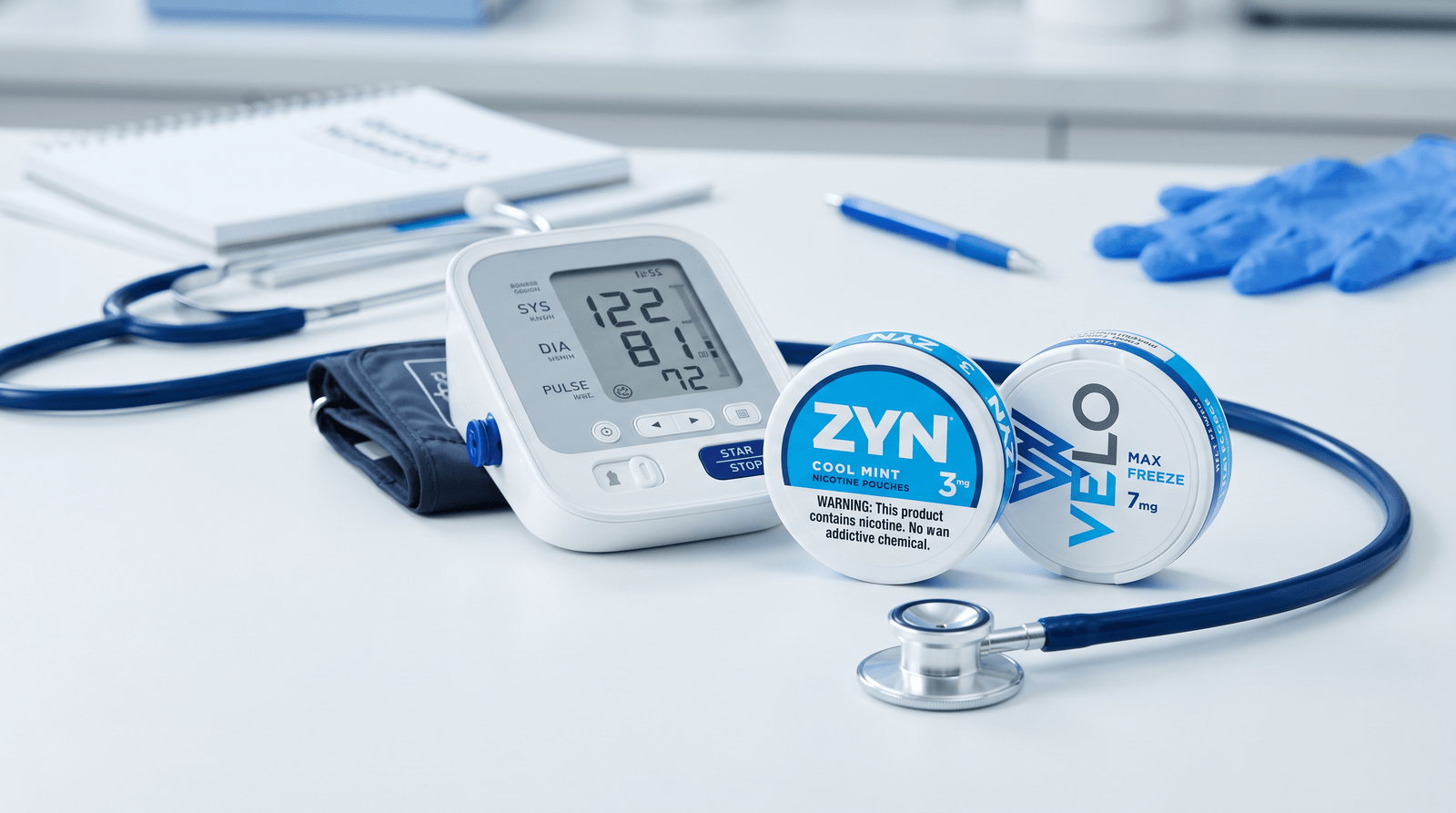
For users who want to minimise cardiovascular impact, the practical implication is clear: lower-strength options reduce the acute BP load. ZYN offers 3 mg variants — one of the lowest starting points in the market — which delivers a noticeably smaller cardiovascular stimulus than extra-strong or ultra-strong pouches.
How Long Does the Blood Pressure Effect Last?
This is where nicotine pouches differ importantly from some other nicotine products. The acute BP elevation from pouches peaks within 5–20 minutes and normalises within 30–40 minutes of removing the pouch. This aligns with the half-life of nicotine's acute cardiovascular effects and the absorption curve of oral mucosal nicotine delivery.
By contrast, cigarette smoke causes a faster peak (inhaled nicotine absorbs more rapidly via the lungs) but also introduces carbon monoxide and other combustion products that have additional effects on vascular tone and oxygen transport. These combustion-related factors are absent with tobacco-free nicotine pouches.
Research published in the Harm Reduction Journal (April 2025) examining snus and nicotine pouch cessation found that systolic blood pressure actually increased after quitting in regular users — suggesting that chronic users develop tolerance and that their resting BP may be lower than it appears during active use, due to physiological adaptation.
Nicotine Pouches vs Other Nicotine Products: Cardiovascular Comparison
How do pouches compare to other nicotine delivery methods? The European Heart Journal's 2025 consensus makes clear that no nicotine product is cardiovascularly neutral — but the magnitude and mechanism of harm varies meaningfully between products.
| Product | Acute BP Increase | Combustion Products | Nicotine Absorption Speed |
|---|---|---|---|
| Cigarettes | 5–15+ mmHg | Yes (CO, tar, carcinogens) | Very fast (pulmonary) |
| E-cigarettes / Vapes | 5–10 mmHg | Minimal (vapour, not smoke) | Fast (pulmonary) |
| Nicotine Pouches | 5–10 mmHg | None | Moderate (oral mucosal) |
| Nicotine Patches (NRT) | 2–5 mmHg | None | Slow (transdermal) |
| Nicotine Gum (NRT) | 3–6 mmHg | None | Slow (oral mucosal) |
Nicotine patches produce the smallest acute BP effect because transdermal delivery is slow and the nicotine level rises gradually. Pouches sit between patches and inhaled products in terms of absorption speed — slower than a cigarette but faster than a patch, with no combustion toxicants involved in the BP picture.
Who Should Be Most Careful?
The science is clear that certain groups face higher risk from nicotine's cardiovascular effects:
- People with diagnosed hypertension — elevated baseline BP means even a 5–10 mmHg spike carries more clinical significance
- People with coronary artery disease or prior heart attacks — nicotine causes coronary vasoconstriction, which can be especially dangerous with pre-existing narrowed arteries
- Young adults (under 25) — the developing cardiovascular system may be more susceptible to nicotine's effects, according to research published in Frontiers in Public Health (November 2025)
- Dual users — combining pouches with cigarettes or vapes maintains continuous nicotine exposure and removes the partial cardiovascular benefit of eliminating combustion
If you fall into any of these categories and still use nicotine pouches, the clearest harm-reduction step is using the lowest effective strength. ZYN's 3 mg range and VELO's 4 mg options are starting points that deliver meaningful nicotine satisfaction with a smaller cardiovascular stimulus than mid-to-high strength variants.
Lower-Strength Pouches Worth Considering in 2026
If you want to manage nicotine intake and BP impact, the market has solid options at the lower end of the strength spectrum:
- ZYN 3 mg — available in Cool Mint, Citrus, and Spearmint. The benchmark low-strength option from one of the world's leading brands
- VELO 4 mg — slim format, broad flavour range including Berry Frost and Citrus. Clean delivery with a modest nicotine load
- LOOP 6 mg — the dual-chamber design gives a longer, steadier nicotine release that avoids sharp peaks, which may produce a smoother BP curve than fast-release formats
- C.R.E.A.M 8 mg — in the mid-strength category but known for its low-drip, soft delivery that many users find less intense than equivalent-strength alternatives
Browse the full range at The Snus Outlet's beginner-friendly collection for lower-strength options across multiple brands. Free EU shipping on orders over €99.
Frequently Asked Questions
Do nicotine pouches raise blood pressure?
Yes. Nicotine in any form activates the sympathetic nervous system and causes an acute increase in blood pressure — typically 5–10 mmHg systolic. This effect peaks within 5–20 minutes of use and returns to baseline within 30–40 minutes of removing the pouch.
Are lower-strength pouches better for blood pressure?
Yes. The blood pressure effect from nicotine is dose-dependent — lower-strength pouches (2–4 mg) cause a smaller and slower peak BP increase than extra-strong or ultra-strong variants (10–50 mg). If you are concerned about cardiovascular impact, choosing the lowest strength that still meets your needs is the most practical step.
Can I use nicotine pouches if I have high blood pressure?
This is a medical question that should be discussed with your doctor. Nicotine is known to acutely raise blood pressure, and its effects are more pronounced in people who already have hypertension. Any nicotine product carries cardiovascular considerations for people with existing high blood pressure.
How long after using a pouch does blood pressure return to normal?
Studies show that blood pressure from nicotine pouch use returns to baseline within 30–40 minutes of removing the pouch. The 2024 crossover study cited above found that even pouches containing up to 30 mg normalised within this window.
Do nicotine pouches cause permanent high blood pressure?
The acute effects are transient. However, regular nicotine use maintains chronic sympathetic activation, which over time may contribute to elevated resting blood pressure and other cardiovascular changes. Long-term outcome data specific to nicotine pouches is still limited, given how recently the category emerged. The most definitive answer currently available is that nicotine itself — at sustained exposure levels — is associated with cardiovascular risk factors including elevated blood pressure.
Final Thoughts
The answer to the question is straightforward: yes, nicotine pouches raise blood pressure. The rise is real, measurable, and dose-dependent. It is also temporary — normalising within 30–40 minutes — and caused by the nicotine itself, not tobacco or combustion byproducts.
If you are an adult who already uses nicotine pouches and wants to manage the cardiovascular impact, the most practical actions are: choose the lowest effective strength, avoid ultra-high-strength products, and space out your sessions to allow blood pressure to recover between uses. And if you have existing cardiovascular conditions, that conversation belongs with your doctor, not just a blog.
For lower-strength options across ZYN, VELO, LOOP, and more, browse the beginner and light-strength range at The Snus Outlet. Orders over €99 ship free across the EU.