

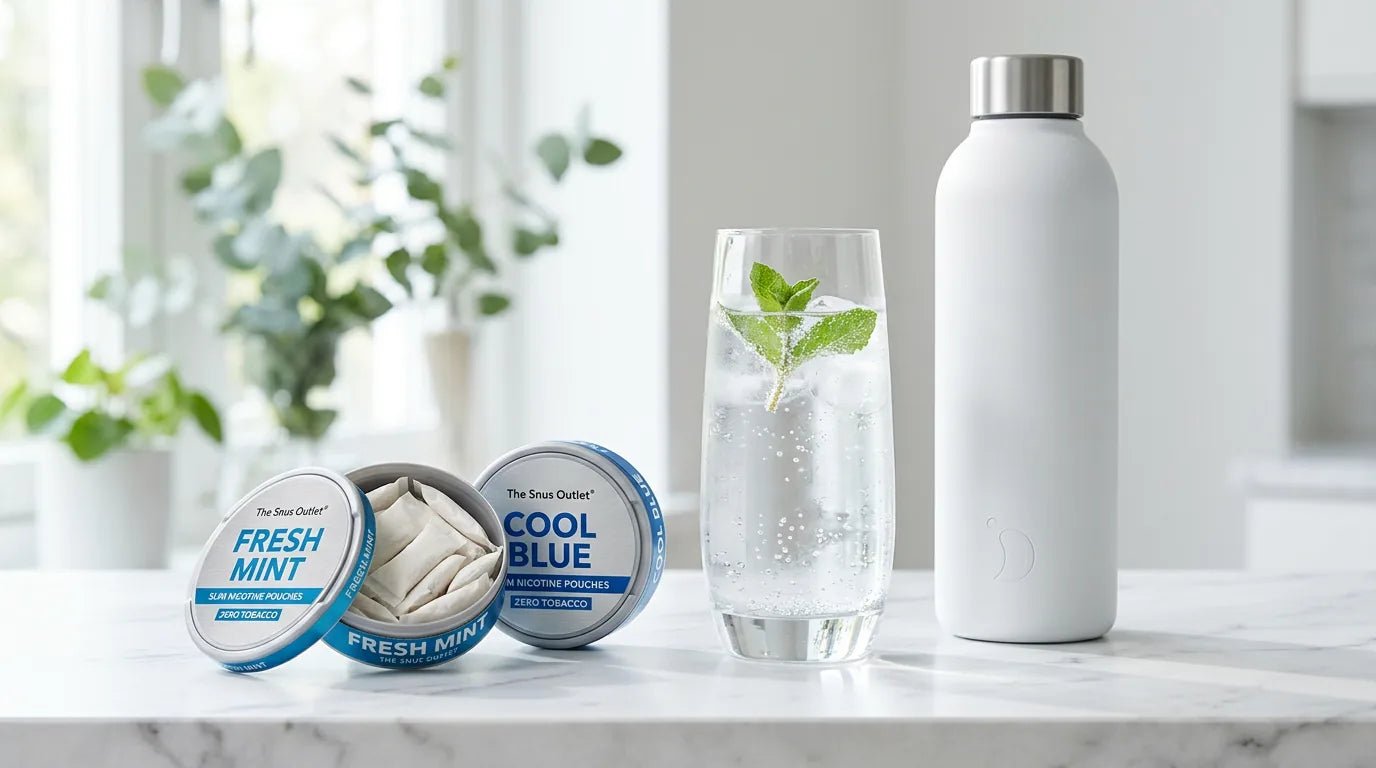
The short answer: yes, mildly. Nicotine has three distinct effects on fluid balance — it mildly disrupts the hormone that regulates water retention, it reduces saliva production significantly, and it constricts the blood vessels that deliver moisture to your oral tissues. None of these effects will cause clinical dehydration on their own in a healthy adult who drinks adequate water. But if you use nicotine pouches every day and you already drink less water than you should, the effects compound. Here is the science, and what to do about it.
- Key Takeaways
- Nicotine has a mild diuretic effect by disrupting vasopressin (antidiuretic hormone) signalling in the kidneys, causing slightly more water loss through urine.
- Dry mouth (xerostomia) is the most consistent and noticeable effect — nicotine reduces salivary output by up to 20–30% during active use.
- Nicotine constricts blood vessels including those supplying the salivary glands and oral mucous membranes, reducing moisture delivery to oral tissues.
- Clinical dehydration from nicotine pouches alone is unlikely in normally hydrated adults — but pouches increase your daily fluid requirement.
- Practical fix: drink at least 500 ml more water per day than non-users, and have a glass of water before placing each pouch.
The Short Answer: Does Nicotine Cause Dehydration?
Nicotine is classified as a mild diuretic — it increases urine output compared to baseline. The primary mechanism involves vasopressin, also called antidiuretic hormone (ADH), which signals your kidneys to reabsorb water rather than excreting it. According to StatPearls (NCBI), nicotine is one of several substances that affects ADH secretion, with research showing that acute nicotine exposure can suppress vasopressin release at higher doses — allowing the kidneys to pass more water as urine.
The effect is modest rather than dramatic. Moderate nicotine pouch use (4–11 mg per pouch, several per day) produces a measurable but small increase in urine output compared to no nicotine use. You are not going to become acutely dehydrated from a ZYN 6 mg in the same way you would from spending a day in the heat without water. But the effect is real, cumulative, and clinically meaningful for daily heavy users — particularly those who already drink less than the recommended 2–2.5 litres of water per day.
The more immediately noticeable problem is dry mouth, which can feel like dehydration but operates through a different mechanism. Understanding the difference matters for knowing what to do about it.
Three Ways Nicotine Affects Your Fluid Balance
1. Vasopressin Disruption (Diuretic Effect)
Vasopressin (ADH) is the hormone that tells your kidneys to retain water. Nicotine interacts with the pituitary gland and hypothalamus — the same regions that produce and regulate vasopressin. Research published in PubMed (2024) on nicotine pouches' physiological effects confirms that dry mouth and fluid-related side effects are among the most consistently reported outcomes across user studies. The effect on ADH is dose-dependent — higher nicotine content per pouch produces a more pronounced diuretic response than lighter strengths.
2. Dry Mouth (Xerostomia)
This is the most reliably documented effect and the one most pouch users actually notice. Nicotine activates the sympathetic nervous system — the fight-or-flight system — which directly suppresses salivary gland output. Saliva production can drop by 20–30% during active pouch use, according to dental research on nicotine's sympathomimetic effects. Saliva is 99% water and serves critical functions: neutralising oral acids, washing away bacteria, protecting enamel and keeping mucosal tissue hydrated. When saliva flow drops, you get the dry, cottony sensation most users associate with stronger pouches.
Dry mouth is not the same as systemic dehydration, but it contributes to it if you do not compensate by drinking more water. Chronic dry mouth also accelerates bacterial overgrowth in the mouth, increases plaque accumulation, and can cause gum irritation around the pouch placement site — a compounding issue for heavy daily users.
3. Vasoconstriction
Nicotine is a potent vasoconstrictor — it narrows blood vessels throughout the body, including those supplying the salivary glands and oral mucous membranes. Less blood flow means less moisture delivered to tissue surfaces. This effect compounds the dry mouth caused by reduced salivary output, contributing to the parched-throat feeling that many users experience with high-strength pouches (11 mg and above). The vasoconstriction effect resolves within 30–60 minutes after pouch removal as nicotine clears the bloodstream.
Dry Mouth vs True Dehydration: Know the Difference
Dry mouth during pouch use is primarily a local oral effect — reduced saliva and mucosal moisture. Systemic dehydration is a body-wide fluid deficit affecting blood volume, kidney function, cognitive performance and thermoregulation. The two overlap in feel but differ in cause and solution.
| Symptom | Likely Cause | Fix |
|---|---|---|
| Dry mouth during pouch use | Xerostomia (salivary suppression) | Sip water; remove pouch after 20–30 min |
| Persistent thirst after pouch use | Diuretic effect + vasoconstriction | Drink 250–500 ml water post-pouch |
| Afternoon headache, fatigue | Mild systemic dehydration (cumulative) | Increase daily baseline intake by 500 ml |
| Dark yellow urine | Systemic dehydration — drink more | Aim for pale yellow, not clear |
| Dizziness when standing | Low fluid volume (orthostatic drop) | Hydrate; reduce pouch frequency temporarily |
The good news: all of these are manageable. Unlike the fixed physiological effects of combustible tobacco (where smoke damages the airways permanently), nicotine pouch dehydration effects are transient and respond directly to water intake.
Nicotine Pouches vs Smoking: Which Is Worse for Hydration?
Cigarette smoke causes significant fluid loss through multiple additional pathways: smoke dries the respiratory tract, tobacco-specific compounds cause additional inflammatory fluid responses, and the vasoconstriction caused by combustion products is systemic and more severe. Nicotine pouches produce only the nicotine-specific effects — no smoke, no combustion, no respiratory drying. For users switching from cigarettes to pouches, most report that dry mouth from pouches is easier to manage than the throat-and-airway dryness associated with smoking. Pouches are significantly better for hydration than cigarettes, while still requiring more daily water intake than no nicotine at all.
How Much More Water Should You Drink?
The evidence-based recommendation from nicotine research and dental practitioners is to increase daily water intake by approximately 500 ml (roughly 2 extra glasses) above baseline needs for regular nicotine pouch users. Standard adult hydration targets are 2–2.5 litres daily; regular pouch users should aim for 2.5–3 litres. The practical habits that matter most:
- Before each pouch: Drink a glass of water (200–250 ml). This pre-loads your system and reduces the dry mouth intensity during use.
- After each pouch: Rinse with water and swallow. This removes any residual pouch material, rehydrates the placement site, and offsets the diuretic effect.
- Limit pouch time to 20–30 minutes: Extended use (45–60+ minutes) prolongs the dry mouth window and increases oral bacterial activity.
- Watch urine colour: Pale yellow = well hydrated. Dark yellow = drink more water immediately.
- Be cautious with alcohol: Combining alcohol with nicotine pouches compounds dehydration — both are diuretics, and the effects add together.
Does Strength Affect How Much You Dehydrate?
Yes — and it matters practically. Higher nicotine content per pouch produces greater sympathetic nervous system activation, stronger vasoconstriction and more pronounced salivary suppression. A ZYN 3 mg or VELO 6 mg will cause noticeably less dry mouth than a ZEUS 25 mg or a VELO Max 15 mg. If you are using high-strength pouches and consistently experiencing dry mouth, headaches or fatigue, stepping down to a medium-strength alternative may solve the problem without reducing your nicotine satisfaction significantly.
Active users — runners, gym-goers, cyclists — should be especially mindful. Exercise already increases fluid loss through sweat; combining it with a high-strength pouch while not drinking enough compounds the risk of mild dehydration. If you use pouches during sport, browse The Snus Outlet's sports-focused picks, where medium-strength options (6–9 mg) are recommended over ultra-strong for workout sessions. Light-strength pouches (3–6 mg) are the safest choice if you are training in heat or expect significant sweat loss.
Frequently Asked Questions
Can I drink water while using a nicotine pouch?
Yes — and it is actively encouraged. Drinking water during pouch use does not significantly reduce nicotine absorption (absorption occurs through the mucosa, not via swallowing). Sipping water while a pouch is in place helps offset the dry mouth effect and keeps oral mucous membranes hydrated. Avoid very hot drinks, which can irritate the placement site, but water, herbal teas and cold drinks are all fine.
Do higher-strength pouches cause more dehydration?
Yes, proportionally. Higher nicotine content causes stronger sympathetic activation, more pronounced vasoconstriction and greater salivary suppression. ZYN 3 mg or VELO 6 mg produce noticeably less dry mouth than ZEUS 25 mg or VELO Max 15 mg. If dehydration symptoms are a consistent problem, stepping down one strength tier often resolves them without requiring a brand change.
Are nicotine pouches worse for dehydration than coffee or alcohol?
Coffee at moderate doses (up to 400 mg caffeine daily) has minimal diuretic effect in habitual consumers. Alcohol is a more significant diuretic than nicotine. Nicotine pouches sit between the two — more than moderate coffee, less than alcohol. Combining all three in one day (morning coffee, afternoon pouch, evening drink) compounds the fluid loss and requires meaningfully higher water intake to compensate.
Does dry mouth from nicotine pouches damage teeth?
Chronic dry mouth can accelerate tooth decay and gum disease over time. Saliva neutralises oral acids and remineralises enamel — reduced saliva flow allows acid to attack enamel more effectively. This is a concern for heavy daily users (8+ pouches per day), particularly if oral hygiene is not optimal. Drinking water regularly, maintaining twice-daily brushing and using alcohol-free mouthwash helps mitigate this risk significantly.
Final Thoughts
Nicotine pouches do affect hydration — mildly, through three overlapping mechanisms. The effect is real but manageable: add 500 ml to your daily water target, drink a glass before and after each pouch, and keep your pouch duration to 20–30 minutes. If you use high-strength products, consider stepping down to light or medium-strength options on active days. ZYN, VELO, LOOP, XQS and KUMA all offer lighter formats that deliver a satisfying nicotine experience with less physiological load on your fluid balance. Browse the full range at The Snus Outlet — free EU shipping on orders over €99.