
Last updated: April 2026 · By Jonas Saeed, Founder of The Snus Outlet
Key Takeaways:
- Caffeine pouches and nicotine pouches look identical but contain completely different active ingredients with very different risk profiles
- Nicotine is significantly more addictive than caffeine and carries higher cardiovascular risks over time
- Caffeine pouches are unregulated in most countries, meaning doses can vary wildly between brands
- Both types absorb through your gums faster than drinking coffee or using traditional tobacco -- that speed matters for side effects
- Choosing the right pouch depends on your goals: energy boost, nicotine satisfaction, or quitting tobacco altogether
Two Pouches, Two Very Different Stories
Walk into any gas station or scroll any online pouch store in 2026, and you'll see two products sitting side by side that look almost identical. Same small cans. Same white sachets. Same "tuck it under your lip" instructions. But caffeine pouches and nicotine pouches are fundamentally different products with different effects on your body.
The confusion is real -- and it matters. One is a stimulant that blocks tiredness. The other triggers your brain's dopamine reward system. One creates mild habits. The other can lead to serious dependency. If you're using either type, or thinking about switching between them, you need to understand the health effects of each.
Let's break it all down so you can make an informed choice.
How Each Pouch Works in Your Body
Both caffeine and nicotine pouches deliver their active ingredient through sublingual absorption -- meaning the substance passes through the thin tissue of your gums directly into your bloodstream. This bypasses your digestive system entirely, which is why both hit faster than a cup of coffee or a piece of nicotine gum.
Caffeine pouches work by blocking adenosine, a brain chemical that makes you feel tired. When adenosine can't do its job, you feel more alert, focused, and awake. The effect is similar to drinking coffee, but faster and more concentrated.
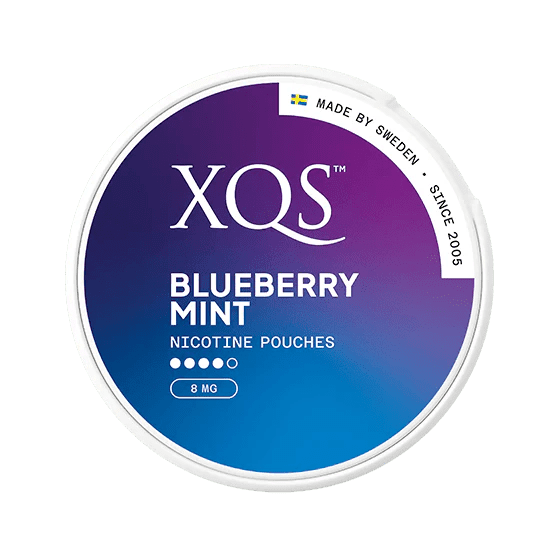
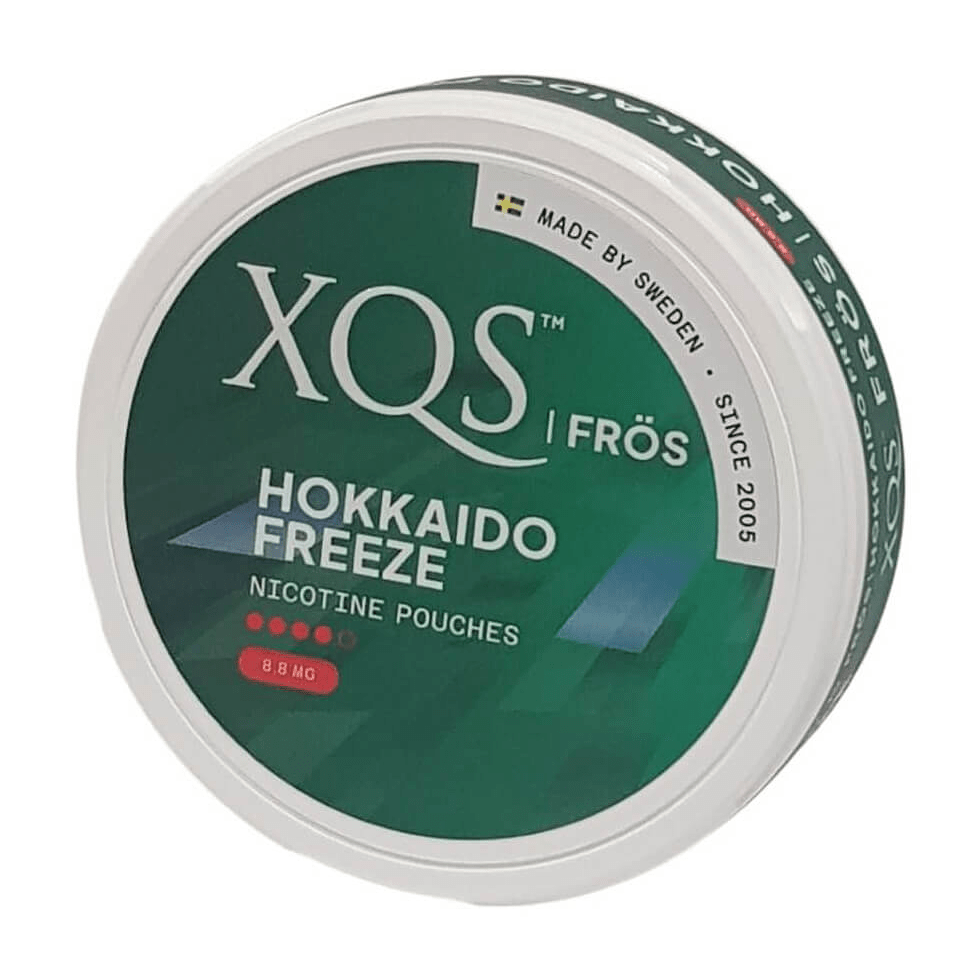
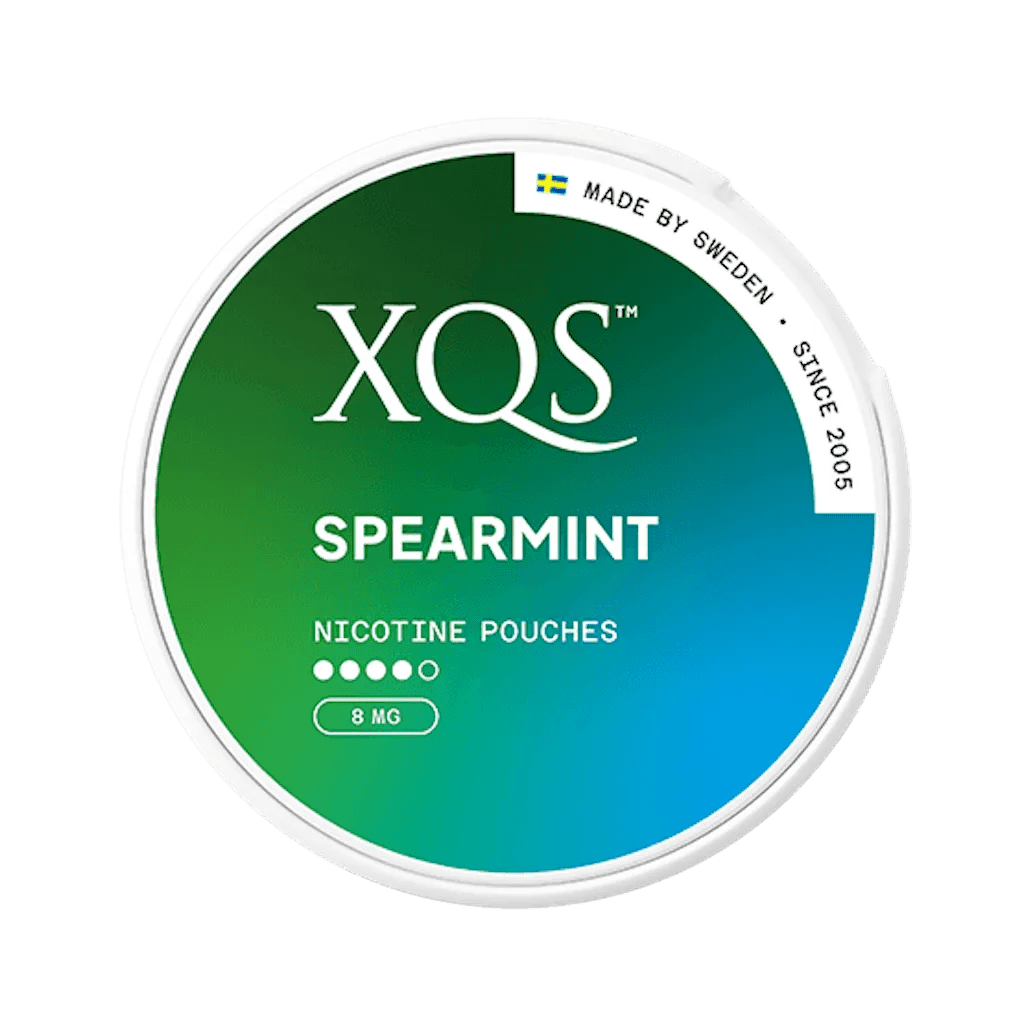
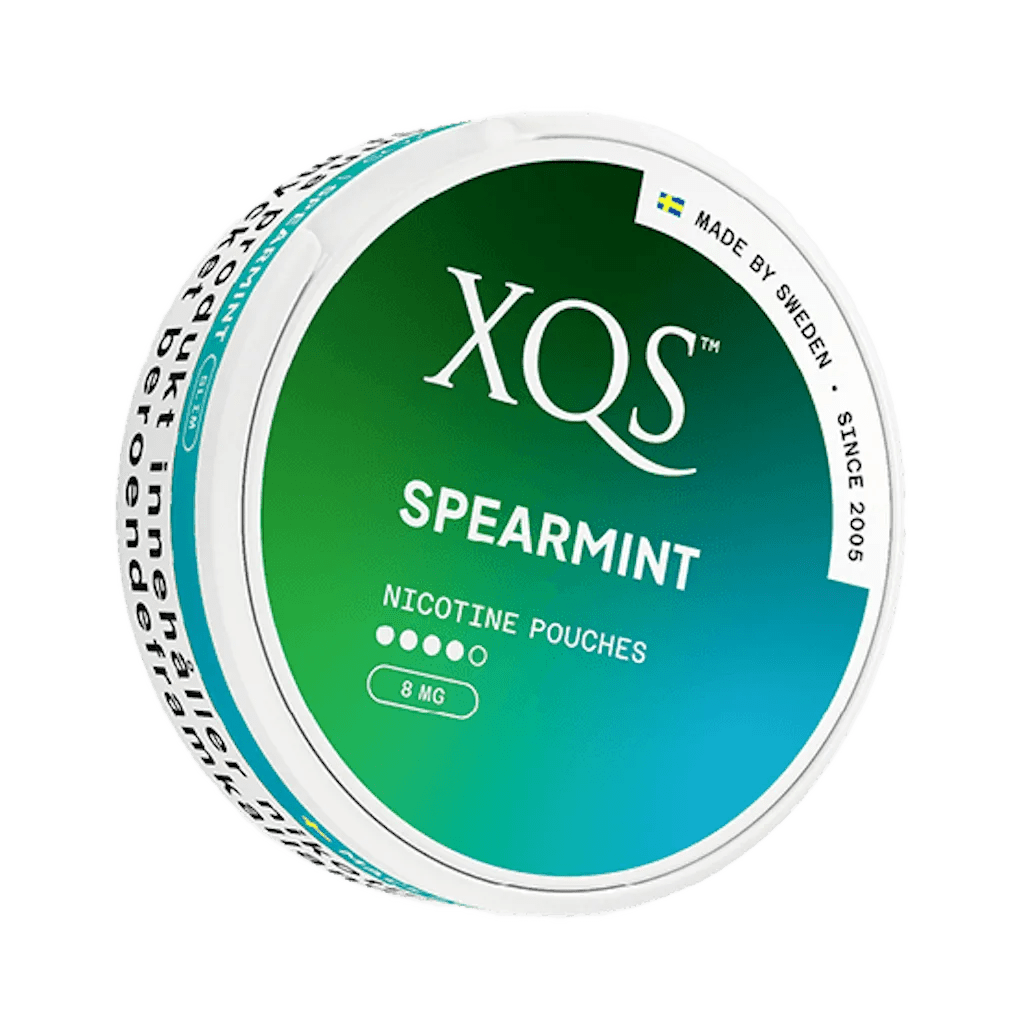
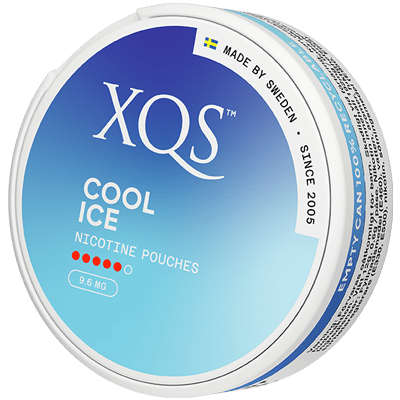
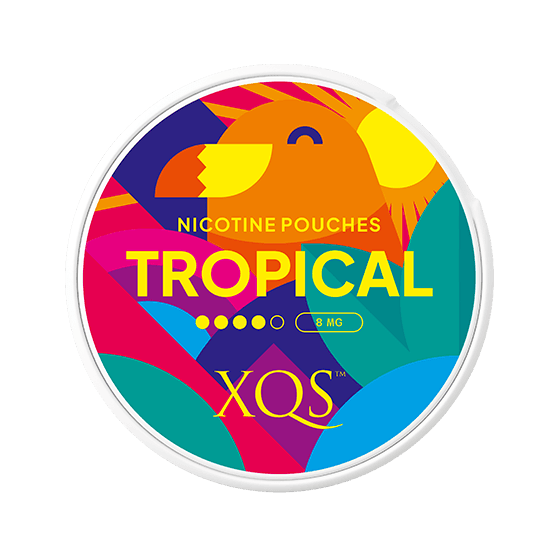
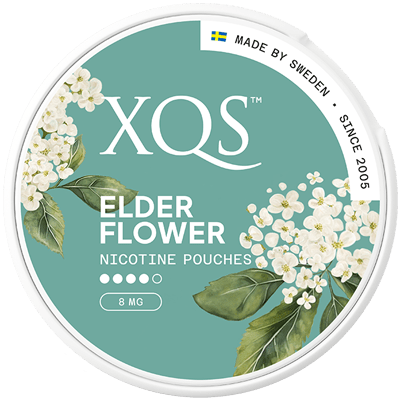
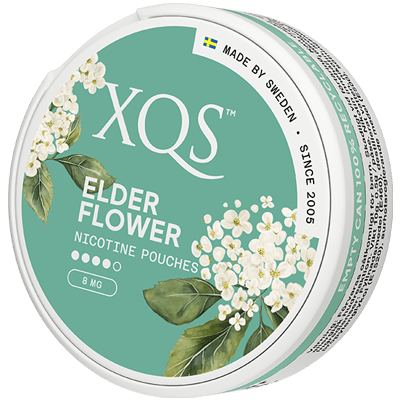
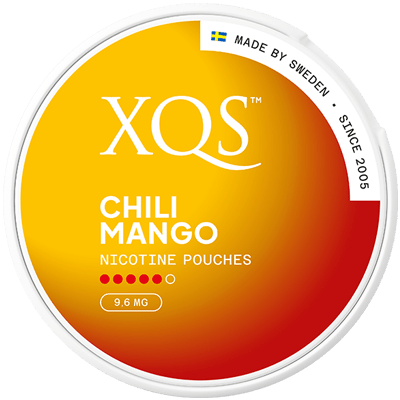
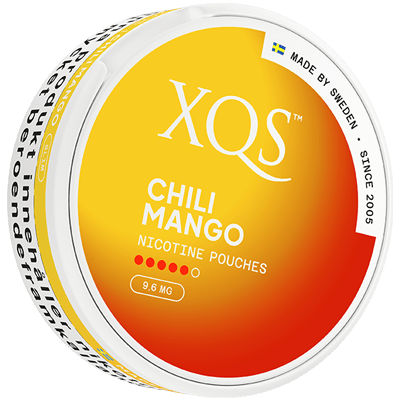
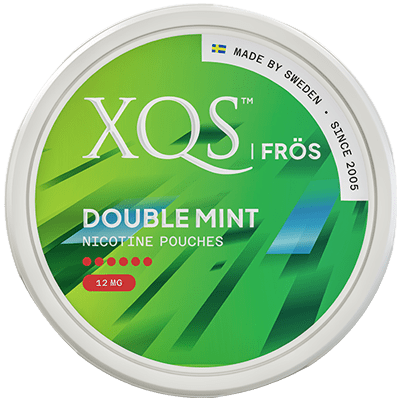
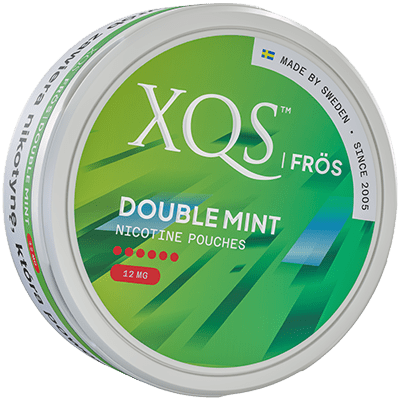
Nicotine pouches activate nicotinic receptors in your brain, triggering a release of dopamine -- the "feel good" chemical. This creates a calming yet focused sensation, a mild buzz, and over time, a strong reinforcement loop that drives repeated use. Brands like ZYN, VELO, LOOP, and XQS all use pharmaceutical-grade nicotine derived from tobacco plants, but the pouches themselves contain zero tobacco leaf.
Head-to-Head Health Comparison
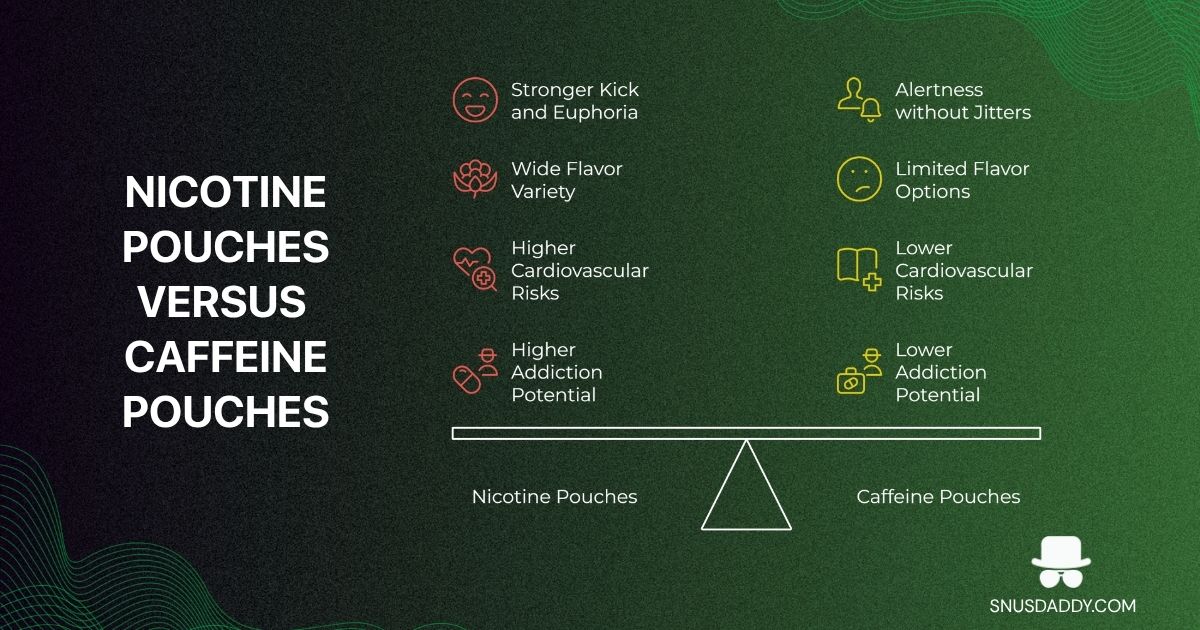
| Health Factor | Caffeine Pouches | Nicotine Pouches |
|---|---|---|
| Addiction potential | Low -- mild physical habit possible | High -- nicotine is one of the most addictive substances known |
| Withdrawal symptoms | Mild headache, fatigue (1-2 days) | Irritability, anxiety, cravings, insomnia (1-4 weeks) |
| Cardiovascular impact | Mild, temporary heart rate increase | Sustained blood pressure and heart rate elevation |
| Gum health risk | Minimal with moderate use | Moderate -- nicotine constricts blood flow to gum tissue |
| Dopamine effect | Small, slow dopamine increase | Large, rapid dopamine surge (drives addiction) |
| Sleep disruption | Yes, if used late in the day | Possible, especially with higher strengths |
| Daily safe limit | Under 400mg caffeine total (4-8 pouches) | 8-10 pouches depending on strength and tolerance |
| Regulation | Mostly unregulated (food/supplement) | Regulated as tobacco product (FDA in US, TPD in EU) |
The Addiction Factor -- This Is the Big One
This is where the two products diverge most dramatically. Nicotine hijacks your brain's reward system in a way that caffeine simply does not. Medical research classifies nicotine addiction alongside opioids and alcohol in terms of dependency severity.
Caffeine can create a mild physical dependence -- skip your morning coffee and you might get a headache for a day or two. But it doesn't create the compulsive, escalating craving cycle that nicotine does. You won't find yourself reaching for a caffeine pouch every 30 minutes because your brain is demanding another dopamine hit.
That said, nicotine pouches are dramatically less harmful than smoking. If you're using them as a tool to quit cigarettes or traditional snus, they represent a significant step in the right direction. The FDA itself acknowledged in January 2026 that ZYN poses substantially lower health risks than combustible tobacco.
Caffeine Pouch Risks You Should Know About
Don't assume caffeine pouches are risk-free just because they're not nicotine. The rapid sublingual absorption means caffeine hits your system much faster than drinking coffee -- and that speed can cause problems.
Health experts at George Washington University have warned that rapid caffeine delivery from pouches can cause:
- Elevated heart rate and blood pressure spikes
- Cardiac arrhythmias (irregular heartbeat), especially in younger users
- Anxiety, restlessness, and insomnia
- Nausea and headaches from overconsumption
- Jitteriness and tremors at high doses
The biggest concern? Caffeine pouches are largely unregulated. Unlike nicotine pouches, which face strict oversight from the FDA and European regulators, caffeine pouches fall into a grey area between food supplements and energy products. Some pouches contain over 200mg of caffeine per pouch -- that's two cups of coffee absorbed through your gums in minutes.
Nicotine Pouch Risks -- What the Science Says
Nicotine pouches carry their own set of health considerations, though they're consistently shown to be far safer than smoking or vaping:
- Gum irritation -- nicotine constricts blood vessels, reducing blood flow to gum tissue over time
- Elevated blood pressure -- sustained nicotine use keeps your cardiovascular system under mild stress
- Dependency -- regular users develop tolerance and need higher strengths for the same effect
- Oral health concerns -- long-term effects are still being studied, though early evidence suggests much lower risk than smokeless tobacco
The key context here: nicotine pouches contain no tobacco leaf, no combustion byproducts, and no tar. For people switching from cigarettes, the risk reduction is enormous. Brands like C.R.E.A.M, ZEUS, and KUMA all offer tobacco-free formulations that deliver nicotine without the harmful chemicals found in traditional tobacco products.
Can Caffeine Pouches Help You Quit Nicotine?
This is one of the most searched questions in the pouch community right now -- and the answer is a qualified yes. Caffeine pouches can serve as a behavioral replacement for nicotine pouches because the physical ritual is identical: open the tin, grab a pouch, tuck it under your lip.
The oral habit is a major part of nicotine addiction. By switching to caffeine pouches, you maintain the ritual while removing the nicotine. The caffeine provides a mild stimulant effect that partially offsets the loss of nicotine's dopamine hit.
However, caffeine pouches won't eliminate nicotine cravings. The chemical dependency is a separate challenge that the behavioral replacement alone can't solve. Most experts recommend a gradual step-down approach:
- Switch to lower-strength nicotine pouches first (3-4mg)
- Alternate between nicotine and caffeine pouches throughout the day
- Gradually increase the ratio of caffeine to nicotine pouches
- Transition fully to caffeine pouches or quit entirely
Strength and Dosage Comparison
| Level | Caffeine Pouches | Nicotine Pouches |
|---|---|---|
| Mild | 25-50mg caffeine | 1-4mg nicotine |
| Medium | 50-80mg caffeine | 4-6mg nicotine |
| Strong | 80-120mg caffeine | 6-12mg nicotine |
| Extra Strong | 120-200mg+ caffeine | 12-20mg+ nicotine |
| Max daily | 400mg total caffeine | 8-10 pouches |
One important note: with caffeine pouches, you need to track your total daily caffeine intake across all sources -- coffee, tea, energy drinks, and pouches combined. Going over 400mg in a day can cause unpleasant and potentially dangerous side effects.
Which Pouch Is Right for You?
The answer depends entirely on what you're looking for:
- Choose caffeine pouches if: You want a tobacco-free, nicotine-free energy boost. You're trying to quit nicotine and need a behavioral replacement. You want something less addictive than nicotine.
- Choose nicotine pouches if: You're switching from smoking or traditional snus. You want nicotine satisfaction without tobacco or combustion. You enjoy the specific dopamine-driven calm and focus that only nicotine delivers.
If you're a nicotine pouch user, the best approach is to find a strength and brand that fits your lifestyle without constantly chasing a stronger buzz. Brands like ZYN (3mg and 6mg), VELO, and LOOP offer well-balanced options that provide steady satisfaction without the extremes.
Browse Your Options at The Snus Outlet
Whether you're exploring nicotine pouches for the first time or stocking up on your favorites, The Snus Outlet carries a full lineup of top brands including ZYN, VELO, LOOP, C.R.E.A.M, ZEUS, XQS, and KUMA -- all at some of the best prices online.
Check our Outlet section for up to 60% off selected products. We ship from Stockholm with free EU shipping on orders over €99 EUR and deliver in 2-7 business days. We also ship to the UK, USA, and South Africa.
Sources & Further Reading
- NIDA — Nicotine — how nicotine affects the brain and body
- NCBI — Nicotine Pharmacology — nicotine absorption and metabolism
- WHO Tobacco Fact Sheet — tobacco and health research
Frequently Asked Questions
Q: Are caffeine pouches safer than nicotine pouches?
Caffeine pouches are less addictive and carry lower cardiovascular risks with moderate use. However, they are largely unregulated, so quality and dosage can vary between brands. Both are significantly safer than smoking.
Q: Can I use caffeine and nicotine pouches at the same time?
Technically yes, but it's not recommended. Both are stimulants that increase heart rate. Stacking them can amplify side effects like jitteriness, elevated blood pressure, and anxiety. If you use both, space them out and stay well hydrated.
Q: How much caffeine is in one caffeine pouch?
It varies by brand and strength level. Most caffeine pouches contain between 25mg and 200mg per pouch. The recommended daily maximum for adults is 400mg of caffeine from all sources combined.
Q: Will switching to caffeine pouches help me quit nicotine?
Caffeine pouches can help with the behavioral side of nicotine addiction by maintaining the oral ritual. However, they won't address chemical nicotine dependency. A step-down approach -- gradually reducing nicotine pouch strength while introducing caffeine pouches -- tends to work best.
Q: Which nicotine pouch brands have the lowest health risk?
All tobacco-free nicotine pouches (ZYN, VELO, LOOP, XQS, C.R.E.A.M, ZEUS, KUMA) carry similar risk profiles since they all use pharmaceutical-grade nicotine without tobacco leaf. Lower-strength options (3-6mg) put less stress on your cardiovascular system. You can explore all of these at The Snus Outlet.
Final Thoughts
Caffeine pouches and nicotine pouches may look the same, but they have very different effects on your health, your brain, and your potential for dependency. Neither is completely risk-free, but understanding the differences helps you make a smarter choice for your body and your goals.
If nicotine pouches are part of your routine, stock up on quality brands at the best prices. Browse our full range of ZYN, VELO, LOOP, XQS, C.R.E.A.M, ZEUS, and KUMA at The Snus Outlet -- with outlet deals up to 60% off and fast shipping from Stockholm.